Consumer Behaviour

96% of decisions are automatic.
If you only target the rational brain, you miss 96%.

Your customers say one thing and do another. That is not a problem. That is human nature. SUE teaches you to understand and influence consumer behaviour using the tools of behavioural science.

✓ SUE Influence Framework ✓ Proven at 500+ organisations
SUE Behavioural Design training on consumer behaviour

They design customer behaviour with SUE

Heineken ING Bank KPN Eneco ANWB Randstad Amnesty International Roche Adyen European Commission Centraal Beheer Achmea DPG Media Rijkswaterstaat CZ Heineken ING Bank KPN Eneco ANWB Randstad Amnesty International Roche Adyen European Commission Centraal Beheer Achmea DPG Media Rijkswaterstaat CZ

500+ organisations • 15 years of Behavioural Design • 14 courses for every level

Why it does not work

The four blind spots in marketing

More budget. More reach. More messages. Yet conversion does not budge. Most marketing approaches fail because they assume a rational consumer. That consumer does not exist.

1

Campaigns that don't convert

You have the right audience, the right channel and the right message. But conversion stays flat. The problem: you are optimising the communication while the choice context determines the behaviour. A better ad does not fix a bad choice environment.

Context drives 96% of choices
2

Rational value props, irrational choices

Features, benefits, USPs. Your proposition checks out on paper. But consumers don't buy on paper. They buy on feeling, ease and habit. If your competitor is easier, easier wins. Always.

Ease beats quality (Shafir)
3

Price as the only lever

When conversion stalls, you lower the price. Or offer a discount. But price competition is a race to the bottom. Behavioural science offers dozens of levers that cost nothing: defaults, framing, social norms, loss aversion.

Loss aversion: 2× stronger than gain (Kahneman)
4

A journey built for rational man

Your customer journey is designed for a human being who does not exist: someone who seeks information, compares options, and makes a deliberate choice. The real human scrolls, hesitates, gets distracted, and picks the path of least resistance.

47% of behaviour is habitual (Wood & Neal)

Want to learn how the Influence Framework works? Read the full article →

The breakthrough

System 1 decides. Design for it.

Daniel Kahneman identified two systems in our brain. System 2 is slow, analytical and rational. System 1 is fast, intuitive and makes 96% of all decisions.

Most marketing strategies target System 2: arguments, features, comparisons. But the brain that sees your ad, picks up your product and moves through your checkout is System 1. Understand System 1 and you design behaviour.

SUE combines Kahneman's insights with the Influence Framework: a diagnostic model that maps the forces that drive behaviour. Not manipulation, but design.

"You cannot not design. Every choice environment steers behaviour. The question is not whether you influence behaviour, but whether you do it deliberately."
Tom de Bruyne, Gamechangers
The model

Two systems, two strategies

Every decision moment is shaped by the interplay of two systems. Understand both and you can design behaviour. Target only System 2 and you lose 96% of your opportunities.

Context 1

System 1: The autopilot

Fast, intuitive, effortless. System 1 decides based on recognition, ease and habits. It is the brain's default mode. This is where most purchase decisions are made.

Blind spot: Your proposition is too complex for System 1. Too many choices, too much text, too many steps.
Context 2

System 2: The analyst

Slow, analytical, deliberate. System 2 kicks in for complex or uncertain decisions. It costs energy and tires quickly. It looks for shortcuts to switch back to System 1.

Blind spot: You overload System 2 with too much information. Decision fatigue leads to delay or drop-off.
Context 3

Pains & Anxieties

The forces that block behaviour. Pains are the frustrations with the current situation. Anxieties are the uncertainties about the new situation. Together they form the resistance that blocks conversion.

Blind spot: You focus on the benefits of your product but fail to address the fears that block purchase.
Context 4

Gains & Comforts

The forces that attract behaviour. Gains are the desires for a better situation. Comforts are the habits that make the current situation feel safe. Both are levers for behaviour change.

Blind spot: You communicate gains but underestimate the power of comforts (habits). People stick with what they know.

Evidence

The science behind consumer behaviour

Designing consumer behaviour is not a trick. It is built on decades of behavioural research.

96%
Unconscious decisions

Ap Dijksterhuis calculated that only 4% of our daily decisions are made consciously. The rest is driven by System 1: habits, context and emotion. If you only communicate rationally, you reach 4% of the brain.

Dijksterhuis, The Smart Unconscious
Loss aversion

Kahneman and Tversky showed that losing something weighs psychologically twice as heavy as gaining the same thing. That is why 'don't miss this' works better than 'take advantage of this.' Framing is not a trick — it is how the brain works.

Kahneman & Tversky, Prospect Theory
8/10
Choose the default

In nearly every choice context, the majority picks the pre-selected option. Organ donation, pension savings, cookie banners — defaults determine behaviour. Design the default and you design the outcome.

Johnson & Goldstein, Do Defaults Save Lives?
BD intervention

Replace your rational product page with a choice architecture that speaks to System 1: one recommended option, visually distinguished, with social proof. Test the difference. You will be surprised.

Three ways to get started

Choose the level that fits your challenge

Whether you want to learn the method yourself, transform your team, or need an organisation-wide approach: there is a path that fits. Every level builds on the same foundation: behavioural science instead of good intentions.

Individual learning

You want to learn how to understand and influence consumer behaviour

Deep Dive Training
Deep Dive Behavioural Marketing
From System 2 marketing to System 1 design

A full-day intensive training where you learn how consumers actually decide — and how to design the choice context. You apply the Influence Framework to your own marketing challenge.

  • System 1 & 2 in practice
  • Apply the SUE Influence Framework
  • Design choice architecture
  • Use framing & defaults
  • Identify behavioural barriers
  • Immediately applicable action plan

For: Marketers, brand managers, product managers, growth hackers

€7,990
per group (max. 16 participants)
More information →

Or request a quote

Transform your team

Your team wants to structurally understand and design customer behaviour

For teams that want to stop guessing and start designing

Most popular choice
Behavioural Design Fundamentals
The complete method in two days
★ Most chosen

"After the Fundamentals training we saw our checkout conversion increase by 34%. Not through a better ad, but through three small adjustments to the choice environment."

Head of E-commerce, Dutch retailer

The two-day Fundamentals Course is the foundation of Behavioural Design. You learn the complete method: from diagnosing behaviour to designing interventions. The training that changes everything.

  • Complete BD method
  • Influence Framework in practice
  • Conduct behavioural interviews
  • Design interventions
  • Work on your own case
  • Behavioural Design certificate

For: Marketing teams, UX teams, product teams, strategists

€1,490
per person (individual) — or €17,990 per team
View the training →

Or check the calendar

Organisation-wide approach

You want to structurally understand customer behaviour and redesign the choice context

For marketing directors, CMOs and CX managers who want lasting results

Learning Journey
Consumer Behaviour Learning Journey
Structurally understand and design customer behaviour

A multi-month programme where SUE acts as your Behavioural Design partner to analyse customer behaviour and redesign the choice context. From diagnosis and customer research to intervention design and optimisation.

  • Customer behaviour diagnosis (Influence Framework)
  • Behavioural interviews and observation
  • Choice architecture audit
  • Custom intervention design
  • A/B testing and optimisation
  • Embedding in marketing DNA

For: Marketing directors, CMOs, CX managers, product leads

Custom
depending on scope
Request a conversation →

Or call 020 223 46 26

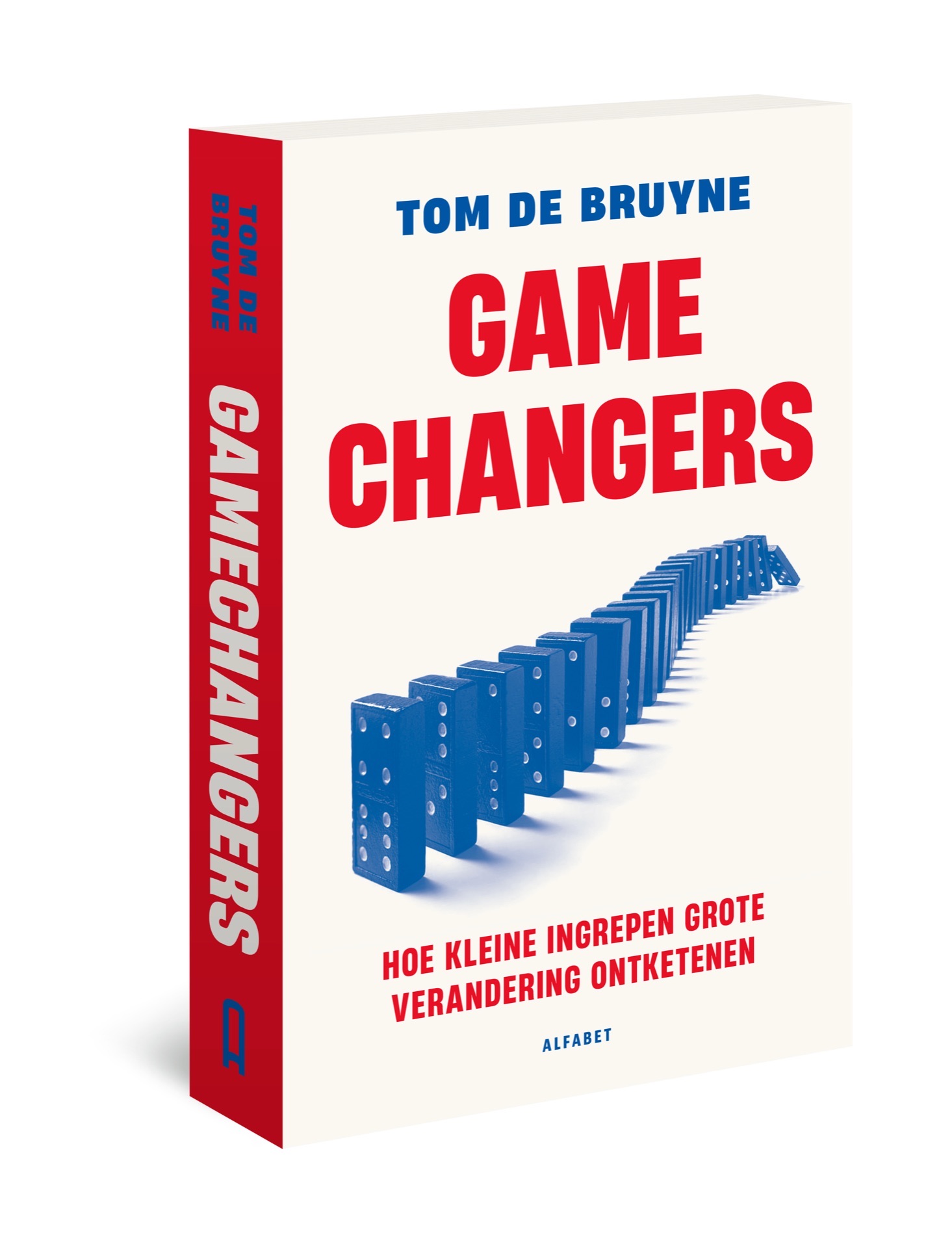
Gamechangers by Tom de Bruyne — the book on consumer behaviour and Behavioural Design
The book

The science behind consumer behaviour: Gamechangers

In Gamechangers, Tom de Bruyne explains how Behavioural Design is the key to understanding and influencing consumer behaviour. How to map the forces that drive choices, and how to design the choice context that makes desired behaviour the obvious choice.

Discover the book →

Tom de Bruyne • Maven Publishing, 2020 • Included with the courses

Deep dives

Everything about consumer behaviour

Frequently asked questions

Still have questions? We answer the most important ones.

What is consumer behaviour from a Behavioural Design perspective?

Consumer behaviour is the sum of choices people make when buying, using and evaluating products and services. From a Behavioural Design perspective, we don't look at what people say they want, but at what they actually do. 96% of those decisions happen automatically through System 1: fast, intuitive and context-dependent.

Why do rational sales arguments often fail?

Because they target the wrong brain. System 2 — the rational, analytical brain — is slow and lazy. It only kicks in during high-involvement or uncertain decisions. Most purchase decisions are made by System 1: based on ease, habits and social cues. If you only communicate rationally, you miss 96% of decision moments.

What is the SUE Influence Framework?

The SUE Influence Framework is a diagnostic model that maps the forces that drive behaviour. It distinguishes pains (frustrations), gains (desires), comforts (habits) and anxieties (uncertainties). By understanding these four forces, you design interventions that effectively steer behaviour — without manipulation.

How does your approach differ from traditional marketing?

Traditional marketing focuses on communication: the right message, at the right time, through the right channel. SUE looks broader: we analyse the entire choice context. Where does someone drop off? What barriers block conversion? Which defaults drive behaviour? We design the context, not just the message.

Which industries does this work for?

We work with organisations across all industries: from financial services, retail and e-commerce to telecom, FMCG and technology. Consumer behaviour is universal — the principles of Behavioural Design apply in any context where people make choices.

Ready to design customer behaviour instead of guessing?

Fill in the form and we will get back to you within 2 working days for a no-obligation conversation.

No obligations • No brochure • Just honest advice

Prefer direct contact?