Your organisation already has a culture programme. Maybe even a set of core values on the wall. But core values don't change behaviour. Context does. SUE helps you design the rules of the game so that desired behaviour emerges naturally.
They designed culture change with SUE
500+ organisations • 15 years of Behavioural Design • 14 courses for every level
New core values. Town halls. Change coaches. Posters in the hallway. Yet nothing changes. Most culture programmes fail for one reason: they try to change people instead of the context.
Respectful. Innovative. Customer-centric. Beautiful words, but core values on the wall don't change behaviour on the floor. Between intention and action lies a gap that no poster can bridge.
70% of culture programmes fail (McKinsey)Resistance is seen as an obstacle. Something to overcome. But resistance is information. It tells you exactly which forces keep the current behaviour in place. Suppress resistance, and you suppress the signal.
Resistance = information, not an obstacleThe board decides, HR communicates, employees must follow. But culture is not a waterfall. It is an ecosystem. Behaviour that is not supported by the context fades as soon as attention wanes.
Only 30% top-down adoption (Kotter)We explain why change is needed. We present data. We share the business case. But 96% of our behaviour is not rational. You are speaking to the wrong brain.
96% of behaviour is automatic (Dijksterhuis)Want to read more about why change programmes fail? Read the full article →
Most culture programmes fail because they treat culture as something abstract. Something that lives 'in people's heads.' But culture is nothing more — and nothing less — than the sum of all the behaviour that takes place every day.
Change the meeting structure, and decision-making changes. Redesign the feedback loop, and collaboration changes. Change the rules of the game, and the roles change by themselves.
SUE doesn't ask: 'How do we convince people to be different?' We ask: what context naturally produces the behaviour you want to see?
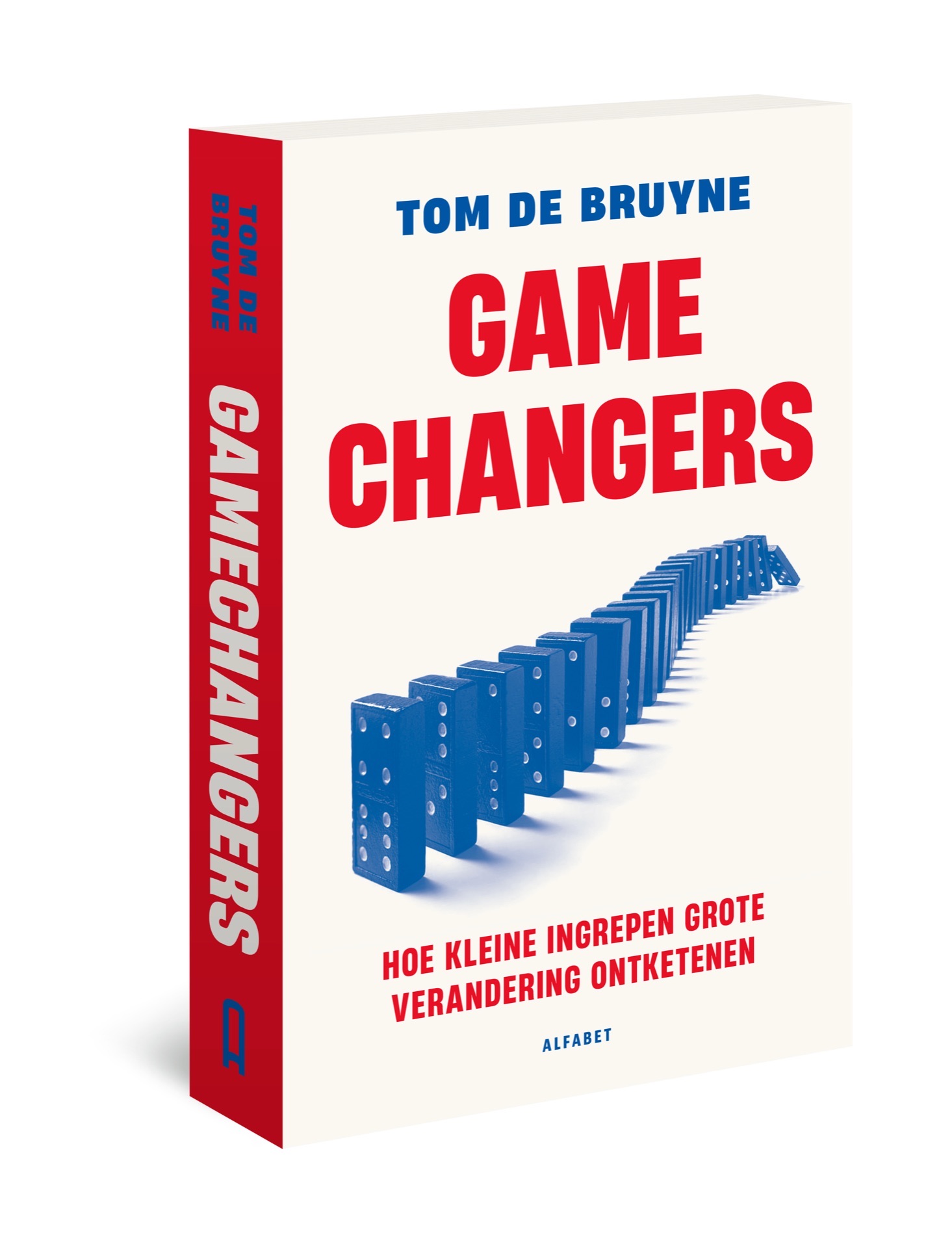
"Change the rules of the game, and the roles change by themselves. Change the roles, and the behaviour follows. You don't need to fix people. You fix the context."
— Tom de Bruyne, Gamechangers
Every behaviour in your organisation is maintained by two opposing forces: attraction forces that stimulate desired behaviour, and resistance forces that block it. Most change programmes focus only on attraction — pushing harder. SUE focuses on weakening resistance.
The forces that keep current behaviour in place: convenience, habit, social norms, fear of the unknown. Not rational, but powerful.
The forces that stimulate new behaviour: benefit, reward, status, autonomy. Important, but not enough without removing resistance.
The most effective intervention is not pushing harder, but removing barriers. Make the undesired behaviour harder. Make the desired behaviour the path of least resistance.
Only after the resistance has been weakened do you strengthen the attraction. Make the new behaviour visible, socially attractive and immediately rewarding.
Designing culture change is not a soft stance. It is built on decades of behavioural research.
70% of all culture change programmes fail. Not due to lack of commitment, but due to wrong thinking about behaviour. The solution is sought in communication and buy-in, while the real lever is in context design.
Ap Dijksterhuis (Radboud University) calculated that 96% of our daily behaviour is automatic. Presentations and town halls only reach the 4% of conscious decisions. The rest is determined by context and habit.
Lewin's Force Field Analysis shows: removing resistance is up to eight times more effective than pushing harder. Yet most change programmes focus on communication (pushing) rather than removing barriers.
Replace the annual culture survey with a 'rules of the game audit': which unwritten rules determine how people behave? Make them visible, and design better rules.
Whether you want to learn the method yourself, transform your team, or pursue organisation-wide culture change: there is a path that fits.
For change managers, HR professionals and leaders
A full-day intensive training where you learn how to use Force Field Analysis to map the forces that keep behaviour in place. You go home with a concrete intervention plan for your own change challenge.
For: Change managers, HR professionals, leaders, project managers
For management teams that want to stop talking and start designing
"We had already been through three culture programmes. This was the first time we actually changed behaviour. The difference: we started with the context, not the people."
VP HR, international technology companyA five-month leadership programme where your management team learns to design culture change with Behavioural Design. From diagnosis to intervention, with monthly coaching.
For: Management teams of 8 to 16 people, directors, senior leadership
For HR directors and board members seeking lasting change
A multi-month programme where SUE acts as your Behavioural Design partner to design and guide the culture change. From diagnosis and rules-of-the-game audit to intervention programme and embedded change.
For: Organisations of 200+ employees, HR directors, board members
In Gamechangers, Tom de Bruyne describes how Behavioural Design is the key to lasting change in organisations. How to understand the forces that keep behaviour in place, and how to design the context that makes desired behaviour the obvious choice.
Discover the book →Articles on behavioural design, change management and how to design culture instead of managing it.
70% of change programmes fail. The cause: we try to convince people instead of designing the context.
Building buy-in does not start with communication, but with understanding the forces that keep current behaviour in place.
Resistance is not an obstacle. It is information. Learn how to redirect resistance by designing the context.
70% of culture change programmes fail. The main reason: they focus on mindsets and values, but not on concrete behaviour. Culture is not an abstract entity. Culture is the sum of all the behaviour that takes place every day. If you want to change the culture, you need to change the behaviour. And you change behaviour by designing the context, not by convincing people.
Culture change is the goal. Behaviour change is the method. Culture does not exist separately from behaviour — it is behaviour. How people interact, make decisions, share information. SUE designs the context and rules of the game that make desired behaviour the obvious choice. The culture changes as a result.
Traditional change management focuses on communication, training and buy-in. SUE looks at the forces that keep behaviour in place: what makes the current behaviour logical? Through Force Field Analysis we identify the resistance forces and the attraction forces, and design interventions that weaken resistance and strengthen desired behaviour.
With a Deep Dive training, your team starts working on concrete interventions that same day. With a Learning Journey, we typically see measurable shifts in behaviour after 4 to 8 weeks. Culture change is not a project with an end date — it is an ongoing design process. But the first interventions deliver visible results quickly.
We work with organisations across all sectors: from financial services and government to healthcare, technology and retail. Culture change is a behavioural challenge, and behaviour is universal. Our method adapts to your context, not the other way around.
Fill in the form and we will get in touch within 2 working days for a no-obligation conversation.
Prefer direct contact?