You learn about Kahneman, about nudging, about the Influence Framework. Back at work on Monday, nothing changes, because knowledge is not the same as a skill. A course that actually sticks teaches you to diagnose behaviour, design the context, and measure the result, on your own or with your team.
"We did a training. Two weeks later everyone was back to doing the same thing."
10,000+ professionals trained, including people from
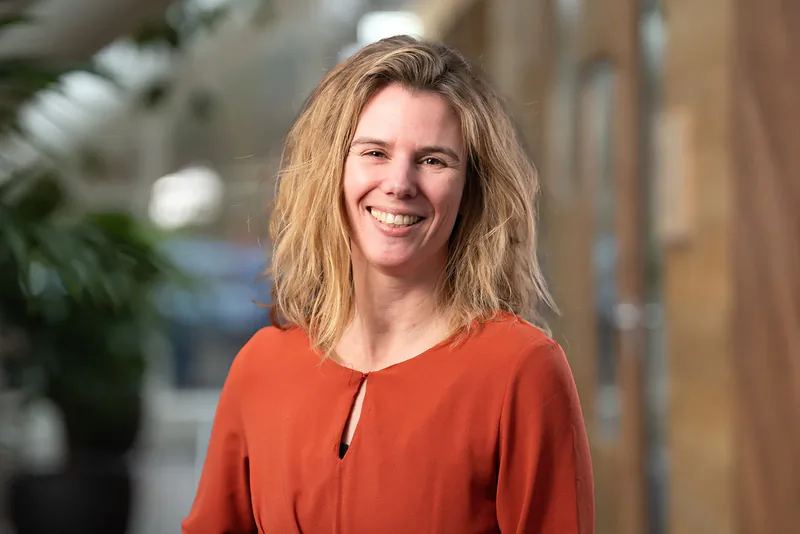
Astrid Groenewegen wrote an article about it: informing doesn't work. You can tell someone everything about bias and motivation, and their behaviour stays the same. That goes for your customer, your colleague, and for you after a course that stops at theory.
Most courses assume the information-deficit model: if people just understand it, they will change. That model is wrong. Knowing and doing run on two different systems in your brain.
That comes down to plain human nature: in the moment, the old habit beats the good intention you formed two weeks earlier in the training room.
You return to the same meetings, the same defaults, the same colleagues showing the old behaviour. Without an adjusted context, that environment beats your new insight.
A course that starts with interventions instead of asking why the behaviour is the way it is now usually solves the wrong problem.
Until you practise with your own challenge, the method stays abstract. You learn to apply it by doing, not by watching.
A course without an experiment ends with a feeling, not proof. You only know an intervention works once you test it.
Most courses only address the conscious, rational part of the brain. Behaviour change mostly lives on autopilot.
A behaviour change course teaches you how to diagnose behaviour, how to design the context that makes new behaviour more likely, and how to prove with an experiment that the intervention works. You can apply that method to any behavioural problem, from your own habits to the behaviour of an entire team, in place of a list of models to memorise.
10,000+ professionals took a SUE course. These three have one thing in common: they applied it straight away.
After 7,500 working days, I learned how you could influence behaviour in just two days. Afterwards, you can initiate change where you have never previously considered to start a change.

An educational training that provides easy tools for behavioural change.

A method that helps you to better identify needs from your daily practical examples and to really make a difference through small experiments.
The Fundamentals Course is our most popular course: the full Behavioural Design method, directly applied to your own challenge. Live in Amsterdam or online at your own pace.
Want to go deeper, or start with your team instead? See three other ways to start ↓
From a focused training in change behaviour to an in-company programme for your whole team.
Looking for an organisation-wide programme? See Learning Journeys → · or read more about Behavioural Design for change managers →
Most behavioural science knowledge sits locked away in academic papers. SUE built the Influence Framework, a practical roadmap any professional can apply without a scientific background.
“ SUE Behavioural Design was a genuine experience that changed how I look at behaviour. They take you through challenging topics in a very pragmatic way. I think the Influence Framework will solve many problems in the world. It's more than just a method, it's a fundamentally different way of thinking.
In-depth articles on the behavioural science behind change, written from SUE's own practice.
Everything you need to know about how behaviour change works, and how to design it instead of hoping it happens.
Read article →Astrid Groenewegen explains why transferring knowledge rarely leads to different behaviour, and what does work.
Read article →Two inspiring days, full of insights and good intentions. Back at the office, nothing changes. Tom de Bruyne explains why.
Read article →What an in-company programme needs to include to actually change behaviour, not just inspire it.
Read article →The method behind every SUE course: how you map the forces that drive behaviour and design targeted interventions.
Read article →The discipline behind every SUE course: making behavioural science applicable to real challenges.
Read article →A behaviour change course teaches you how to diagnose behaviour, how to design the context that makes new behaviour more likely, and how to prove with an experiment that the intervention works. It is a method you can apply to any behavioural problem, from your own habits to the behaviour of an entire team, rather than a list of models to memorise.
In practice the terms overlap. At SUE, a course is usually short and focused on one topic, a training runs for one to several days and is hands-on, and a programme such as the Fundamentals Course or Advanced Course builds a complete method across multiple sessions. All three teach you to make behavioural science applicable, the difference is depth and time investment.
Yes. Alongside the individual Fundamentals and Advanced Course, we offer in-company programmes: the one-day Masterclass Change Management from €7,990, and the Behavioural Design Accelerator, a three-month programme for teams who want to crack a concrete challenge.
That depends on the format. The Fundamentals Course starts from €1,190 online or €1,490 live in Amsterdam. The Leading Change and Transformation training starts from €690, online or as an in-company Deep Dive. For teams, an in-company Masterclass starts from €7,990. In a no-obligation conversation we look at what fits your situation.
Yes, participants in the Fundamentals and Advanced Course receive a certificate. SUE Behavioural Design Academy is EQAC-certified, the international quality standard for training institutes.
No. Coaching and therapy focus on the individual and their personal development. A behaviour change course at SUE is behavioural science applied to a problem: how you design the context, the defaults and the social norms so that desired behaviour becomes the path of least resistance, for yourself, in a team, or with customers.
From knowledge about behaviour to behaviour change that sticks. The Behavioural Design Method gives you the framework to design it.