Theme Theory of Change
Behavioural Design for theory of change

Your theory of change explains why the intervention should work. It rarely explains what else it changes.

Most logic models stop at the first-order outcome: if we do X, Y happens. SUE trains policy, programme and impact teams to add the behavioural layer underneath the diagram, and to trace what an intervention triggers elsewhere before it goes live.

See training options → Individual or with your programme team
10,000+
trained
9.3/10
rating
EQAC
certified
€1,190
starting from
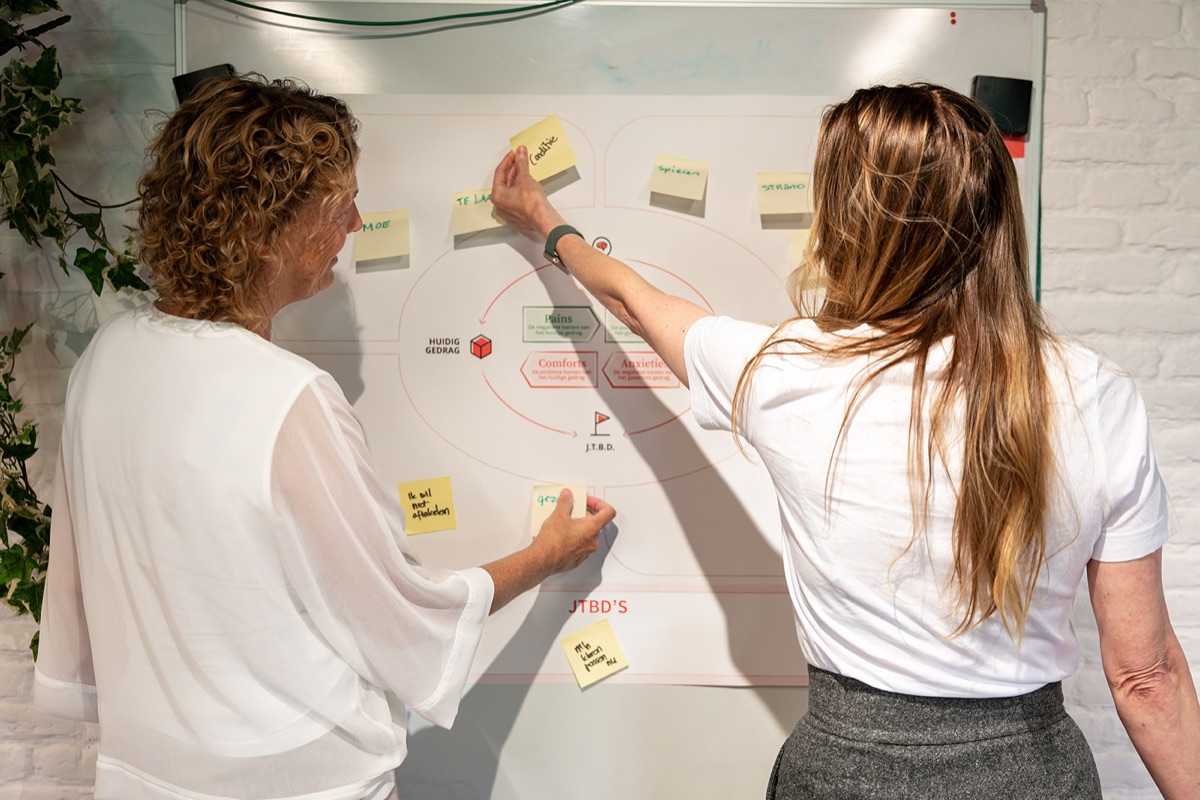
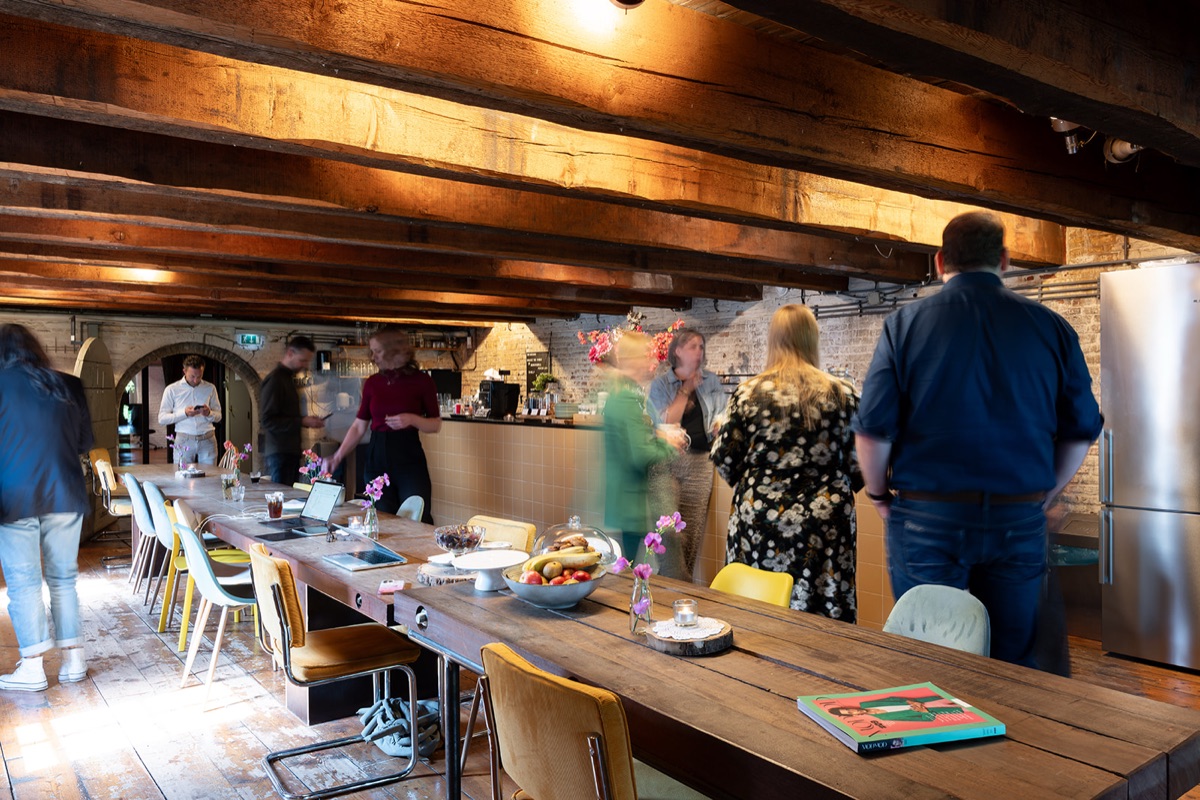
Programme team tracing second order effects during the Behavioural Design training at SUE Amsterdam
Familiar to programme teams

"The logic model looked perfect on the slide. It never played out that way."
10,000+ professionals trained, including people from

ING Heineken KPN ANWB Randstad Achmea Eneco Centraal Beheer ING Heineken KPN ANWB Randstad Achmea Eneco Centraal Beheer
The forces a logic model doesn't show

Seven forces working against your theory of change

Some are documented by the Netherlands Scientific Council for Government Policy, others by Kahneman and Lipsky. They apply to the people your intervention targets and to the person who delivers it on the ground. None of them show up on a logic model diagram, and every one of them is designable.

01 - The first-order trap

The diagram stops one step too early

Most theory of change diagrams map the intended outcome and stop there. They rarely model what else moves: which behaviour shifts elsewhere as a reaction to the intervention.

02 - The incentive assumption

People rarely act on the stated incentive

A logic model assumes people weigh the intervention and choose accordingly. Most behaviour runs on autopilot, habit and social proof, not on a rational cost-benefit calculation.

03 - Capacity to act

Knowing is not yet doing

The Netherlands' WRR advisory council showed it in 2017: a theory of change assumes people who can plan, persist and resist temptation. For large groups, especially under stress, that's a heavier ask than the diagram suggests.

04 - Street-level delivery

The theory dies at the point of delivery

As Michael Lipsky described in 1980: the caseworker with limited time and wide discretion decides what the intervention means in practice, not the diagram.

05 - Social norms

People do what they see others do

Whatever looks like the norm in the community or the sector becomes the norm. An intervention that ignores it usually loses to it.

06 - Defaults

The form decides the behaviour

Not the stated theory, but the default option, the enrolment process and the number of steps decide what most people actually do.

07 - System 1

96% of behaviour is automatic

Most theories of change speak to the conscious, deliberate mind. But behaviour lives on autopilot. Arguments never reach that layer.

Read the full article: why behavioural interventions fail → Behavioural Design for government →
Behavioural Design is the missing layer.

Your theory of change is a hypothesis. Every intervention reaches further than the box on the diagram.

A theory of change maps how and why an intervention is expected to lead to a specific outcome. Most theories of change stop at that first arrow: if we do X, Y happens. But an intervention doesn't operate in isolation. It changes incentives, habits and norms elsewhere in the system too. In Gamechangers, Tom de Bruyne describes how small, targeted interventions trigger large systemic change, and why you have to think through what an intervention causes elsewhere before you act on it. That's exactly the layer most theory of change work leaves out.

1
Diagnose the behaviour, not just the outcome. You map which forces keep the current behaviour in place, so your theory of change is built on how people actually decide, not how the diagram assumes they decide.
2
Design the intervention. Through the SUE Influence Framework, you design an intervention that makes the intended behaviour the easiest choice, not just the logical one.
3
Predict the second and third order. You trace what new behaviour your intervention provokes, and where in the system it resurfaces, before you act on your theory of change.
Read more about the Behavioural Design Method →
From diagram to effect

Four stages for a theory of change that holds up

A standard theory of change stops at the causal chain and an end-of-programme evaluation. We add two sharp steps: designing the behaviour itself, and thinking through what the intervention causes elsewhere before it launches. Skip one of the four steps, and the theory stays a diagram that doesn't survive contact with reality.

1
Diagnose: which behaviour needs to change? Start with what the target group actually does, not with the assumption written into the logic model. Which behaviour needs to shift, and which capacity, norms and friction hold the current behaviour in place?
2
Design: make the intended behaviour the easiest choice. You design the defaults, the enrolment process and the social norm so the intended behaviour costs less effort than the current one, rather than relying on the stated incentive to do the work.
3
Predict: trace it through to the second and third order. This is the step most theory of change work skips. What new behaviour does your intervention provoke elsewhere? Does the target group shift to a different channel, a different provider, a different part of the system? Map it in advance and the funder's next question won't catch you off guard.
4
Evaluate: measure behaviour, not activity delivered. This is where evaluations often fall short. Checking whether the activities were delivered as planned measures nothing about the actual outcome. Pick a behavioural indicator upfront, set a baseline, and check after a few months whether behaviour actually shifted.
See how SUE approaches this with your programme team →
What programme and policy professionals say

From The Hague to Amsterdam: they pressure-test their logic differently afterwards.

Policy, programme and impact professionals among our 10,000+ alumni have one thing in common.

Inspiring and recognisable. Good to combine with service design projects. I want to use this knowledge to improve the service for civilians in The Hague.

Anita Korevaar
Anita Korevaar
Advisor Services - Municipality of The Hague
★★★★★

Very nice and directly applicable training! I would like to share what I have learned with my colleagues and apply it directly in my work.

Heike Faber
Heike Faber
Municipality of Amsterdam
★★★★★

A fun, interactive and easy way to understand complex human behaviour and decision making. For everyone who needs to pitch an idea or implement process or policy.

Chelsea Outshoven
Chelsea Outshoven
People & Organization Development Consultant - Stork
★★★★★
The best first step

Learn to build a theory of change that survives contact with reality.

The Fundamentals Course teaches you the complete Behavioural Design Method: from behavioural diagnosis to intervention design. Exactly the layer most theory of change training leaves out. Self-paced online, or as a two-day live course.

Fundamentals Course Behavioural Design for theory of change professionals
Built for programme teams
9.3/10
rating
EQAC
certified
2 days
live option
SUE Academy Fundamentals Course

The complete Behavioural Design Method

You learn why the stated incentive rarely drives behaviour on its own, how to build a behavioural diagnosis, and how to design an intervention through the SUE Influence Framework, including tracing its effects before you roll anything out.

Two ways to take it
Online, self-paced, individual, on your own schedule Live, two days, in-person in Amsterdam
See the Fundamentals Course → €1,190 See start dates

Want to pressure-test your organisation's theory of change together? See the in-company formats ↓

Theory of change for teams and organisations

Pressure-test your theory of change with the whole team

Three in-company formats, depending on how deep you want to go and how long you want to build. Always applied to the programme or policy your own organisation runs.

Behavioural Design Masterclass programme team
1 day

Behavioural Design Masterclass

An intensive day where your team applies the method directly to your organisation's own theory of change. From behavioural diagnosis to first intervention designs.

  • In-company, at your location or in Amsterdam
  • Max 16 participants
  • €7,990 excl. VAT
More on the Masterclass →
Behavioural Design Sprint team training programme team
Most popular choice
2 training days + interviews

Behavioural Design Sprint

Two intensive training days with interviews and prototype tests in between. Your team learns the method while applying it to a real programme or policy challenge from your own organisation.

  • Interviews between sessions included
  • Up to 8 or up to 20 participants
  • €11,900 (up to 8) or €17,900 (up to 20) excl. VAT
More on the Sprint →
Behavioural Design Learning Journey programme team
End-to-end programme

Learning Journey

An organisation-wide programme from start to finish, facilitated by a senior SUE facilitator. For organisations that want to embed behavioural science structurally into how they build and test a theory of change.

  • Interviews, prototypes and effect measurement included
  • Senior SUE facilitator throughout the programme
  • Custom, price on request
See Learning Journeys →
Why the SUE Behavioural Design Method

Behavioural science made applicable for people who build a theory of change.

Most behavioural science knowledge sits locked in academic papers and advisory reports. SUE built the Influence Framework, a practical step-by-step approach any policy or programme professional can apply without a scientific background.

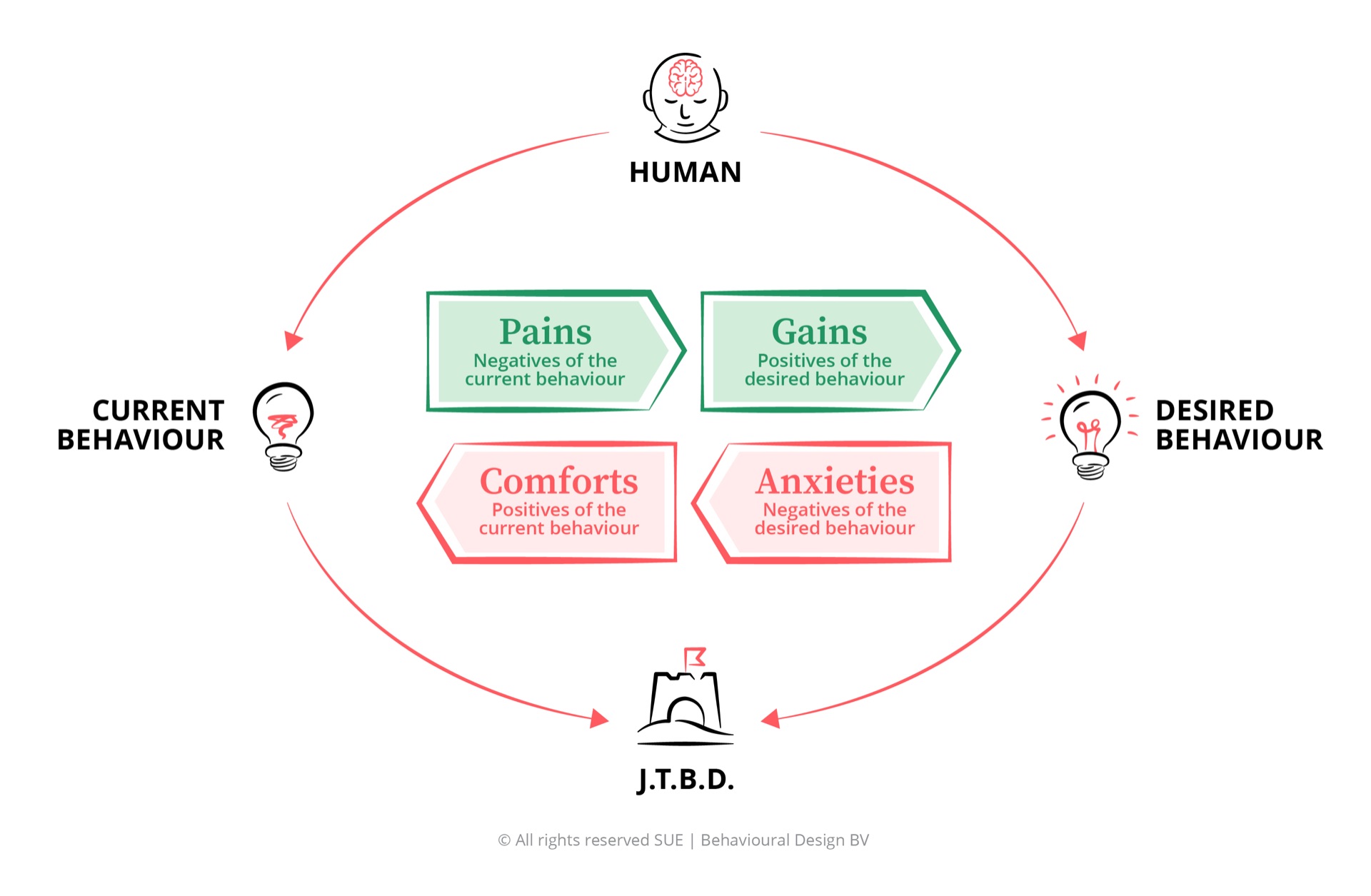
SUE Influence Framework: the forces that shape behaviour and a theory of change
No academic theory, you work on your own theory of change during the training and leave with an actual intervention design
Built on Kahneman, Cialdini and Thaler, scientifically grounded but accessible for practitioners
A proprietary method, the Influence Framework isn't taught anywhere else, and is described in the #1 bestselling management book Gamechangers
16 years of experience, from municipalities and ministries to NGOs and foundations: the method is proven on the largest policy and programme challenges

SUE Behavioural Design was a real experience that changed how I look at behaviour. They walk you through challenging topics in a very pragmatic way. I think the Influence Framework will solve a lot of problems in the world. It's more than a method, it's a fundamentally different way of thinking.

Eline Grouwels
Eline Grouwels
Founding partner - Umital
★★★★★
Springest
9.3/10
★★★★★
Google Reviews
4.8/5
★★★★★
certified
EQAC certified
Trusted by
Municipality of The Hague Municipality of Amsterdam Stork Randstad
Further reading

Theory of change and behavioural science explained

In-depth articles on the behavioural science behind policy, programme design and government communication, written from SUE's practice.

See all articles on nudging and behavioural policy →
Frequently asked questions

A few more things

A theory of change is a diagram or narrative that maps how and why an intervention is expected to lead to a specific outcome. It sets out the assumptions, the intended activities, and the causal chain that connects them to the intended result.

A logic model lists inputs, activities, outputs and outcomes in a straightforward sequence. A theory of change goes further and explains the underlying assumptions: why the activity is expected to cause the outcome, and under which conditions. Most logic models and most theories of change both stop at the first-order effect, and rarely map what else the intervention changes.

No, not as a standalone facilitation service. SUE adds the layer that most theory of change processes skip: diagnosing the actual behaviour behind the intended outcome, and predicting the second and third order effects before the intervention is rolled out. If your organisation already has a theory of change, SUE's training helps you pressure-test and strengthen it.

The Fundamentals Course starts from €1,190 online or €1,490 as a two-day live course. For teams, SUE designs an in-company Masterclass from €7,990, a Sprint from €11,900, or a custom Learning Journey.

Policy officers, programme managers, impact and evaluation professionals, and anyone at a government body, foundation or NGO who builds or relies on a theory of change. No prior knowledge of behavioural science is required to start.

A theory of change usually assumes people act on the stated incentive: if we inform them, they will choose differently. In practice, most behaviour runs on automatic habits, social norms and defaults, not on stated incentives. Without a behavioural layer, a theory of change explains the logic on paper, but not what actually happens.

Ready to start?

A theory of change that survives contact with reality is the one that was built to.

From the diagram on the slide to the behaviour in the field. The Behavioural Design Method gives you the framework to design it, and to predict what it triggers.

See the Fundamentals Course → Learning Journey for your team →