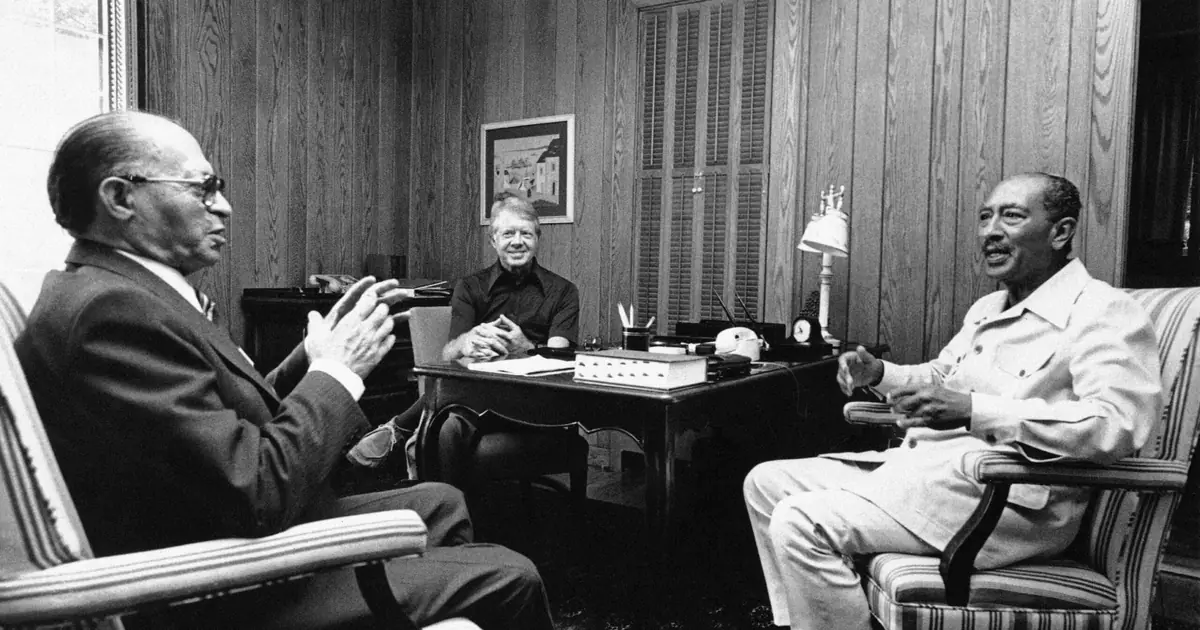
On 17 September 1978, Sadat and Begin signed the Camp David Accords. The negotiations had gone on for years. They kept hitting the same wall: the Sinai Peninsula.
Egypt wanted the territory back. Israel wanted to keep it. Both sides had solid reasons for their position. Neither was willing to move. Then an American negotiator asked a different question.
Not: "What do you want?" But: "What do you actually want, underneath the land?"
The answer changed everything.
Positions and interests: the distinction that unlocks everything
Egypt wanted the Sinai back, yes. But the deeper need was sovereignty. To be recognised as an independent state with authority over its own territory. That was the real Job to be Done behind the Egyptian position.
Israel wanted to keep the Sinai, yes. But the deeper need was security. A buffer between its own territory and a potentially hostile neighbour. That was the Job to be Done behind the Israeli position.
Once those two interests were on the table, a solution became possible that nobody had considered. Egypt would get the Sinai back, but as a demilitarised zone. Both countries could tell their own people they had won. And they had: each on the thing that actually mattered to them.
This is what behavioural science calls positional thinking versus interest-based thinking. And it is exactly the pattern that explains deadlocked conflicts every day, in meeting rooms, management teams, project groups and budget negotiations.
You read about it. But what if you could apply it yourself to the deadlocked situations in your organisation?
In the Deep Dive: Creating Buy-in, you learn how to analyse the forces behind resistance and conflict, and how to redesign the context so people start moving. Live, in one day.


 EQAC
EQACCertified
Training
Jobs to be Done: the question behind the question
Jobs to be Done is a thinking framework that originally came from product innovation. The core idea: people don't buy products, they hire solutions for a problem they have. You don't buy a drill, you hire a hole in the wall.
Applied to conflict, it works exactly the same way. People don't take positions because they love their position. They take a position because the position does something for them. It protects an interest. It secures something they need.
The question that shifts stuck conversations is therefore not "why do you want this" but "what is this position doing for you?" Or, in classic JTBD terms: what are you hiring this stance for?
Ask that question about yourself. And ask it about the other person.
Three steps to breaking a deadlocked conflict
Camp David was a geopolitical conflict, but the pattern is universal. Here is how to apply it to an everyday situation.
Step 1: Name the positions, but don't stop there.
What does each party say they want? Write it down. These are the icebergs above the water. They are real, but they don't tell the whole story.
Step 2: Ask the JTBD question.
For each position: what is this position trying to protect or achieve? What need is behind it? Think in categories like safety, recognition, autonomy, fairness, control, connection. Sometimes you need to ask the question several times before you reach the real interest.
Step 3: Look for the solution at the level of interests, not positions.
Once the interests are clear, there is usually room that wasn't there at the positional level. Two parties who both want recognition don't have to hold the same position to get it. Two parties who both want security can satisfy that need in very different ways.
 Training for professionals
Why we so rarely do this
If the solution is so logical, why are meeting rooms full of people talking about positions for hours on end?
Two reasons.
The first is that positions feel safe. They are concrete, they are defensible, they give something to hold onto. Stating an interest feels exposed: you are revealing something about what you actually need, and that gives the other person power over you.
The second is that we have been conditioned to win rather than to solve. A meeting is about who gets their way, not about which interest deserves the most protection. That framing makes it rational to defend your position, even when doing so produces an outcome that is worse for everyone.
Behavioural science calls this the fixed-pie bias: the assumption that whatever the other person gains, you lose. That assumption is wrong in most conflicts. But it drives the behaviour anyway.
The question that shifts conversations
There is one question that works in almost every stuck conversation, either to yourself or out loud to the other person:
"What would need to change for you to be satisfied with this?"
It is a JTBD question in disguise. It invites the other person to move from position to interest, without it feeling like an interrogation. It creates space. And it produces information you would never have got otherwise.
Sadat and Begin needed that question to untangle ten years of stuck negotiations. In most organisations the conflicts are smaller, but the pattern is identical. The Sinai is a metaphor for every budget, every role, every project that two parties want to keep from each other.
The solution is almost never in the Sinai itself.
Frequently asked questions
Why do conflicts get stuck?
Conflicts get stuck because both sides focus on their position (what they say they want) rather than their interest (what they actually need). As long as the conversation stays at the level of positions, there is no way out. Once the underlying interests are visible, there is room for solutions neither side had considered.
What is the difference between a position and an interest?
A position is what someone says they want: "I want an apology" or "We won't share the budget." An interest is the deeper need behind that position: recognition, safety, autonomy, or fairness. Two parties can share the same underlying interests while their stated positions appear irreconcilable.
How do you apply Jobs to be Done thinking in a conflict?
Ask not "what do you want" but "what is this position doing for you?" Which deeper need is this stance protecting? Ask that question explicitly, including about your own position. Once both parties understand their real interests, you can look for solutions that serve both, even when the stated positions seemed incompatible.

1.5 Minutes on Influence
Every week I notice something: a meeting that locks up, a decision that makes no sense, a conversation that tips the wrong way. Always something that shows exactly how context drives behaviour. I write it down. Every Thursday morning it lands in your inbox. In 90 seconds.
Read by 10,000+ professionals · Free · Unsubscribe any time