Picture this. A candidate applies for a role at your organisation. The CV is impressive. McKinsey, an MBA from INSEAD, an unblemished track record at a company everyone’s heard of. The interview goes smoothly. The candidate is articulate, confident, funny at the right moments. Everyone in the room is enthusiastic. You hire them.
Six months later, performance is disappointing. Deadlines are missed. Working with the team is difficult. The quality of the work is mediocre. And nobody saw it coming. How is that possible? You hired such a strong candidate, didn’t you?
What you hired wasn’t the candidate as they actually are. You hired an image. An image formed entirely by one impressive feature: that CV.
This is the halo effect at work.
The halo effect is the tendency to form an overall favourable judgement of a person or brand based on one positive trait. That single positive impression colours how you assess everything else: competence, character, potential. At work, it undermines hiring, performance reviews and strategic procurement decisions in ways that are hard to see, precisely because they feel so convincing. More on the psychological mechanisms: the SUE Influence Framework explained.
What is the halo effect?
The term comes from American psychologist Edward Thorndike, who described the phenomenon in 1920 based on research into how military officers rated their soldiers.[1] Thorndike discovered something striking: when an officer rated a soldier highly on physical appearance, he also gave him higher scores on intelligence, loyalty and leadership potential. Traits that objectively have little to do with each other.
The mechanism is simple. Your brain dislikes inconsistency. When someone is impressive on one dimension, it feels uncomfortable to rate them low on everything else. So your brain fills in the blanks automatically. Positive onto positive. This is a classic System 1 process: lightning fast, automatic and entirely below the threshold of conscious judgement.
The reverse exists too. The horns effect is when one negative trait overshadows everything. But in the workplace, the halo effect is by far the more dangerous variant, because it combines with the tendency to confirm what we already think. We hire people on the basis of a halo, then seek out evidence that our impression was correct.
Nisbett and Wilson (1977) demonstrated the power of this effect in an elegant experiment.[2] Students rated a lecturer based on two video clips. Group A saw a warm, approachable teacher. Group B saw the same lecturer, but framed as cold and distant. Both groups were then asked to rate his accent, his appearance and his mannerisms. Group A found his accent charming. Group B found it irritating. Same accent. Completely different verdict. Everything they perceived was coloured by the first impression.
You don’t judge people for who they are. You judge them for the image one trait has created.
Three places where it does the most damage
The halo effect is not an abstract bias that only lives in laboratories. It surfaces in three concrete situations that every organisation recognises, and in each of them it costs you money, talent or strategic clarity.
Start with the meeting room. There’s a colleague who presents brilliantly. Smooth, confident, persuasive. Always a compelling story. Always buy-in. In meetings, their proposals get approved where others at the same table struggle to hold attention. But if you look critically at the quality of their ideas, something becomes apparent: they aren’t systematically better. They’re just better received.
The presentation skill has created a halo that colours how the content is judged. Their ideas feel sharper, more original, more thoroughly considered. Not because they are. But because your brain translates the impression of their presentation style into a verdict on their thinking. Organisations that let their decisions be driven by whoever pitches best rather than whoever has the strongest analysis pay a price for that.
Then the performance review. An employee delivers one spectacular project in February. A major client, a clean result, visible impact. In December the annual review takes place. The manager remembers February vividly. The months that followed were, honestly, mixed: deadlines missed, communication that could have been sharper, collaboration that felt strained. But February glitters. And that glitter colours the overall verdict.
The employee receives higher scores on competencies that have nothing to do with the February project: communication, teamwork, proactivity. The early success has created a halo that outshines the rest of the year. This is not a conscious judgement from a bad manager. It is an automatic process happening in every organisation, with real consequences for promotions, bonuses and talent development.
And then the procurement decision. An organisation needs a consultancy for a strategic project. Two candidates: a well-known international firm with a recognised name, and a smaller specialist firm that has exactly the expertise required. The large firm presents well. The name alone inspires confidence. They work for Shell and Barclays. That says something, doesn’t it?
The choice goes to the large firm. The project delivers less than hoped. In hindsight, the smaller firm had a far better track record on precisely this type of question. But the brand halo of the big name had already won the comparison before the substantive evaluation began. This is the halo effect in the context of branding and sales: brand prestige automatically translates into confidence in quality, even when that correlation is absent.
Why it is so hard to counter: an IF analysis
When you analyse the halo effect using the SUE Influence Framework, you immediately understand why awareness alone is never the solution. The forces keeping people in their current behaviour are fundamentally stronger than the forces pulling them toward different behaviour.
The Pains are real: poor hires, unfair performance ratings, missed strategic opportunities. But they are invisible at the moment the decision is made. You feel the pain months later, when the new employee underdelivers or the consultancy project fails to live up to its promise. By then, the link to the original halo bias is nearly impossible to trace.
The Gains of more objective assessment are also real: better people decisions, fairer evaluations, smarter procurement. But they are abstract and future-tense. They compete poorly against the immediate reward of an intuitive, confident judgement.
The Comforts are the real problem. Mental shortcuts feel efficient. If someone has worked at McKinsey, you don’t need to go deep to assess their competence: you borrow the judgement of an institution that has already filtered. That is cognitively comfortable. It costs less energy. And it feels reliable. The halo is a shortcut your brain is happy to take, precisely because it feels so convincing.
The Anxieties are present too. More rigorous assessment takes time and energy. It requires challenging a first impression that everyone in the room shares. Who dares to say that the impressive candidate with the glittering CV might not actually be the best choice? The social pressure to confirm the shared halo is considerable.
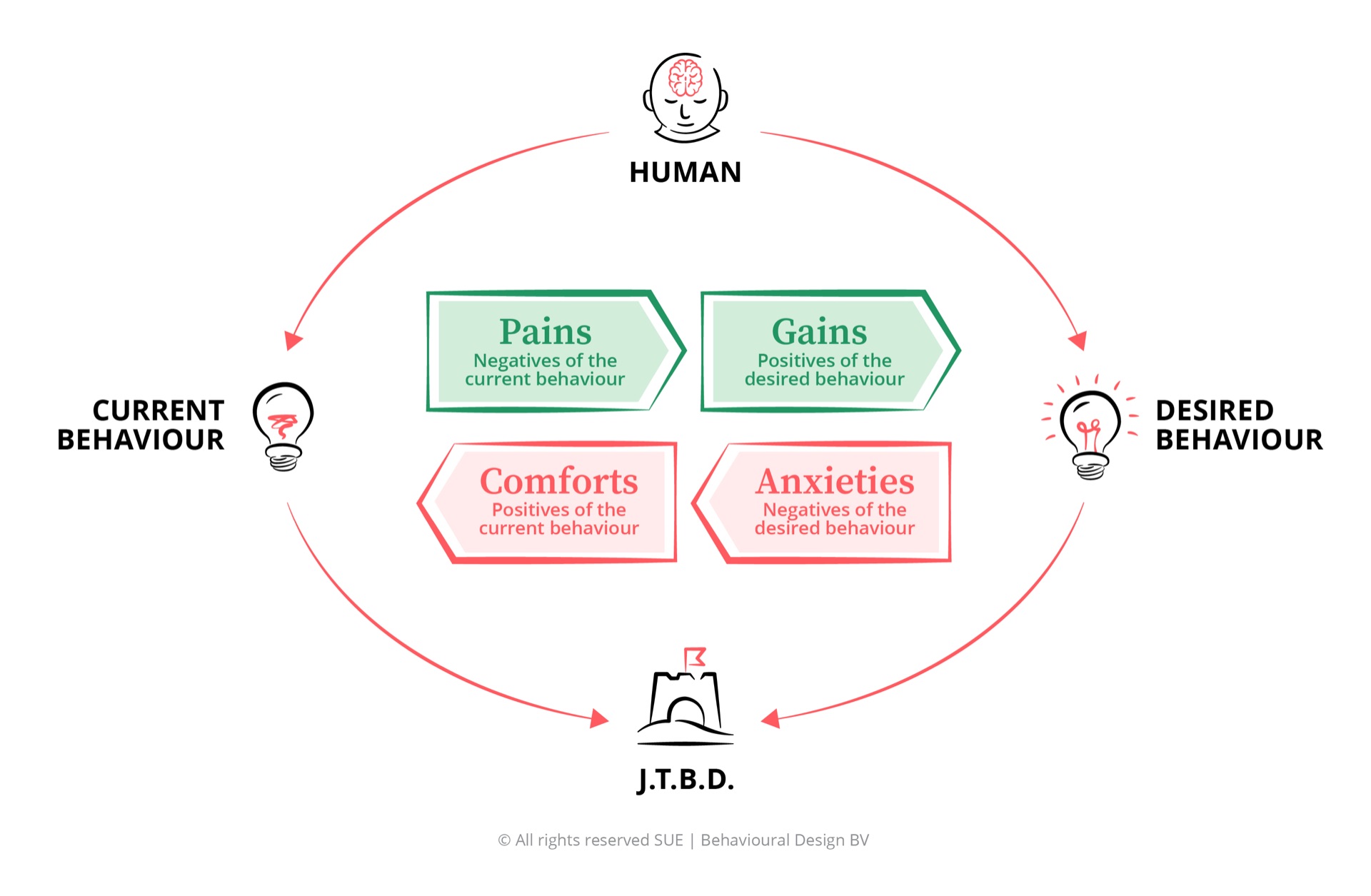
The Comforts dominate. Mental shortcuts feel efficient. And that is exactly the heart of the problem: the halo effect does not feel irrational to the person experiencing it. It feels like a sharp, well-grounded judgement. You cannot think your way out of it. Awareness does not help. The solution is redesigning the environment.
Five interventions that work structurally
Every intervention below works at the environmental level, not the level of individual mindset. That is intentional. Mindset interventions fail with biases that operate below conscious thought. Environmental interventions work, because they adjust the choice architecture before the bias has the chance to operate.
Blinded first-stage screening. Remove name, gender, university and employer from CVs before assessors see them. Orchestras that did this for auditions saw the proportion of female musicians rise dramatically. Companies like Unilever and HSBC have introduced it for initial CV selection and measured measurably less homogeneity in the resulting shortlists. The halo of a prestigious employer can only work if you see the name. If you don’t see the name, it cannot work.
Competency-by-competency scoring. Ask interviewers to score each competency separately against a pre-defined scale, immediately after the conversation and before any group discussion. This prevents one strong overall impression from pulling all other dimension ratings upward. The general impression is only formed after aggregating the individual scores, not before.
Sequential independent assessment. Have multiple interviewers or reviewers form and write down their verdict before speaking to each other. The moment the first person in a debrief shares their enthusiasm, it colours the perception of everyone who follows. Whoever speaks first defines the halo. By capturing judgements independently first, you limit this group effect.
Time-weighted performance measurement. Divide the review year into quarters and weight performance per period separately, rather than asking for an overall rating at year end. This structures memory and reduces the chance that one spectacular moment dominates the entire year. Pre-defined criteria per quarter strengthen the effect further.
Explicit counter-indicator question. Add a mandatory question to every assessment process, both hiring and performance reviews: “What would a sceptic say about this candidate or employee?” or “Give three concrete examples where the performance fell below expectation.” This forces assessors to actively seek information that contradicts the halo, rather than exclusively gathering evidence that confirms it.
How the halo effect connects to other biases
The halo effect rarely operates alone. It is related to and amplified by a cluster of other biases that converge in the workplace.
Confirmation bias is its most direct partner. The halo effect creates an initial impression; confirmation bias ensures that all subsequent information is filtered to confirm it. Together they form a closed system that actively blocks correction from the outside.
The Dunning-Kruger effect compounds the problem: people who are themselves limited in a domain cannot accurately assess the quality of others in that domain. They lean more heavily on the halo as a substitute for substantive judgement. The manager without a technical background is especially susceptible to the halo of an impressive technical CV.
Anchoring bias reinforces it: the first impression functions as an anchor against which all subsequent information is measured. The halo is essentially an anchor that is set too high, pulling all subsequent assessments upward.
And social proof deepens the group effect: when one person is enthusiastic about a candidate or brand, the rest of the group adopts that enthusiasm as evidence of quality. The halo becomes collective and therefore almost invisible to those experiencing it.
Frequently asked questions
What is the halo effect at work?
The halo effect is the tendency to form an overall favourable judgement of a person or brand based on one standout positive trait. At work, this means a candidate with an impressive CV, an employee who delivered a big win early in the year, or a consultant from a prestigious firm will automatically be rated higher on every other dimension, even without objective evidence to support that higher rating.
Who discovered the halo effect?
The halo effect was described in 1920 by American psychologist Edward Thorndike. He analysed how military officers rated their soldiers and found that a high rating on one positive trait, such as physical appearance, systematically carried over to ratings on entirely unrelated dimensions like intelligence, loyalty and leadership potential. The same bias Thorndike documented in army officers operates today in every hiring committee and every performance review.
How does the halo effect influence performance reviews?
An employee who delivers one spectacular project early in the year will on average receive higher scores across all competencies in their year-end review, including dimensions that have nothing to do with that project. Months of average or even disappointing performance are overshadowed by the shine of that early success. The solution is time-weighted performance measurement by quarter with pre-defined criteria set in advance.
What is the difference between the halo effect and confirmation bias?
The halo effect is a first-impression bias: one positive trait colours your overall picture before you look further. Confirmation bias is a search-and-filter bias: you actively seek information that confirms what you already believe. They reinforce each other at work. The halo effect creates the initial conviction; confirmation bias keeps it alive by systematically filtering out counter-evidence.
How do you prevent the halo effect in job interviews?
The most effective approach works at the process level, not the level of individual awareness. Use blinded CV screening that removes name, university and employer. Run structured interviews with pre-defined scoring criteria per competency. Have multiple independent interviewers score separately before debriefing together. And add an explicit counter-indicator question: “What would a sceptic say about this candidate?”
Conclusion
The halo effect is not trying to deceive you. It is an efficiency mechanism of a brain that must constantly make decisions with incomplete information. The problem is that in an organisational context it makes separating signal from noise genuinely difficult. The candidate who dazzles is not necessarily the candidate who performs. The employee who shone early in the year may have underdelivered for months afterwards. The brand with the famous name is not automatically the better choice.
The solution is never awareness alone. Awareness tells you the bias exists; it does not prevent it from colouring your judgement. The solution is structure. Processes designed so that the halo has less grip: blinded assessments, competency-by-competency scoring, sequential independent evaluation, time-weighted performance measurement and explicit counter-indicator questions.
This is what Behavioural Design is about. Not changing people. Changing the environment in which people decide.
Want to learn how to structurally improve decision-making in your organisation? In the Behavioural Design Fundamentals Course you learn to apply the Influence Framework and the SWAC Tool to diagnose and overcome cognitive biases. Rated 9.7/10 by more than 10,000 professionals from 45 countries. Read more in our book: The Art of Designing Behaviour.
PS
At SUE our mission is to use the superpower of behavioural psychology to help people make positive choices. The halo effect is perhaps the most seductive enemy of good decisions, precisely because it feels like a sharp judgement. You don’t notice it colouring your decision. You feel certainty, not bias. The first step is accepting that certainty is sometimes an illusion. The second step is to stop trying to be more objective, and start building processes that enforce objectivity.