There is a sentence that comes up again and again in behavioural design work, said with genuine frustration by clients who have tried everything and still can't get people to change: "But they said they wanted to!"
They wanted to eat better. They wanted to use the new system. They wanted to go to the gym. They said so, clearly, in the survey and in the focus group and to the manager's face. And then they didn't.
The gap between intention and action is not a mystery. It is not willpower. It is not apathy. In almost every case, it is an anxiety that never got addressed. Someone wanted to move, and something stopped them, and nobody in the organisation ever thought to ask what that something was.
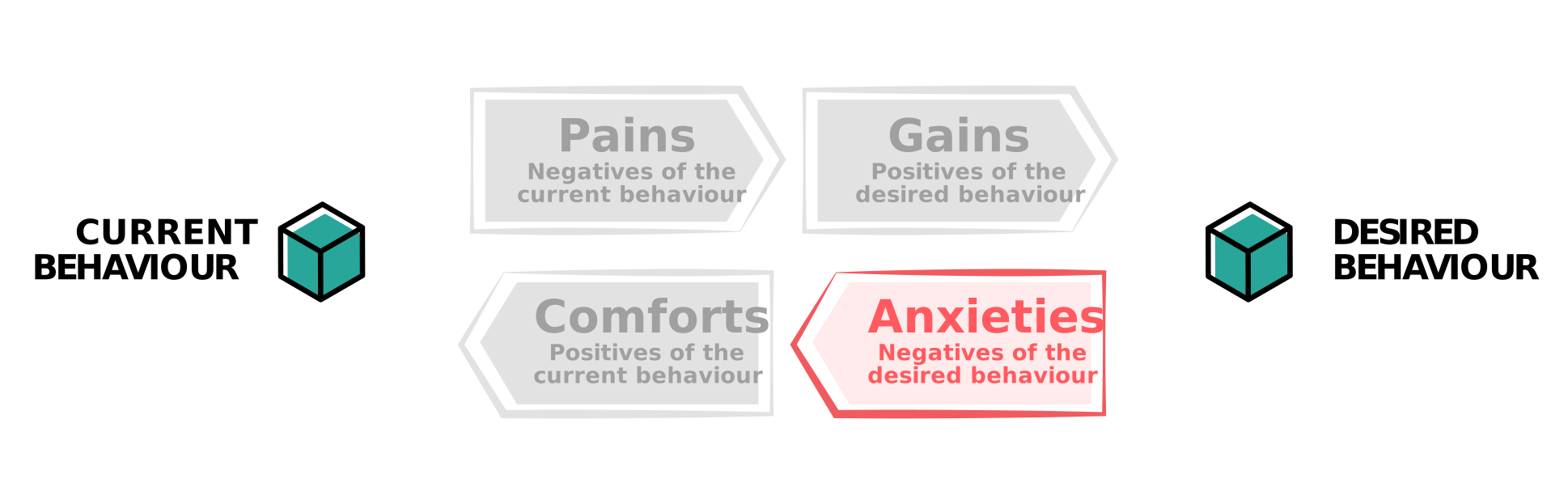
Anxieties are all the reasons someone does not want to shift to new behaviour, whether those reasons are objectively valid or not. They are often the most important factor in behaviour change, and the most frequently ignored. The good news: an anxiety is a design brief. When you know the block, you know where to build.
The problem with focusing only on gains
Walk through any marketing brief, any change management plan, any product launch strategy. Most of the energy goes into one place: making the gains more visible, more attractive, more immediate. Better messaging. Stronger benefits. Bigger rewards. More convincing proof points.
This is not wrong. Gains matter. If someone can't see what's in it for them, you've lost them. But gains only work when the real block is a lack of motivation. They do nothing when the real block is an anxiety.
Imagine someone who genuinely wants to go back to the gym. They've thought about it. They know it would make them feel better. The gym is nearby. They can afford it. And they haven't been in six months.
What does a gym typically do? Advertise the benefits more. Show before-and-after photos. Offer a free first month. Make the gains even more vivid and attractive.
None of that touches the actual problem. The actual problem is that the moment they imagine walking through the door, something tightens. A feeling of being watched. A sense of not belonging. The memory of not knowing how to use a machine and feeling foolish in front of people who clearly did. The gains are not the issue. The anxiety is the issue.
An anxiety is a lock. No matter how appealing the room beyond the door looks, if the door is locked, the room stays inaccessible.
More gains don't open locks. You need the right key. And finding the right key means first understanding the exact shape of the lock.
What anxieties actually are
In the SUE Influence Framework, anxieties sit in the restricting forces quadrant alongside comforts. They push people toward their current behaviour and away from the desired one. While gains and pains pull people toward change, anxieties and comforts pull them back toward what they already do.
The definition matters here. Anxieties are not just fears. They are everything that blocks someone from making the shift: difficulties, uncertainties, prejudgments, doubts, barriers, insecurities, excuses, and a lack of ability or confidence. They do not have to be objectively real to be behaviourally real.
This is the part that trips people up. An organisation will say: "But the concern isn't valid. We've shown them the data. The evidence is clear." And they're right about the evidence. But they're wrong about how behaviour works. If something feels true to the person, it functions as a truth. An irrational anxiety blocks behaviour just as effectively as a rational one.
"Knowing is something completely different than doing." That sentence sounds obvious, but it underpins almost every behaviour change failure. Information alone does not change behaviour. Resolving anxiety does.
The intention-action gap is almost never about willingness. It's about the moment when someone says "I will" and then encounters, in real life, the actual thing they were anxious about. The willingness doesn't carry them over it. The anxiety wins.
Where anxieties come from
Anxieties arrive from four directions. Understanding which direction they're coming from is the first step toward designing a response.
From within
This is the self-image question. "I don't feel confident about this." "This isn't really who I am." "I'm not the kind of person who does this kind of thing." Identity anxieties are among the most persistent, because they're not about external circumstances. They're about how someone sees themselves. Asking a person to adopt a behaviour that conflicts with their self-image is asking them to change who they are, not just what they do. That's a much bigger ask than it usually looks.
From others
Social risk is real risk. "What will people think of me?" "Will I look foolish?" "Will my colleagues judge me?" "What does this say about me?" These anxieties are particularly powerful in visible behaviours, anything done in public, in front of peers, or in a group context. They're also the ones most easily dismissed by designers who are thinking about the behaviour in the abstract rather than the person in the social context.
From the influencer
Trust is not automatic. "I'm not sure I can trust this organisation." "What's in it for them?" "Is this too good to be true?" "I've been let down by promises like this before." When the anxiety is about you, the institution or person asking for the behaviour change, no amount of benefit messaging helps. Trust has to come first, and trust is built through track record, through transparency, through consistency over time.
From the behaviour itself
"I don't know if I can do this." "I tried this before and it didn't work." "What if I get it wrong?" "It's harder than it looks." Anxieties about the behaviour itself are often grounded in past experience. Failed attempts leave traces. The person who has tried and failed carries that failure into their next attempt. If you don't acknowledge it and address it directly, you're asking them to trust that this time will be different without giving them any reason to believe that's true.
Why anxieties are actually good news for designers
Here is the reframe that changes how you approach behaviour change: an anxiety is a design brief.
When someone won't do something because they're anxious, they're telling you exactly where the problem is. They're handing you a specification. The anxiety defines the challenge, which means the anxiety also defines the solution.
Airbnb understood this early. In the beginning, bookings were slow. The product was there, the idea was clear, but people weren't using it. The founders found the anxiety: strangers were reluctant to stay in each other's homes because the apartments didn't look trustworthy. They flew to New York, went to hosts' apartments, and paid for professional photography. Bookings took off. One specific anxiety, one specific design response.
Uber resolved multiple anxieties, each with a different design lever. The anxiety about what the ride would cost: solved with upfront fixed pricing. The anxiety about driver reliability: solved with ratings and reviews. The anxiety about being stranded: solved with real-time tracking. The anxiety about safety: solved with driver identity verification and a digital paper trail. Each feature maps directly to a specific anxiety. That's not coincidence. That's anxiety-driven design.
Amazon's Snowmobile service is perhaps the most dramatic example. Enterprise customers needed to move enormous quantities of sensitive data to the cloud, but the anxiety about sending that data over the internet was real and entirely understandable. Amazon's response was literal: they drove an armoured truck to the customer's premises, loaded the data physically, and drove it to the data centre. The design response matched the anxiety exactly. The absurdity of the solution is precisely what made it powerful.
When you know why someone won't act, you know exactly where to focus. The anxiety is not the obstacle. It's the brief.
Most organisations treat anxiety as the enemy. Something to argue against, disprove, or overcome. The better approach is to treat it as information. The anxiety is telling you something true about the person's experience of the world. Honour that, and then design your way around it.
The gym case: anxieties in practice
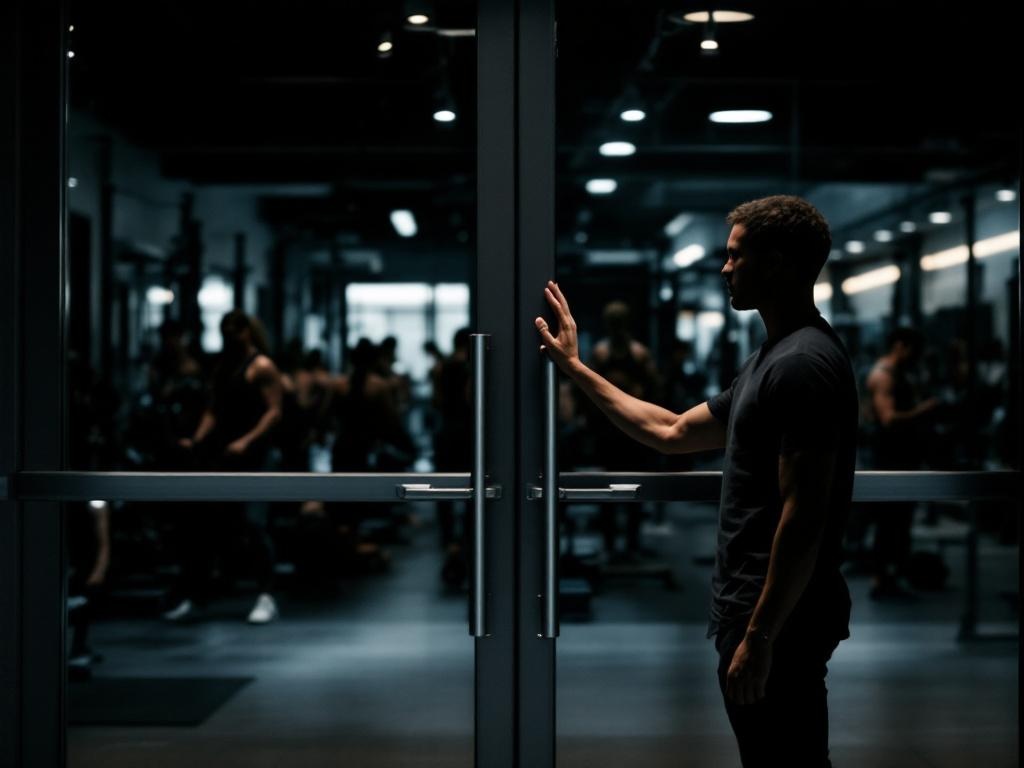
A gym is a perfect case study in how anxieties block behaviour that people genuinely want to adopt.
People say they want to go. They buy memberships. Then they don't use them. The gym's instinct is to advertise the results: the toned bodies, the transformation stories, the free first month. These are gains. And they don't address the actual block at all.
What do people feel when they imagine walking in? Often: intimidation. The visual presence of people who clearly know what they're doing is a social anxiety trigger. The machines with unclear names and confusing settings trigger the anxiety of looking incompetent. The mirrors, which gym designers think motivate people, trigger the anxiety of being evaluated by others while already feeling vulnerable.
Each of these has a specific design response.
Some gyms have removed mirrors from certain areas. Not all of them, but the areas most likely to be used by beginners. This directly addresses the social evaluation anxiety without removing the benefit for people who find them useful.
Renaming equipment helps more than it might seem. An "oblique machine" is intimidating if you don't know your obliques. A "side-torso strengthener" or, more cheekily, a "six-pack wonder" is approachable. The name is the first interaction with the machine. If it triggers the anxiety of incompetence, many people won't try it at all.
Beginner classes serve a function that goes beyond teaching technique. They create a social context where everyone is new and the anxiety of not knowing is shared. The isolation of individual anxiety dissolves in a group that's all in the same position.
None of these are complicated. They're all direct design responses to specific, nameable anxieties. The gym that resolves them isn't fighting against human psychology. It's working with it.
How to surface anxieties in your own work
The method is simpler than you might expect, but it requires asking different questions than the ones most research uses.
Standard research asks about future intentions. "Would you consider using this?" "How likely are you to try this?" "What would need to change for you to adopt this?" These questions get you stated preferences, which are useful but incomplete. People know what they're supposed to want. They'll tell you they'd try something if they find the idea appealing. That tells you nothing about what will actually happen at the moment of decision.
Better questions are backward-facing. "Have you ever tried something like this before?" "What happened?" "Why did you stop?" "What was the moment when you decided not to continue?" "What did you tell yourself at that point?" Past behaviour is much more honest than future intention, because it's already happened. The anxiety that caused someone to quit or avoid shows up more clearly in their account of what they actually did than in their account of what they might do.
Listen for the qualifications. "I'd probably try it, but..." "I like the idea, except..." "I might, if only..." Everything after the "but" is an anxiety. It's the person telling you exactly what's in the way. Most researchers code that as noise and move on. In behavioural design, it's the most important part of the sentence.
Once you have a clear picture of the anxieties, the design work becomes unusually straightforward. You're not guessing at what to fix. You're not running five simultaneous A/B tests hoping something improves. You have a specific list of specific blocks, and your job is to design a specific response to each one. That's a much more tractable problem than "make the behaviour more appealing in general."
Frequently asked questions
What are anxieties in behavioural design?
In behavioural design, anxieties are all the reasons someone does not want to shift to new behaviour, whether those reasons are objectively valid or not. They include fears, doubts, insecurities, excuses, past failures, social concerns, and a lack of confidence. In the SUE Influence Framework, anxieties sit in the restricting forces quadrant alongside comforts: they push people toward current behaviour and away from the desired one.
Why do anxieties matter more than gains in behaviour change?
Gains attract. Anxieties block. When someone is frozen by an anxiety, adding more gains does not unfreeze them. The anxiety is like a lock: no matter how appealing the room beyond the door looks, if the door is locked, the room is inaccessible. Most organisations spend nearly all their energy making the gains more visible and attractive, which is useful when gains are the problem. But when the real block is an anxiety, that effort is wasted. Finding and resolving the anxiety is the faster path to behaviour change.
What are the four sources of anxiety in behaviour change?
Anxieties come from four directions: from within (concerns about self-image and confidence), from others (social risk and fear of judgment), from the influencer (distrust of the organisation or person asking for the change), and from the behaviour itself (doubt about whether the change is achievable, especially after previous failed attempts). Each source requires a different design response.
How do you resolve anxieties in product or service design?
The first step is surfacing them accurately. Ask people about past failed attempts, not future intentions. "Why did you stop?" is more revealing than "Would you ever try this?" Once you know the specific anxiety, you can design a specific response. Airbnb resolved stranger-danger anxiety with professional photography. Uber resolved fare-shock anxiety with upfront pricing. Amazon resolved enterprise data-security anxiety by physically driving an armoured truck to customers' premises. Each anxiety has a design response. Finding the right key requires knowing the exact shape of the lock.