Best training formats for marketers learning nudging and cognitive biases
The three most effective training formats for marketers learning nudging and cognitive biases are: the two-day course The Art of Influence©, the single-topic Deep Dive, and in-company training with follow-up days. Each format serves a different goal, from broad foundational fluency to deep expertise on one campaign or a shared approach across an entire marketing team. More on Behavioural Design for Marketing →
Why marketing needs a dedicated training format for behavioural science
Most marketing courses teach positioning, channel strategy, and funnel analysis, but they don't explain why a customer with a clearly better deal still picks the more expensive option, why a pricing page with three tiers converts better than the same page with two, or why a 20% discount works one time and not the next. Cognitive biases drive these outcomes, and nudging gives you the systematic toolkit to design for them. Marketers who understand how the decoy effect, anchoring, and social proof work build campaigns that actually change buying behaviour, not campaigns that merely look good.
A dedicated training format for behavioural science matters because generic marketing courses rarely make the translation to buying behaviour. The most effective programmes are structured so you work on your own campaign throughout the training and leave with an intervention ready to test the following week. Behavioural Design is not a creative trick, it's a method, and the training format determines how quickly that method becomes a habit.
SUE Behavioural Design Academy has trained more than 10,000 professionals from 45+ countries in applying behavioural science to real marketing challenges, with an average course rating of 9.3. The formats below are drawn from that practice.
Format 1: the two-day course The Art of Influence©
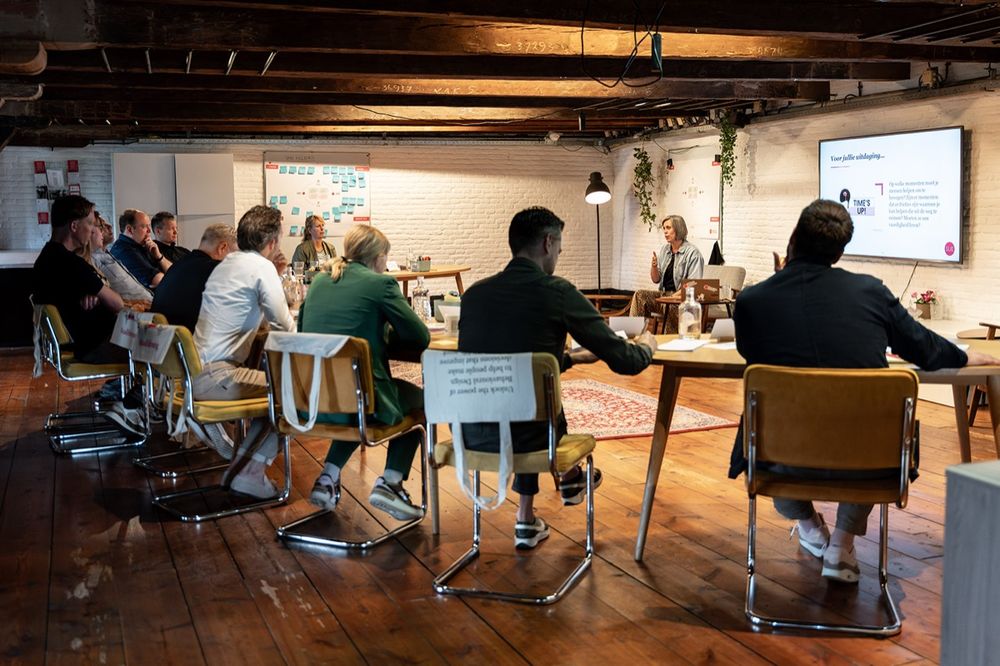
The Art of Influence© is the most efficient training format for marketers with no prior background in behavioural science. Over two days, you learn the cognitive biases that most often drive buying behaviour, including the decoy effect, anchoring, framing, and social proof, and apply them directly to a campaign you bring yourself. Groups are capped at 16 participants, which leaves room for discussion and cross-pollination between marketing, sales, and product management.
SUE's course The Art of Influence© follows this two-day format and runs as a live programme in Amsterdam (from €1,490 excl. VAT) or as 33 self-paced online lessons (from €1,190 excl. VAT). The course is EQAC-accredited, so costs are reimbursable through most development budgets. This format works best when the goal is broad foundational knowledge with an immediately applicable outcome. You leave with a concrete intervention for one campaign, ready to test on your next pricing page or product description.
Format 2: the single-topic Deep Dive
A Deep Dive is a one-day deep dive into a single cognitive bias or behavioural principle and its direct application to marketing. Rather than covering the full breadth of behavioural science, you build mastery on one theme, such as behaviour-driven marketing, persuasive writing, or behavioural economics, and leave with a toolkit you can use the next day.
SUE offers more than ten Deep Dive topics relevant to marketing, including Behaviour-Driven Marketing (for campaigns and pricing), Persuasive Communication (for product copy), and AI & Insights. Individual attendance starts at €690 excl. VAT. A Deep Dive can also run in-company, for groups of up to 16 participants. For marketers who already know the basics and want to go deep on one domain, a Deep Dive is the highest-return format: one day, one bias domain, one concrete outcome.
Format 3: in-company training with follow-up days
In-company training with follow-up days trains your marketing team together, using real campaigns as the learning material. It is spread over several sessions. Between the sessions participants apply what they learned, and on the follow-up days they come back with real data.
This format works well for marketing teams that collaborate with sales and product management, because a campaign meant to change buying behaviour is rarely designed by one person alone. SUE's in-company training is for groups of up to 16 participants and suits organisations that want to embed behavioural design as a shared marketing practice. The rhythm of sessions and follow-up days leaves room to run micro-experiments in between, such as a decoy option on a pricing page or a different ad framing, and discuss the results together.
The cognitive biases marketers encounter most
The cognitive biases most relevant to marketing are the decoy effect, anchoring, social proof, scarcity, and framing. They explain why a third, less attractive option lifts sales of another option, why the first number a customer sees colours the rest of the decision, and why "only 3 left in stock" outperforms a discount.
The decoy effect makes a third, deliberately less attractive option steer the choice between the other two, which explains why three pricing tiers tend to push buyers to the middle option more often than two. The decoy effect is one of the most widely applied principles in pricing design. Anchoring means the first number someone sees, such as a crossed-out old price, colours how they value everything after it. Social proof explains why "10,000 customers already did this" makes a purchase more likely than the same product description without that number. Scarcity explains why "only 3 left in stock" drives more purchases than a price cut on the same product. Framing determines whether a customer reads an offer as a gain or a risk, which is the difference between "save €50" and "don't lose €50" for the exact same deal.
How to choose the right training format
The right training format for a marketer learning nudging and cognitive biases depends on three factors: prior knowledge, available time, and whether the goal is individual skill-building or a shared approach across the marketing team.
For marketers with no prior knowledge, the two-day course The Art of Influence© provides the fastest route to foundational fluency and an immediately applicable outcome. For those who already know the basics and want to go deep on one domain, such as pricing or persuasive writing, a one-day Deep Dive delivers the highest concentration of applied knowledge per hour. For marketing teams that want a shared language with sales and product management, in-company training with follow-up days provides the cadence and group accountability that individual training can't replicate.
| Format | Duration | Best for | Typical investment |
|---|---|---|---|
| The Art of Influence© | 2 days | No prior knowledge, individual or small group | From €1,190 |
| Deep Dive | 1 day | Going deep on one campaign | From €690 |
| In-company training with follow-up days | Several sessions | Shared approach across the marketing team | Tailored, per group |
Frequently asked questions about training formats for marketers
What is the best training format for an individual marketer with no prior knowledge?
The two-day course The Art of Influence© is the most effective choice for marketers with no background in behavioural science. Over two days, it covers the cognitive biases that most often drive buying behaviour, and applies them to a real campaign. The Art of Influence© at SUE Behavioural Design Academy follows this format and is EQAC-accredited, meaning costs are reimbursable through most professional development budgets. It runs as a two-day live programme in Amsterdam (from €1,490 excl. VAT) or as 33 self-paced online lessons (from €1,190 excl. VAT), with a maximum of 16 participants per group.
How quickly can a marketer apply behavioural science after training?
Most marketers can apply behavioural design within days of completing The Art of Influence©. The course is structured so that participants work on a real campaign throughout the two days, leaving with a concrete intervention ready to test the following week, for example a decoy option on a pricing page or a different framing in product copy. Deeper application, such as redesigning a full funnel, typically develops over the first month after training as participants meet situations that match what they've learned.
Is there a recognised certification for behavioural science training for marketing?
Yes. SUE Behavioural Design Academy's courses are EQAC-accredited, the European quality standard for continuing professional education. EQAC accreditation means training costs are reimbursable through most marketing development budgets. Upon completing The Art of Influence© or Advanced course, participants receive a certificate of completion recognised across Europe. The Advanced course is a four-month expert track (from €3,990 excl. VAT) for marketers who want to specialise in behaviour-driven marketing.