Digital transformation fails because organisations invest in technology while neglecting the behavioural layer that determines whether people actually change how they work. The SUE | Influence Framework©, developed by SUE Behavioural Design and described in Astrid Groenewegen’s The Art of Designing Behaviour (2024), reveals that technology implementation is not behaviour change. Four psychological forces determine whether new digital tools become new habits: the Pains and Gains that drive adoption, and the Comforts and Anxieties that anchor people to existing digital habits. The blocking forces almost always win - unless the environment is deliberately redesigned.
The Numbers Behind the Failure
I’ve sat in enough digital transformation steering committees to recognise the pattern. The technology has been selected. The vendor has been chosen. The implementation timeline is ambitious but achievable. The business case is solid. And then - twelve, eighteen, twenty-four months later - the system is live and largely unused. People have found workarounds. The old spreadsheets are still circulating. The new platform exists but the old behaviour persists.
McKinsey puts the full-success rate of digital transformations at 16%. The waste is not in the technology selection or the project management. It is in the assumption that implementing a new system is the same as changing how people work. It is not. Not even close.
Astrid Groenewegen names this in The Art of Designing Behaviour (2024) with a phrase that has reshaped how we approach every transformation engagement at SUE: de missende laag - the missing layer. Every digital transformation that fails is missing the same layer. The layer that governs what people actually do when they sit down at their desk, open their laptop, and decide - automatically, below conscious awareness - which tool to use and which habit to follow.
Technology Is Not Behaviour Change
The digital transformation playbook typically goes like this: select technology, plan implementation, run change management communications, train users, go live, celebrate go-live, measure adoption, be disappointed by adoption numbers, run more communications, plateau.
At no point in this sequence does anyone ask: what are the specific psychological forces that will pull people back to their existing digital habits? What makes the new system feel more effortful than the old workaround? What social dynamics in the team reinforce staying with the familiar? What anxiety will people feel the first time they use the new platform in front of a client?
These questions are not soft. They are the questions that determine whether the €2 million ERP implementation translates into €2 million of value, or whether it produces a beautifully implemented system that nobody uses with confidence two years after go-live.
Technology changes what is available. Only behavioural design changes what people actually do.
The SUE | Influence Framework©: What Is Blocking Digital Change
Before designing any transformation intervention at SUE, we run an Influence Framework© diagnosis. We map the four forces for the specific transformation and audience. The findings are remarkably consistent across industries and geographies.
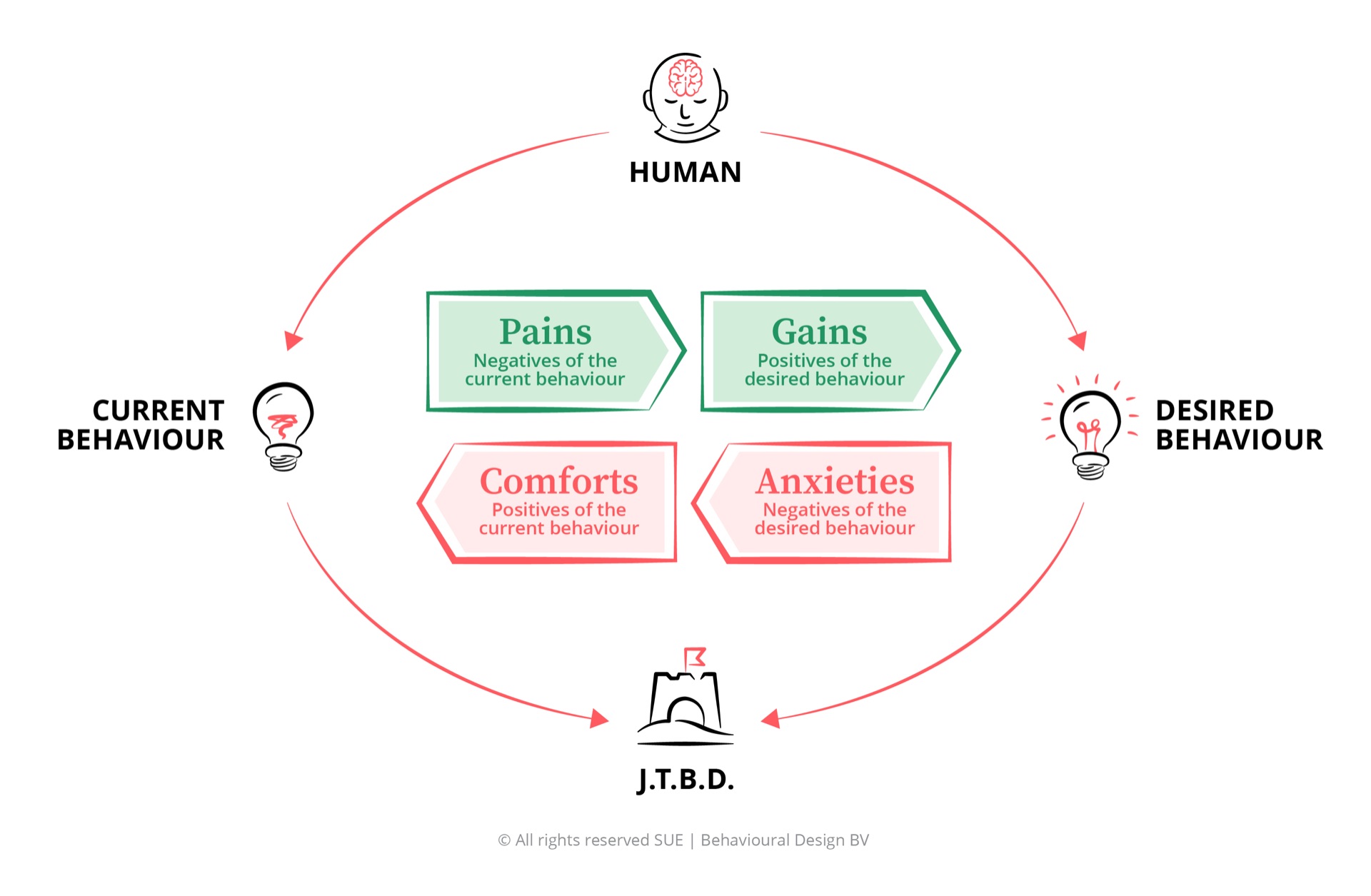
Why digital transformation stalls despite good technology
The driving forces for digital transformation are real but abstract. The blocking forces are immediate, embodied, and operating at System 1 speed. This is why technology implementation without behavioural design produces the 16% success rate McKinsey documents.
Current systems are genuinely painful: Fragmented data, manual processes, systems that don’t talk to each other. The inefficiency is visible and frustrating. People want it to change - in the abstract.
Competitive pressure: Competitors are moving. The board has made digital capability a strategic priority. The urgency is real and acknowledged. It just doesn’t translate into daily behaviour change without deliberate design.
Personal productivity frustration: Many people are wasting significant time on processes that should be automated. They know it. They still resist the new system - because the new system is unfamiliar, and familiar inefficiency is more comfortable than unfamiliar efficiency.
Real productivity gains - but future-oriented: The new system will save hours per week. Per month. Per year. This is a compelling gain - once it materialises. Before it materialises, it is a promise. And promises require sustained behaviour change before they become real.
Better decisions from better data: Integrated systems produce insights that fragmented ones cannot. This gain is real but requires the system to be used correctly and consistently - a chicken-and-egg problem that behavioural design must solve.
Being the team that made it work: Being known as early, effective adopters of new digital capability is professionally attractive. This motivates some people. Most people follow the social norm.
Existing digital habits are deeply automatic: The workaround spreadsheet, the familiar interface, the muscle memory of the old process - these require zero cognitive effort. The new system requires deliberate attention every single time, until the new habit forms. Most people never get to the point where the habit forms, because the early friction period is too long.
“This will be updated again in two years anyway”: Experienced employees have lived through multiple system changes. The strategic comfort is in not over-investing in any single new system - because another one is probably coming.
The workaround works well enough: The old spreadsheet is inefficient but reliable. It produces the output needed. The new system is more capable but currently produces uncertainty. Certainty beats capability in daily behaviour.
Competence anxiety in front of colleagues and clients: Being seen to struggle with the new system - in a client meeting, in a team presentation, in a management review - is an acute social risk. This anxiety is rarely mentioned in adoption surveys. It is always present in the actual behaviour.
Data migration and accuracy anxiety: Will my old data be there? Will the numbers match? What if the new system produces a different output than the old one? The fear of making consequential errors in unfamiliar environments is a powerful behavioural anchor.
Role anxiety: Some digital transformations implicitly threaten the value of current expertise. If the new system automates what I currently know how to do, what does that mean for my role? This anxiety operates below the surface of stated support for the transformation.
The key insight: Digital transformation budgets are heavily weighted towards technology selection and implementation, and lightly weighted towards the behavioural layer that determines whether the technology is actually used. The Influence Framework diagnosis consistently shows that blocking forces - particularly Comforts and Anxieties - are more powerful than driving forces in the daily behaviour of most employees. This is not because employees are resistant or uncommitted. It is because the environment has not been designed to make the new digital behaviour easier than the old one.
Three Scenarios That Define the 84% Failure Rate
Scenario 1: The CRM That Nobody Populated
A professional services firm implements a leading CRM platform after eighteen months of selection, implementation, and training. Go-live is celebrated with a leadership communication and a system demo. Eight months later, the CRM contains data for approximately 30% of the client portfolio. The rest of the intelligence still lives in personal notebooks, email threads, and the heads of individual relationship managers.
The problem was not the CRM. It was that populating the CRM added friction to the end of every client interaction, while providing no immediate benefit to the person doing the populating. The benefit accrued to the team and the organisation - future-oriented and abstract. The cost was immediate: five minutes at the end of every meeting, in the window when you most want to move to the next thing. The Comfort of skipping it was immediate. The Gain of doing it was distant. Distant always loses to immediate in daily behaviour.
Scenario 2: The Collaboration Platform That Became a Repository
A manufacturing company implements a modern collaboration platform to replace email as the primary communication tool. The intent is clear: reduce email overload, improve cross-functional visibility, speed up decision-making. Three years after implementation, email volume has not decreased. The new platform is used primarily for storing documents and occasionally for announcements. All actual collaboration still happens in email, WhatsApp, and hallway conversations.
The platform was well-designed. The issue was that it asked people to change a deeply embedded communication habit - email - without addressing the forces that made email so persistent. Email is reliable, universal, socially normative, and asynchronous in a way people have internalised over decades. The new platform required learning new social norms: when to use which channel, what etiquette applied, who would actually respond there. These are not small changes. They are System 1-level rewirings.
Scenario 3: The Data Platform That Produced Better Dashboards Nobody Trusted
A retail organisation invests significantly in a new data analytics platform, replacing fragmented Excel models with an integrated, real-time reporting system. The platform produces genuinely better data, faster, with more granularity. Six months after go-live, senior managers are still asking their finance teams for the “Excel numbers” before every meeting. The platform data and the Excel data occasionally differ - due to timing, methodology, and definitional differences. The managers trust what they know. They distrust what they don’t yet understand.
The data anxiety - “what if the new system says something different from what I’ve always seen?” - is a powerful Anxiety force that no communication plan addresses. When a senior manager presents a number in a board meeting and gets challenged, the instinct is to go back to the source they trust, not the source that is technically better.
Five Behavioural Interventions That Digital Transformation Roadmaps Miss
-
Run the Influence Framework Diagnosis Before the Technology Roadmap
Most transformation roadmaps are designed before anyone has systematically mapped the behavioural forces that will determine success. Running the Influence Framework diagnosis at the start - mapping the specific Pains, Gains, Comforts, and Anxieties for each key user group - changes the design of the transformation itself. It tells you which Anxieties need to be resolved before go-live, which Comforts need to be disrupted, and which social dynamics will either accelerate or stall adoption. This is a day of work that changes the design of an eighteen-month programme.
-
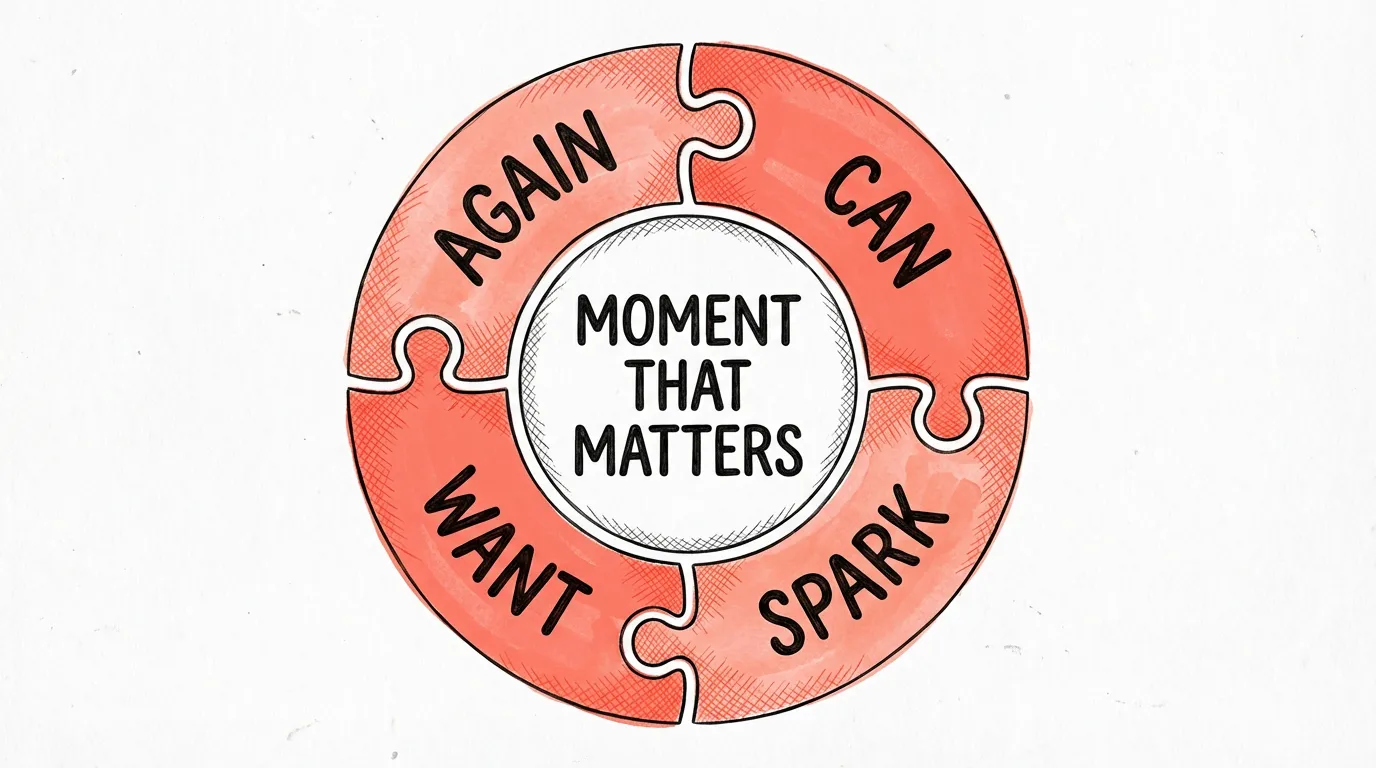
Design Behaviour Change Moments, Not Just Training Sessions
Training teaches capability. It does not trigger behaviour. The SPARK dimension of the SWAC Tool© asks: at which specific moment in the working day will the new digital behaviour be triggered? Design that moment deliberately. Change the default, modify the interface, create a structural prompt at the right time in the right context. The behaviour follows the trigger. The trigger is environmental, not motivational.
-
Address Competence Anxiety Before Go-Live
The anxiety about being seen to struggle with the new system is a more powerful blocker than most transformation leaders realise. Design a structured pre-go-live period where using the new system is the explicit norm, mistakes are expected and visible, and no output is consequential. Give people competence before the social stakes are real. This is the CAN dimension - not just “can they technically use the system?” but “do they feel competent enough to use it in front of the people who matter to them?”
-
Make the New Digital Norm Visible at the Team Level
Individual training and individual motivation are insufficient to overcome social anchoring. If the people around me are not using the new system confidently, not using it feels safe and appropriate. Make the new behaviour visible at the team level: managers demonstrating the new tool in meetings, a weekly “here’s what I got from the new system this week” at team stand-ups, public recognition of effective adoption. The WANT force follows visible social norms.
-
Design for Habit Formation, Not Just Go-Live Adoption
Go-live adoption metrics measure whether people used the system in the first week. They do not measure whether the new behaviour has become automatic. Habit formation requires repetition in a consistent context over weeks, not days. Design for the 90-day post-go-live period with the same rigour applied to the implementation phase. Which rituals will produce repetition? Which environmental conditions will make the new behaviour the automatic choice? The AGAIN dimension of the SWAC Tool is where most digital transformations stop investing too early.
Frequently Asked Questions
Why does digital transformation fail most of the time?
Digital transformation fails because organisations invest in technology while neglecting the behavioural layer. Implementing new systems does not change how people work - it changes what tools are available. The SUE Influence Framework reveals that four forces govern whether people actually change their behaviour: the Pains and Gains that drive change, and the Comforts and Anxieties that block it. In most digital transformations, the blocking forces - particularly the comfort of existing work patterns and the anxiety about new competences - consistently outweigh the driving forces.
What is the success rate of digital transformation?
McKinsey research shows that only 16% of digital transformations fully achieve their stated goals. 70% fail outright or fall significantly short of ambitions. The consistency of this figure across industry and geography suggests a structural cause - and that structural cause is the absence of behavioural design as a core discipline within the transformation approach.
What is the SUE Influence Framework and how does it apply to digital transformation?
The SUE | Influence Framework© is a diagnostic tool developed by SUE Behavioural Design, described in The Art of Designing Behaviour (2024) by Astrid Groenewegen. It maps four forces that determine whether people change behaviour: Pains and Gains (driving) versus Comforts and Anxieties (blocking). Applied to digital transformation, it consistently reveals that blocking forces - particularly the comfort of existing digital habits and the anxiety about visible incompetence with new systems - dominate. Technology implementation does not address these forces. Behavioural design does.
Why do employees resist digital transformation?
Employees do not resist digital transformation because they dislike technology or oppose change in principle. They resist because new digital systems require effortful behaviour change in contexts where existing habits work well enough. The anxiety about competence - about being seen as struggling with new tools in front of colleagues and clients - is particularly powerful. The comfort of existing digital workflows, even inefficient ones, creates a strong anchor. These are not character flaws. They are predictable outputs of well-understood behavioural mechanisms.
How can behavioural design improve digital transformation outcomes?
Behavioural design improves digital transformation outcomes by addressing the environmental conditions that determine whether new digital behaviours stick. This means: identifying specific moments in the working day where new digital tools need to be triggered (SPARK), removing friction that makes old digital habits easier than new ones (CAN), building visible social reinforcement for new digital behaviours (WANT), and designing repetition into the work rhythm so new digital habits become automatic (AGAIN). These are the four dimensions of the SWAC Tool©, developed by SUE Behavioural Design.
PS
The 16% success rate for digital transformations is not a technology problem. It’s a behavioural design problem. Every time I see a transformation roadmap that is 95% about the technology and 5% about how people will change the way they work, I know exactly which 84% this programme is heading towards. The investment in behavioural design - running the Influence Framework diagnosis, designing the Moments That Matter, building the SWAC interventions into the implementation plan - is a fraction of the technology budget. And it is the fraction that determines whether the technology investment produces value. If you’re planning a digital transformation, the Fundamentals course is where I’d start before writing the technology RFP.