Behavioural Design for UX designers and product designers

Supercharge your UX and products with deep insight into human behaviour.

You test, iterate, optimise. But users still don't do what you want. More than 10,000 professionals have discovered how to combine Behavioural Design and AI to create products and experiences that genuinely change behaviour, and that people love using and keep coming back to.

Fundamentals from €1,490 · EQAC-accredited · max. 16 participants

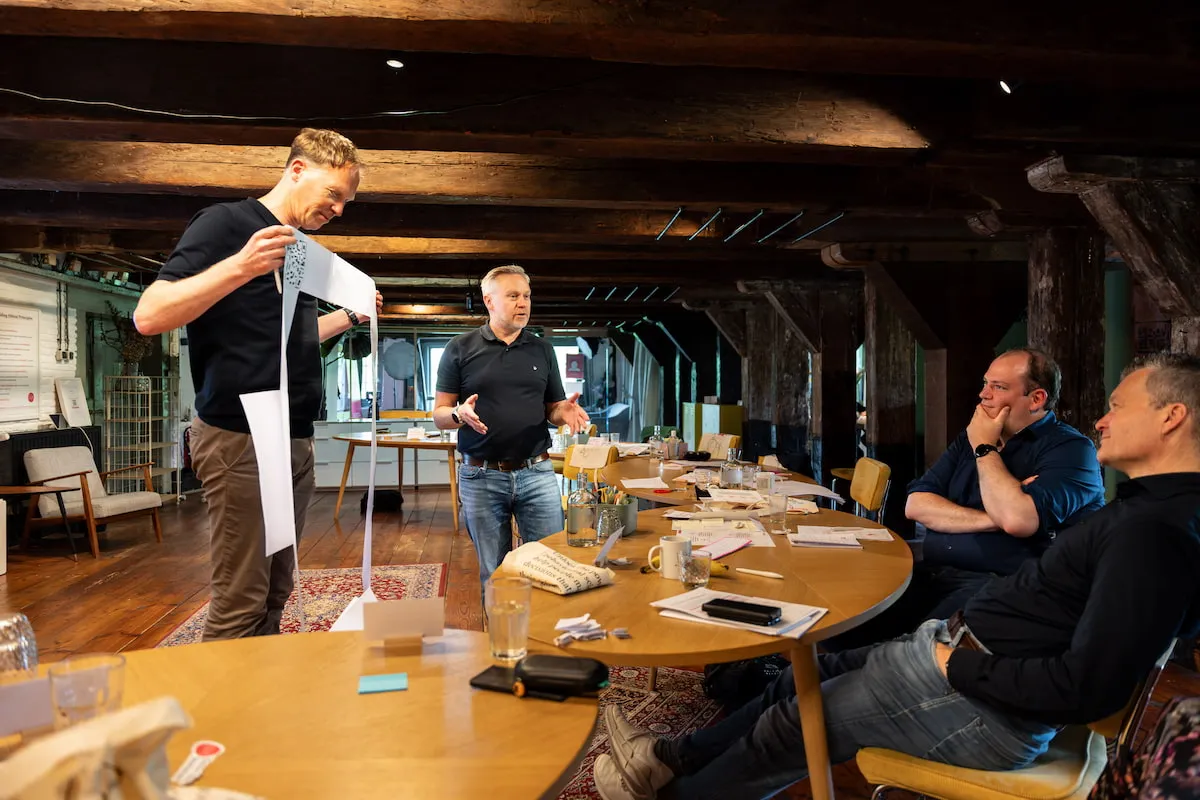
UX designers working together on the Influence Framework during SUE Behavioural Design training
9.7/10 Average rating
10,000+ Professionals trained
EQAC Accredited training
Heineken Sony eBay European Commission Amnesty International UNHCR Medtronic Randstad Roche Adyen ING IKEA Orange Naspers T-Mobile Aramco Heineken Sony eBay European Commission Amnesty International UNHCR Medtronic Randstad Roche Adyen ING IKEA Orange Naspers T-Mobile Aramco
Who is this for?
UX Designer You design interfaces that make logical sense, but they still don't convert. The psychological layer is missing from your design process.
Product Designer You build features that are well-crafted but get too little adoption. Users understand them, they just don't use them.
Service Designer You design journeys that pass testing, but in practice still don't produce the desired behaviour from users.
UX Researcher You gather insights about what users say, but you're missing a framework to explain why they do what they do.

Behavioural Design × AI: the combination that gives you the edge

Good UX is about more than usability. A clean interface is hygiene, not strategy. With Behavioural Design you understand why users drop off, click through or hesitate, and you design experiences that genuinely change behaviour. Combine that with AI and you don't just work faster, you design with a precision others simply don't have. The difference is never in the technology. It's in the people.

BD x AI Guru tool used for Behavioural Design UX training at SUE
Step 1
Understand why users drop off Not from data, but from behavioural science. You learn the psychological forces that determine whether someone completes a flow, uses a feature or abandons during onboarding.
Step 2
Learn the Influence Framework The only proven behaviour model for designers. You analyse pains, gains, comforts and anxieties, and design interventions that press exactly the right button.
Step 3
Design products that change behaviour From wireframes to behavioural design. You learn to design flows, defaults and micro-interactions that trigger the desired behaviour, without manipulating.
Step 4
Become an AI-native designer With behavioural frameworks as your foundation, you prompt AI with purpose. You know which psychological triggers to activate and which friction to remove. Better prototypes in less time.
Behavioural science Behavioural science
+
Power of AI Power of AI
=
UX that changes behaviour UX that changes behaviour
How can you learn?

Choose the path that fits you

On your own, with your design team, or across the whole organisation: there are several ways to get trained.

What is Behavioural Design for UX and product designers? Behavioural Design is the application of behavioural science to interaction and product design. Rather than designing for idealised users, it teaches you to understand how people actually decide and behave, and design experiences that work with human psychology, not against it. The SUE Influence Framework gives you a structured method for translating behavioural insights into better products.

Google 4.8/5 Bloomville 5 stars Springest EQAC accredited
What the training gives you

What you do concretely
differently after the training
Four shifts that UX designers and product designers mention time and again after the training.

1

You design from proven behavioural principles, not gut feel

You know which psychological forces determine whether users take action. Your choices for flows, defaults and micro-interactions are grounded, not intuitive. Your work becomes more effective and your decisions are defensible to stakeholders.

UX designer designing from behavioural principles
2

You increase feature adoption by removing friction

You understand which barriers block users and which motivators activate them. You design features and onboarding that trigger the desired behaviour. Adoption goes up without having to build more features.

Product designer increasing feature adoption with Behavioural Design
3

You get taken seriously as a strategic design professional

When you can explain why something works, people listen differently. You back your advice with behavioural science rather than taste. That changes how colleagues, product managers and stakeholders see you.

UX designer recognised as a strategic expert
4

You combine BD + AI for sharper designs in less time

With behavioural frameworks as your foundation, you prompt AI with purpose. You know which triggers to activate and which friction to remove. The result: better prototypes and flows in fewer iterations.

Product designer combining Behavioural Design and AI for faster work
Results

What participants say about the Behavioural Design training

The Behavioural Design Academy has done a great job creating an easy-to-use framework that covers every major behavioural insight. I've learnt a lot and even just had fun. Highly recommended.

One of the best 2-day courses I've been on. The amount of knowledge gathered in such a short time is simply unrealistic, but it was. Everyone in product management should go through this, as it makes theory applicable to practice, not just in your job.

The BDA provides a great structure to apply behavioural insights into real world applications. Jorn was fantastic at creating an open atmosphere in which to truly understand how people think and what can be done to influence their behaviour.

Extremely inspiring training, with which you start thinking even more from the needs of the target group. Thanks to the Influence Framework the Job To Be Done stays central, and you learn to remove anxieties. I can't wait to put this into practice.

As a UX Designer I've always had a passion for understanding user behaviour and how people make decisions. This course provided me with the Influence Framework and practical tips I can use in my day-to-day projects.

I decided to attend the Behavioural Design Academy instead of going to Hyper Island or SXSW. I wasn't disappointed. During the 2 days my eyes opened up. Theoretical and interactive sessions on human behaviour created a new way of thinking, and a feeling that the possibilities of this knowledge are unlimited.

I've learned many new insights I can implement in our marketing strategies, but also in other areas like team building and the wider organisation. The BDA is perfect for anyone who wants to know what really moves people and how to tap into that knowledge. Brilliant 2-day experience!

The BD course pushes you to think differently and gives you concrete principles to bring back and use in your working life. A great overview of how social psychology can meet design to give fabulous results.

The course gives all the right insights, not only in a theoretical but also a practical way, into behavioural design. By learning by doing you get a deeper understanding of how to approach your customers' problems and solve them in a unique and tailored way.

For your manager

What your manager wants to know

Need to convince your line manager? Here's what concretely changes:

Higher feature adoption and NPS

We design products that change behaviour, not just interfaces that look good. The result: higher activation rates, less abandonment and a better user experience that translates into measurable product outcomes.

Evidence-based design decisions, no taste debates

Design reviews become more productive. We stop designing on gut feel and start designing on behavioural insight. That shortens the iteration cycle and increases the impact of every design decision.

Working faster and smarter with AI

We don't treat AI as a standalone tool, but as an extension of our behavioural expertise. Our designers prompt with purpose, iterate less and deliver better prototypes in less time. EQAC-accredited, rated 9.7/10.

Last updated: March 2026
Frequently asked questions

We think you'll want to know this

Most participants start without any prior knowledge, and that's exactly the point. The training teaches you the behavioural science you need, linked directly to your design work. No academic theory for theory's sake, just actionable insights you can apply the very next day in your wireframes, flows and user journeys.
UX designers are one of the largest groups in our courses. The method gives you the psychological layer that usability alone can't provide. You don't just learn why users can do something, but why they actually do it. That fundamentally changes how you design wireframes, flows and prototypes.

The training is most valuable for experienced designers. You've got the practical experience. The training gives you the scientific framework that backs up your intuition and sharpens your approach. Many participants say afterwards: I was already doing parts of this, but now I finally understand why it works and when it doesn't.
You'll be in a deliberately mixed group, with professionals from all sorts of sectors and fields. UX designers, product managers, marketers, communication advisers and HR professionals all sit together. Maximum 16 participants per group. That mix is what makes the training so valuable: you also learn from how other disciplines run into behavioural challenges.
Start with the Fundamentals. That gives you the complete Behavioural Design framework: the Influence Framework, the JTBD method and all the core tools. The Advanced Course builds on that with deeper persuasion psychology and framing techniques. Without the Fundamentals, the Advanced lacks its foundation.

Yes. We invoice in the company name and the training is EQAC-accredited, which makes reimbursement easier. The 'For Your Manager' section above gives you the business arguments you can use in your request.

You go home with a complete Behavioural Design Toolkit: the SUE Influence Framework Canvas, the JTBD method, cheat cards for CAN, WANT and AGAIN interventions, the Behavioural Interview Guide, Behavioural Statement worksheet, System 1 and 2 guide and the Prototyping Guide. You also get lifetime access to the BD Club (10,000+ behavioural professionals, monthly case calls and free new templates), the BD x AI Guru and an EQAC-accredited certificate. For the live training, there's also a follow-up session after 6 weeks.

Ready to transform your UX work with behavioural science?

Rated 9.7/10 · 10,000+ professionals trained · max. 16 participants per group

Free guide The Art of Choosing PDF · 29 pages
Free download

Design choices that work: the psychology of choice architecture

More options do not lead to better choices. Discover how the paradox of choice undermines user experience, and which five behavioural interventions help design choices that trigger the desired behaviour.

Download free ↓

PDF · 29 pages · no sign-up required

Go deeper

Insights for UX designers

Discover how to apply behavioural science in your design work. Practical insights you can use straight away.

Behavioural Design Fundamentals · limited places per group · 9.7/10

View next available date →