Behavioural Design training for product managers
The feature is live, and hardly anyone uses it.
How much effect your product has depends on how much influence you have on the choices and behaviour of your users. Fortunately, that can be learnt. In our two-day training you learn how to design features people actually use.How much effect your product has depends on how much influence you have on the choices and behaviour of your users. Fortunately, that can be learnt. In our online course you learn how to design features people actually use.
Send me the brochure
€1,490 excl. VAT · 16 and 17 September 2027 · Amsterdam · max 16 participantsOnline · 33 lessons at your own pace · €1,190 excl. VAT
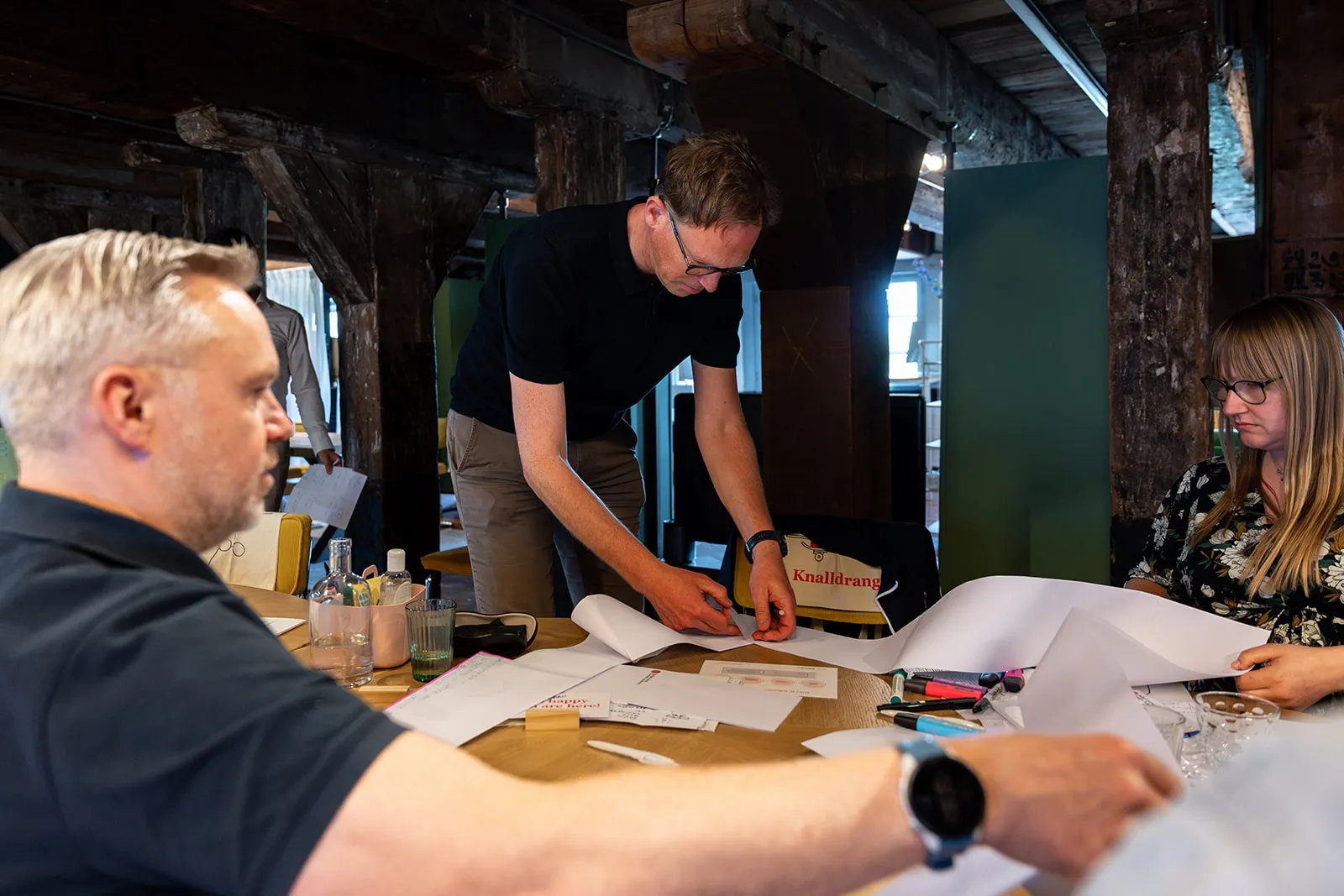
What you do differently on Monday.
- You know why users leave your product unused.Before you build, you know what holds them back and what they really want to get done.
- You know how people keep using a feature.The first use, the habit and the moment of coming back.
- You can explain your roadmap to stakeholders.You show which behaviour a choice changes. Then the conversation is less about opinions.
10,000+ professionals trained, including people from











One of the best 2 day courses I have been in. The amount of knowledge gathered in such a short time is simply unrealistic, but it was!! Everyone in product management should go through this context as it makes theory applicable to practice not just in your job.
Two days in which you are immersed in behavioural design. Theory combined with practice, you can apply it immediatly the next day. Intensive and inspiring. I would definitely recommend this to everyone!
An enormous inspiring course that really triggers you to look at your way of working. It has given me an entirely different outlook on how I can help my clients. The material and the enthusiasm of Tom and Astrid are contagious!

The same two days they had. Then Monday, on your product.The same method, online, at your own pace.
Day 1 is about one question: why does your user do what they do? You apply it straight away with the tools of the SUE Influence Framework©. Day 2 is about the fix. How do you make the usage you want the easiest choice? And how do you put AI to work on it? You go home with downloads and tools you use for your own roadmap, onboarding or feature on Monday. People from marketing, HR and policy sit next to you. That is on purpose.Lesson by lesson you work on one question: why does your user do what they do? You apply it straight away with the tools of the SUE Influence Framework©. Then the fix: how do you make the usage you want the easiest choice, and how do you put AI to work on it? In 33 lessons at your own pace you collect downloads and tools you use for your own roadmap, onboarding or feature on Monday.
Need to run it past your manager first?
Forward them the brochure: the programme for each day, what you take home and what it costs. It lands in your inbox within a few minutes.Programme, outcomes and price in one place, ready to forward.
How to get your employer on board
Most participants take the training on their employer’s budget or their own training budget. The VAT invoice goes to your organisation: €1,490 excl. VAT. Open the email below, fill in three things and send it to your manager.
Six questions every product manager recognises.
Why does hardly anyone use the new feature?
A new feature asks for a new habit. Without a clear moment and a quick result, the old habit keeps winning.
More on behaviour change →Why do users drop out during onboarding?
Every step is a moment to doubt. Show the payoff as quickly as you can.
More on designing customer experience →How do I know what users really want?
What people say is not what they do. Ask what they want to get done, and look at what they do now to get it.
More on consumer behaviour →How do I choose what goes on the roadmap?
Choose what changes the behaviour you need. Then prioritising becomes much less a matter of opinion.
More on theory of change →How do I get stakeholders behind my choices?
Stakeholders watch their own risk. Show what the choice brings them.
More on influencing →How do I build AI features people trust?
People use AI when they understand what it does. Design the moment where they stay in control.
More on working with AI →What product managers ask before they sign up.
I know nothing about behavioural science. Is this still right for me as a product manager?
Most participants start without any prior knowledge. You learn exactly the behavioural science you need, and you apply it straight away to real-life examples. Afterwards you know how to use it in your discovery, roadmap and onboarding.
I already work with design thinking and discovery. Will I still learn something new?
That is exactly when it pays off. You already know how to find problems. The training shows why users behave the way they do. After two days you know what to design to change that behaviour.
Who will I be in the group with?
A mixed group of up to 16 people: marketers, HR, communications, lawyers, policymakers and managers. The mix is on purpose. You see how someone from another sector wrestles with exactly the same kind of question.
Can I claim this back from my employer?
Yes. We invoice in your company’s name and the training is EQAC-accredited. That makes reimbursement easier. Need a quote or more information for your request? Get in touch.