Communication Training

Communication
training that
moves people

You can write perfectly and still convince no one. Communication works through behavioural principles, not logic. And most communication training never covers that part.

01How do I write messages that actually move people to act?
02How do I convince leadership of a plan they keep rejecting?
03How do I communicate change so people embrace it?
04How do I make my presentations less informative and more persuasive?
05How do I get my emails read and acted on?
06How do I change behaviour through communication rather than rules?
07How do I deliver bad news without losing trust?
Who is this for?
Communication advisers You reach people, but they rarely act. You want to understand how to design messages that actually change behaviour.
Copywriters & content creators You write well, but want more than intuition. You're looking for a scientific basis for the choices you currently make on instinct.
Campaign makers You build campaigns that get seen, but want them to drive real behaviour change. Not just reach — impact.
PR professionals You want to build messages that don't just attract attention, but move journalists, partners and audiences to act.
9.7/10 average score from participants
10,000+ professionals trained
Google 4.8/5
Bloomville 5 stars
Springest 9.7/10
EQAC accredited
These organisations train communication with the Behavioural Design Method
ING Heineken KPN ANWB Randstad Achmea Eneco Centraal Beheer
Communication challenges

7 communication problems every professional recognises

Good communication breaks down on how people actually think and decide. Not on how you write. Here is the behavioural science behind each of these patterns.

The Art of Designing Behaviour
The Art of Designing Behaviour These communication patterns are based on the behavioural frameworks in the book by SUE co-founder Astrid Groenewegen.
Persuasion
01

The message everyone read but no one acted on

Well written. Clear argument. Strong structure. Still no response. Persuasion runs through a different channel than information transfer, and most communication training never explains that channel.

Read more
Framing
02

The good news that landed as bad news

You had good news. It was received badly. The message itself was fine. How you introduced it was the problem. Framing determines how information lands, not the facts themselves.

Read more
Change
03

The change communication that triggered the exact resistance you wanted to avoid

Carefully communicated, at the right time, through the right channels. And still: suspicion, rumours, resistance. Change communication rarely fails because of poor wording.

Read more
Behaviour change
04

The campaign that raised awareness but changed nothing

Awareness was there. Willingness too. But behaviour did not change. The step from knowing to doing does not run through information. It runs through environment design, framing and social norms.

Read more
Action
05

The email with a clear call-to-action that nobody followed up on

You made the action easy. You explained the benefit. You sent the reminder. Still nothing. A call-to-action only works when you understand the psychology of the person receiving it.

Read more
Buy-in
06

The boardroom presentation that did not convince

The plan was solid. The data was right. You were well prepared. The decision still went the other way. Boardrooms rarely decide purely rationally, and persuasive presentations account for that.

Read more
Influence
07

The communicator everyone likes but nobody follows

Clear, concise, well-structured. But the recommendations are not acted on. Communication skill and communication influence are two different things. The second requires behavioural science.

Read more
The method

Behavioural Design: the missing layer in communication training

You know the rules of clear communication. You know how to build a structure, construct an argument, set up a presentation. But what most communication training does not include is a method for understanding how people actually make decisions. Not how you want them to respond. How they do so automatically.

01

96% of decisions are automatic

People read your message and make a decision about it through System 1: fast, automatic, based on feeling. Not after careful deliberation. Communication training that only strengthens the rational argument focuses on the wrong 4%. The real levers are in framing, social norms and loss aversion.

System 1 vs. System 2
02

How something is said determines what people do

The same message can trigger two completely different responses, depending on how you frame it. "9 out of 10 colleagues complete this form correctly" works fundamentally differently from "Don't forget the form." Not because of style, but because of behavioural psychology.

Framing & social norms
03

Communication is an environmental intervention

The strongest communication does not change people's opinions. It changes the context in which they make a choice. A well-designed message lowers the threshold, makes the desired behaviour the logical default, and ensures people do not have to think to do what you want.

Influence Framework©
Official HMRC government letter - behavioural framing case study
Case study

How a tax authority increased revenue by changing one sentence

The Behavioural Insights Team ran dozens of trials with HMRC to increase tax payments. In one trial, businesses with a tax debt received a letter with a social norm: "The great majority of business owners who trade in your sector pay their tax on time." Payment rates rose by 15%. In another trial, adjusting the framing of reminder letters to individuals increased payment rates by 34 to 59%. The full programme brought hundreds of millions of pounds in additional revenue to the UK Exchequer.

Same debt. Same deadline. Different framing. Different result. Making the right social norm visible does what demanding payment cannot.

We cover this principle in the Deep Dive Communication & Influence and in the Fundamentals Course.

Gamechangers book
Recommended reading

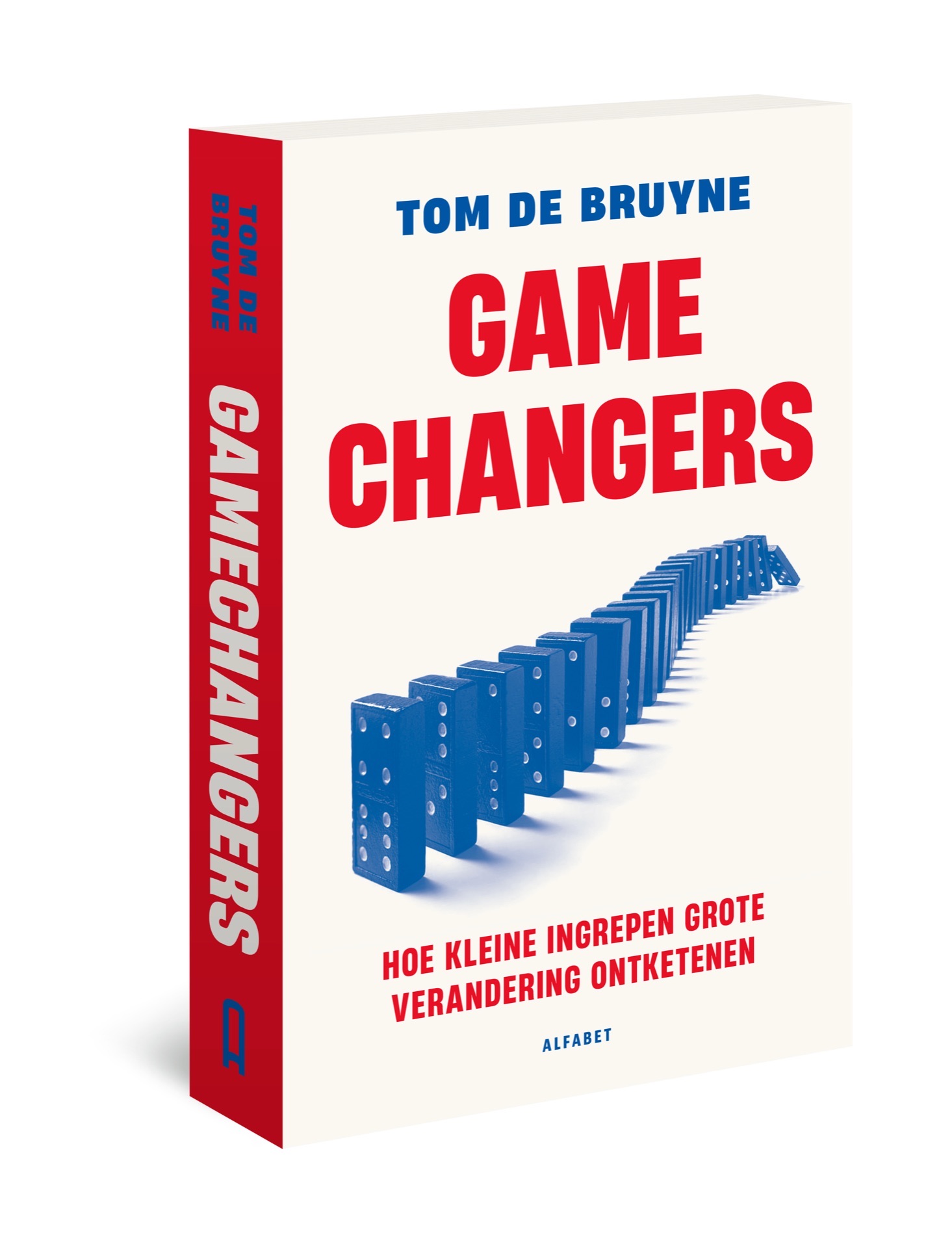
Gamechangers

Tom de Bruyne on how the most influential people and organisations in the world change behaviour. Essential reading for anyone who wants to communicate with more impact.

More about the book
Weekly newsletter

1.5 Minutes of Influence

A behavioural insight every week, directly applicable to your communication. Read by more than 10,000 professionals.

✓ Good. Check your inbox for confirmation.

No spam. Unsubscribe any time.

How do you want to learn?

This is how you learn communication that changes behaviour

Choose the format that fits. From a one-day Deep Dive on communication and influence to a full Fundamentals Course that builds the behavioural science foundation: every format is directly applicable to your own communication challenge.

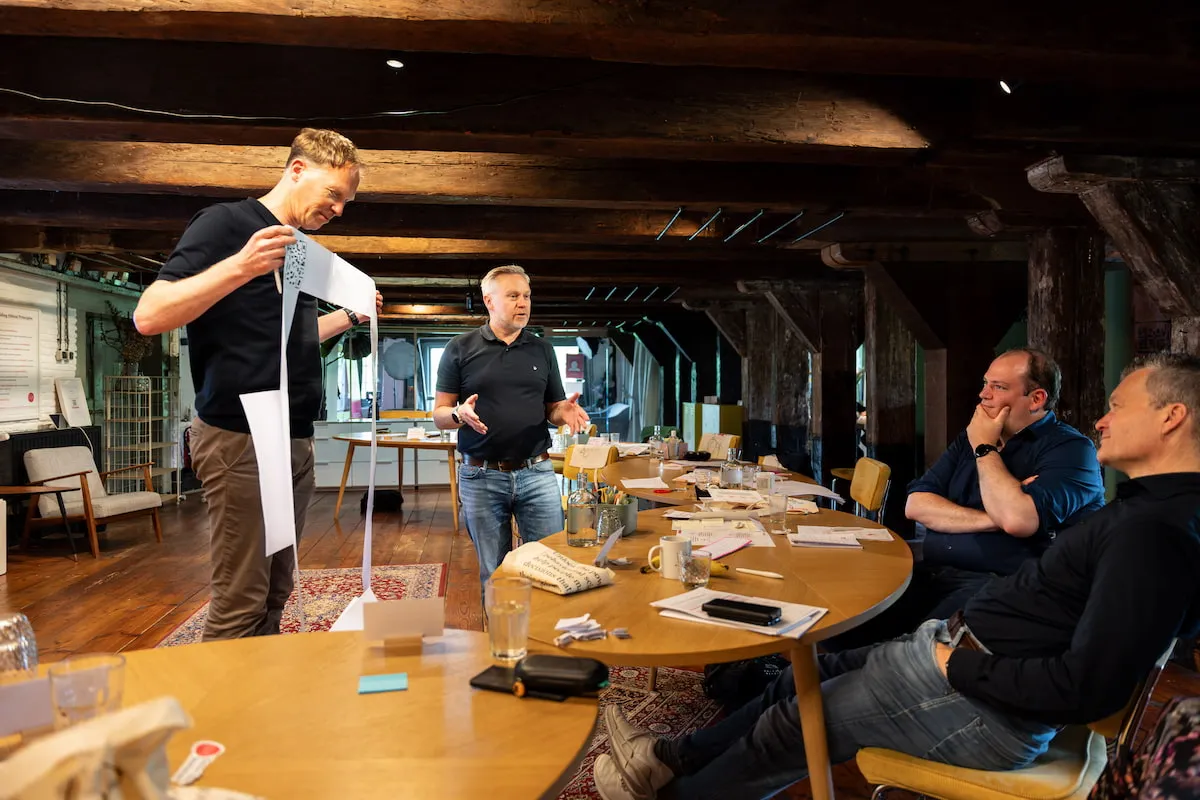
Participants during Deep Dive Communication and Influence
01
Communication training, 1 day
Communication & Influence
Ideal when your plans are objectively good but people still do not get on board

Why do people reject plans that are clearly the best option? In this team training, you learn the behavioural science behind resistance, mistrust and buy-in, so you can de-escalate conflict and actually bring people along.

1 day In-company team: €7,990 Max. 16 participants
  • Understand why resistance emerges and how to turn it into buy-in
  • Learn the behavioural principles behind persuasion, trust and influence
  • De-escalate conflict and bring people along based on their own motivations
Participant in Behavioural Design Fundamentals Course
02
Communication training, full foundation
Fundamentals Course
Ideal when you want to understand the full behavioural science foundation behind persuasive communication

You learn the complete Influence Framework, how to conduct a behavioural analysis and how to design communication interventions based on proven behavioural science. Available live and online.

2 days live or 33 lessons online Max. 16 participants From €1,190
  • Understand how people process information and make decisions
  • Apply the Influence Framework to your own communication challenges
  • Build an evidence-based approach for campaigns, texts and change communication
Team during Behavioural Design Sprint communication challenge
03
Communication training for teams
Behavioural Design Sprint
Ideal when your team has a real communication challenge and wants to learn by working on it directly

Over three months, your team works on a real communication challenge from your own organisation, guided by SUE. No theory for theory's sake: you learn the Influence Framework, the SWAC method and behavioural interventions while applying them to a campaign, policy document or change communication that was already waiting.

3 months 6 sessions of 4 hours €29,900 for the team Max. 16 participants
  • Work on a real communication challenge from your own organisation
  • Learn behavioural science by applying it, not just studying it
  • Build a shared method your team keeps using after the sprint

Results

What communication professionals say about our Behavioural Design training

A mind-blowing crash course that shifted my way of thinking entirely. It helps me ask new questions and come up with new ideas. The BDA helps you come up with ideas that truly move people.

I decided to attend the Behavioural Design Academy instead of going to Hyper Island or SXSW. I wasn't disappointed. During the 2 days, my eyes opened up. A new way of thinking with unlimited possibilities.

SUE Behavioural Design gives you a powerful and practical framework to effectively influence customers. They are focused on customer insights that lead to real behaviour change.

I already did some behavioural work before, but for some reason it has never been so meaningful and understandable as it is now. Everything fell into place. You gave me a mental structure to tackle problems and challenges.

You offered a user-friendly framework packed with scientific insights. The hands-on workshop style really helped me see how I can use this knowledge every day.

Two days of excellent, concrete insight into Behavioural Design. With this foundation I'm going to optimise my entire communication approach from A to Z.

For your manager

What leadership wants to know

Need internal approval for communication training? Here is what concretely changes when you or your team learns behavioural communication design:

Higher conversion from existing communication

Communication professionals who understand framing and behavioural principles get more from the same channels. Existing campaigns, emails and content become more effective without additional media budget.

Less resistance to change

Teams that design change communication based on behavioural science encounter less resistance. They understand how people psychologically process change, and shape their message accordingly.

Communication strategy based on evidence

Behavioural communication training gives teams a shared language and method. Instead of deciding intuitively on tone, framing and timing, you work from proven behavioural principles.

Frequently asked questions

Everything about communication training at SUE

A communication training programme teaches professionals how to communicate more effectively: from persuasive writing and presentations to change communication and internal campaigns. At SUE, communication training goes further than tips about language. We teach you the behavioural science principles behind persuasion, so you understand why certain messages work and others do not, and how to apply that systematically.

You learn how framing, social norms, loss aversion and other behavioural principles determine how people receive and respond to your message. You practise designing texts, campaigns and communication strategies that move people to act. You work on your own communication challenge and leave with a concrete approach you can apply the very next day.

You also learn the SUE Influence Framework, a method for systematically analysing why people do (or do not do) what you want, and how to change that through the right communication.

SUE offers communication training at multiple levels:

Deep Dive Communication & Influence: €7,990 excl. VAT in-company for max 16 participants.
Fundamentals Course: €1,490 excl. VAT for 2 days live, or €1,190 excl. VAT online.
Learning Journey: tailored communication programme, from €25,000 for teams.

All training is EQAC certified.

The Deep Dive Communication & Influence lasts 1 day. The Fundamentals Course takes 2 days live, or is available as a 33-lesson online course you follow at your own pace.

For teams, Learning Journeys of 4 to 8 months are available, embedding communication skills within a broader behaviour change approach. Behaviour change takes time: our longer programmes are deliberately designed so that new ways of communicating actually stick.

Yes. SUE Behavioural Design Academy is based in Amsterdam. In-company training is delivered at the location of your choice, throughout the Netherlands and Belgium. International delivery is available on request.

Regular communication training focuses on skills: writing clearly, presenting well, listening actively. Leadership and communication training combines that with the ability to persuade as a leader, build buy-in and influence behaviour at scale.

At SUE, both draw from the same behavioural science methodology. The Fundamentals Course covers both dimensions. The Deep Dive Communication & Influence focuses on the persuasion and influence side. The Influential Leadership track goes deeper into communication as a leadership instrument.

Because they stop at tips about style, structure and tone, while the real problem runs deeper. People do not read and listen rationally. They filter information through emotion, context and social expectations.

Communication training that only teaches clearer writing addresses the wrong layer. Effective communication training teaches you how the recipient's brain works, and how to design messages that work with that brain rather than against it. That is what SUE focuses on.

10,000+ professionals have already made the move

Ready to invest in communication that truly persuades?

Join a communication training at SUE
View the training →