How do you design an organisation where people dare to use AI?
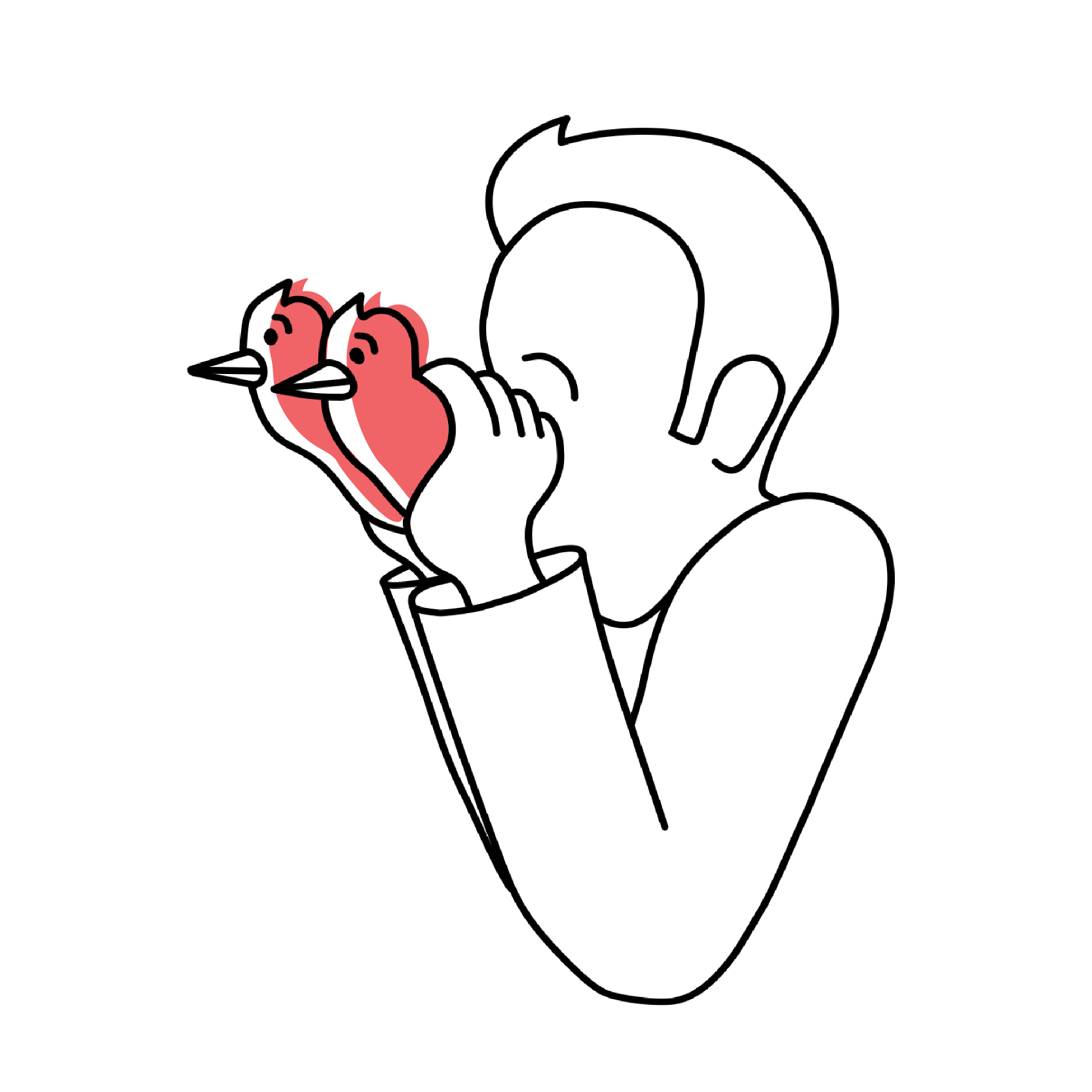
An open-plan office has just had a powerful new tool rolled out across it. Everyone has access to it. The training has been delivered, the licences are live, the leadership emails have been sent. And yet, weeks later, almost no one is really using it. Look closer and you see why. At every desk sits a person quietly assuming that everyone else has it figured out, that they are the only one still confused, and so saying nothing, asking nothing, and avoiding the tool rather than exposing their own uncertainty. The whole floor is stuck, not on a problem of skill, but on a silence.
This is what AI adoption looks like in a great many organisations right now, and the picture of it, a room full of people each privately convinced they are the only one who does not get it, makes the argument before a word is said. It is a clean example of a behaviour blocked by a social misreading rather than a lack of ability. And the mechanism behind it explains far more than hesitancy about AI; it explains why groups so often get stuck behind a wall that none of them actually believe in.
What actually happens in those teams
When a new and slightly intimidating technology arrives, the obvious explanation for slow uptake is a skills gap, and the obvious fix is more training. But in many teams the real blocker is not capability at all. It is a particular kind of collective silence.
Here is the pattern. Each person feels behind, uncertain, not quite on top of the new tool. Each person also assumes that their colleagues are doing better than they are, because everyone else seems to be coping and no one is admitting otherwise. So no one asks the basic question, no one says they are lost, and no one experiments openly for fear of looking foolish. And because everyone stays quiet, everyone's false impression is confirmed: the silence of the room is read as everyone else being fine. The group ends up acting on a belief, that everyone but me has this handled, that almost no individual in it actually holds. The thing blocking adoption is not a missing skill. It is a shared misreading of one another.
The fear was never really about competence
The organisations that crack this do not start by adding more training. They change the social conditions so that not knowing becomes safe to admit, and let the experimenting follow. That is the reversal worth pausing on. The instinctive response to slow adoption is to assume a deficit in the people, more courses, more support, more pressure to get on board. We have all seen that fail to move the needle, because it treats a social problem as a skills problem and leaves the actual barrier, the silence, completely untouched.
The barrier is not that people cannot learn the tool. It is that everyone is privately protecting themselves from a judgement that, it turns out, no one is actually making. Each person is managing the appearance of competence rather than building it, because the room feels unsafe for visible beginners. Pile on more training and you do nothing about that; you may even deepen it, by raising the implied standard everyone feels they are falling short of. What changes things is making the room safe for not knowing, so that the energy people are spending on hiding their uncertainty can go into resolving it instead.
This is the difference between training and designing. Training works on the individual's skill and assumes the blocker is inside the person. Design changes the social situation around the person, so the behaviour that was being suppressed by fear can finally appear.
The science: pluralistic ignorance and social loafing
The behavioural principle underneath this is pluralistic ignorance, a concept introduced by the psychologists Daniel Katz and Floyd Allport in the early twentieth century. It names exactly the trap above: a situation in which most members of a group privately reject or doubt something, but assume that most others accept or are fine with it, and so go along with it. Each person's public silence reinforces everyone else's mistaken belief about what the group really thinks. The classic feature is that the group's apparent consensus is one that almost none of its members privately share.[1]
Applied to a new tool, pluralistic ignorance is precisely the mechanism that freezes a room: everyone privately uncertain, everyone assuming the others are not, everyone staying quiet, and the quiet confirming the illusion. The silence is not evidence of confidence. It is everyone protecting themselves from an imagined judgement, and in doing so manufacturing the very impression they are afraid of.
A second dynamic compounds it, sometimes discussed as social loafing or the diffusion of effort: when a behaviour is everyone's responsibility in general and no one's in particular, and when no one visibly goes first, individuals hold back and wait. If using the new tool is broadly encouraged but no one is seen to be openly fumbling their way into it, each person quietly defers, and the collective result is that almost no one starts. The two dynamics together produce a room that is stuck despite being full of people who, individually, would be willing to try.[2]
Through a Behavioural Design lens
It is worth slowing down on what is really happening here, because it is a clean example of how a behaviour gets blocked socially, as opposed to how we usually diagnose it.
Start with the person, not the rollout. Before you can move anyone, you have to understand the progress they are really trying to make. Someone hesitating over a new tool is not, underneath, refusing to learn; they want to do their job well and, just as much, to not look incompetent in front of people they respect. Hold that real motive in view and the forces around it come into focus. Two pull a person towards trying: the frustration of being left behind, and the genuine appeal of a tool that could make their work easier. Two hold them back: the fear of looking foolish or exposing that they do not understand, and the safe comfort of carrying on as before while assuming everyone else is fine. Map those four forces around the real motive and the problem reframes itself. The willingness to try was usually there; it was being held down by the fear of being the visible beginner. This way of mapping a behaviour, the deeper motive plus the four forces around it, is what we call the Influence Framework at SUE, and it is where any adoption effort should begin: with the human fear under the silence, before the training plan.
Now to the intervention. The move that works is to lift that fear: make not knowing openly normal, so willingness is no longer throttled by the dread of looking foolish. The single most effective trigger is someone with standing going first and visibly fumbling, which punctures the illusion of universal competence and gives everyone permission to begin. Then you make experimenting repeat, regular, low-stakes, shared, until being a beginner is simply how the place works. The blocked button here is willingness, and you free it by changing the social conditions, not by adding more ability. This framework of mapping ability, willingness, the spark and the habit is what we call the SWAC Tool at SUE.
This is the move that travels, and it has nothing to do with AI specifically. The first question is never how do I train these people more, but what are they privately afraid of, and what false belief about each other is keeping them silent. Make not knowing safe and visible from the top, and the experimenting you were trying to mandate often simply begins. That, in one line, is the discipline of Behavioural Design here: you do not push harder on skill, you dismantle the silence, and the behaviour follows. At SUE, the Influence Framework and SWAC are the methods we teach in the Behavioural Design Fundamentals Course to systematically analyse which structural conditions make the desired behaviour easier than the alternative.
What this means in practice
It is tempting to file this under AI adoption and move on, but the same lever sits underneath a great deal of group paralysis, starting with the rooms you are in.
At the personal level, think of a time you stayed quiet in a meeting, certain you were the only one who did not follow, only to discover afterwards that others were just as lost. That is pluralistic ignorance from the inside. The lesson, turned personal, is that your private uncertainty is very rarely unique, and the simple act of voicing it, saying you are not sure you follow this, can release the whole room. Being the first to admit not knowing is a small act of courage that usually turns out to cost nothing.
The same move scales up to leading people. When a team will not engage with something new, the instinct is to provide more training or push harder. Far more effective is to break the silence from the top: say, openly and with an example, that you are still figuring it out yourself, the thing that did not work, the attempt you abandoned. A good leader makes their own not-knowing visible, because that single act punctures the illusion that everyone else has it sorted and gives everyone below permission to be a beginner.
And it scales again to the organisation. Why do change initiatives stall despite enthusiasm at the top and capability in the ranks? Often because a pluralistic silence has formed, everyone waiting, everyone assuming everyone else is ahead. Why does more training so often fail to shift behaviour? Because the barrier was never skill; it was the social cost of being seen to learn. In every case the high-leverage question is the same: not how do I build more capability, but what fear is keeping people silent, and how do I make not knowing safe.
Learn to apply this yourself
What makes this approach effective is that it targets the social conditions blocking behaviour, rather than the individual's skill or motivation. In the Behavioural Design Fundamentals Course, you learn to use the Influence Framework and SWAC to map exactly those conditions: what people privately fear, what false beliefs keep a group silent, and which small design moves dismantle the barrier without adding pressure.
View the online Fundamentals CourseWhat you can design this week
The same move works on your own silence in a room, a team that has stalled, or an organisation stuck behind a wall no one believes in. Three ways to start:
Go first, and fumble visibly. If you have any standing in the room, say out loud that you are still working it out, and show something that did not go to plan. Your visible not-knowing gives everyone else permission to stop pretending and start trying.
Make not knowing the explicit norm. Create a space, a session, a channel, a regular slot, where being a beginner is the whole point and nobody is expected to have it sorted. When experimenting is openly normal, the fear that suppresses it drains away.
Name the silence, do not add more training. When a group stalls, resist the urge to push more skill at it. Ask instead what people might privately be afraid of, and whether everyone is staying quiet on a doubt they actually share. Surface the shared uncertainty, and the paralysis usually breaks.
Organisations that crack AI adoption do not out-train the hesitation. They make not knowing safe, and let people begin. That is exactly as useful for your own silence in a meeting, a team frozen on something new, or an organisation stalled behind an imagined consensus, as it is for a floor full of unused licences.
If you want to think this way about a behaviour that is stuck, our Behavioural Design training works through exactly this: how to read what is really blocking people, and design the conditions that free it.
If you want to learn how to design for behaviour rather than trying to motivate it, that's exactly what the Behavioural Design Fundamentals Course covers. View upcoming dates →
Frequently asked questions
What is pluralistic ignorance?
Pluralistic ignorance is the situation where most members of a group privately doubt or reject something, but each assumes that others accept or are comfortable with it, and so says nothing. Each person's silence reinforces everyone else's mistaken impression. The group's apparent consensus is one almost nobody privately shares. In AI adoption, this produces a room of privately uncertain people each convinced everyone else has it figured out.
Why does more training often fail to improve AI adoption?
Because the blocker is usually not skill but social fear. Each person is privately uncertain and afraid to appear incompetent, so they stay silent while assuming others are fine. Adding more training raises the implied standard everyone feels they are falling short of, and does nothing to make the room safer for visible beginners. The barrier is social, and the fix must be social: making not-knowing openly normal removes the fear that suppresses the behaviour.
Why does a leader visibly struggling with a new tool help others adopt it?
Because it breaks the shared illusion of universal competence. When someone with standing admits they are still figuring it out, it punctures the assumption that everyone else has it handled, and gives each person permission to be a visible beginner without fear of judgement. The silence was held in place by an imagined audience of competent colleagues; one honest admission from above dissolves it.