How do you design an organisation where people are engaged without being incentivised into it?
How do you design an organisation where people are engaged without being incentivised into it? It is the question almost every company is quietly failing to answer. Gallup's most recent State of the Global Workplace report found that global employee engagement fell to 20 per cent in 2025, its lowest level since 2020. Roughly one in five people worldwide is genuinely engaged at work. The standard corporate response is to reach for incentives: team away-days, bonuses, leadership training, values posters in the lobby. And the engagement needle barely moves, because engagement was never sitting where the incentives are aimed.
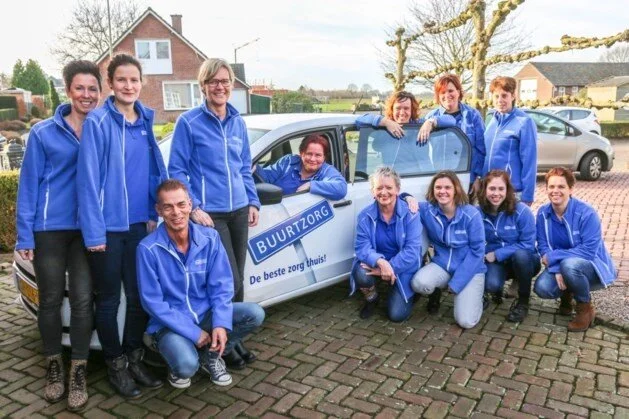
There is a Dutch organisation that found this out and built the answer into its structure. Buurtzorg, a home-care provider, runs on self-managing teams of around ten to twelve nurses, with no managers, a tiny back office and a handful of coaches who hold no authority. The premise is simple: trust that professionals know what they are doing, and remove the layers that get in their way. The result is one of the most engaged workforces in the country. Buurtzorg has been named Best Employer in the Netherlands several times. Not through away-days. Through structure.
The engagement you cannot buy
The conventional approach to disengagement treats it as a morale problem solvable with incentives. Bonuses to reward effort. Team-building events to build cohesion. Leadership training to inspire. Values posters to remind everyone what the company stands for. The logic is that engagement is something you add on top of the work, through the right mix of rewards and motivation.
But engagement does not live in the incentive. It lives in the daily environment: the meeting culture, the physical space, the unwritten rules about what gets rewarded here and what gets punished. A company can run all the away-days it likes, and if the daily structure strips people of autonomy, buries them in approvals and treats them as interchangeable, the engagement will not come. The incentive is a patch laid over a structure that is working against it.
Buurtzorg changed the structure rather than adding incentives to it. By organising around small, self-managing teams with real autonomy, it gave people genuine control over their own work: their schedules, their decisions, their patients, their team. There are no managers to seek approval from, because the premise is that trained professionals do not need managing. That single structural choice does more for engagement than any bonus, because it supplies the thing engagement actually depends on, and that no incentive can fake.
Why this is design, not motivation
You could read Buurtzorg as a story about a particularly inspiring founder or an unusually motivated workforce. But that misses the mechanism, and the mechanism is what makes it copyable.
Buurtzorg does not motivate its nurses to be engaged. There is no campaign urging them to care more, no recognition scheme designed to inspire commitment. The engagement is a by-product of the structure. When you give people real autonomy over their work, genuine connection within a small team, and the chance to be good at something that matters, engagement follows on its own, without anyone having to generate it. The structure produces the conditions, and the conditions produce the engagement.

That is the difference between design and motivation, and in organisations it is decisive. Motivation tries to make people want to be engaged, layering rewards and inspiration on top of a structure that is quietly draining them. Design changes the structure so the engagement arises naturally. You cannot reliably inspire engagement out of people whose daily work strips them of control and connection. You can build a structure that supplies both, and let the engagement take care of itself.
The engagement was never really a matter of how motivated Buurtzorg's nurses happened to be. It was a property of the structure they worked inside. At SUE, the Influence Framework and SWAC are the methods we teach in The Art of Influence© to systematically analyse which structural conditions make the desired behaviour easier than the alternative.
The principle: autonomy, relatedness and competence
The research underneath this is one of the most robust frameworks in the psychology of motivation, and naming it turns Buurtzorg from an inspiring exception into a usable principle.
Self-determination theory, developed by the psychologists Edward Deci and Richard Ryan, holds that intrinsic motivation, the genuine, self-sustaining kind, rests on three psychological needs: autonomy, the sense of having control over your own actions; relatedness, the sense of genuine connection with others; and competence, the sense of being effective and capable at what you do.[1] When an environment meets these three needs, intrinsic motivation flourishes. When it frustrates them, no external incentive can fully compensate.
The crucial point is that these three needs are shaped by the structure of the context, not by the size of the bonus. Buurtzorg's self-managing teams are almost a textbook delivery system for all three. Autonomy comes from the absence of managers and the real control each nurse has over their work. Relatedness comes from the small, tight-knit team. Competence comes from being a trusted professional given the space to exercise judgement. The structure supplies what self-determination theory says intrinsic motivation requires, which is exactly why the engagement appears without anyone trying to manufacture it. A bonus can buy compliance. Only a structure that meets these three needs can produce genuine engagement.
The disengagement in most organisations was never about insufficient incentives. It was about a structure that frustrated the three things motivation actually runs on.
Learn to apply this yourself
What makes Buurtzorg's model work is not goodwill or culture but structure: the organisation removed the conditions that frustrate autonomy, relatedness and competence, and the engagement followed automatically. In The Art of Influence©, the Influence Framework and SWAC give you the tools to diagnose exactly which structural conditions in your own organisation are working against the behaviour you want, and to redesign them.
View The Art of Influence© onlineWhat you can design this week
You do not need to abolish all your managers to apply this. The principle, that engagement follows from autonomy, relatedness and competence, points to structural changes at any scale.
Audit for autonomy first. Of the three needs, autonomy is the one most organisations crush hardest, through approvals, oversight and micromanagement. Ask where people genuinely control their own work and where that control has been taken away. Returning even some of it tends to move engagement more than any incentive.
Build for real connection, not organised fun. Relatedness comes from genuine working relationships, not from mandatory team-building. Small, stable teams who actually depend on one another produce connection that an away-day cannot. Design the structure so connection is built into the work.
Let people be good at something that matters. Competence is the sense of being effective at meaningful work. Where people are deskilled, second-guessed or prevented from exercising judgement, that need goes unmet. Trusting people to do the thing they are good at is itself a design choice.
Stop patching structure with incentives. When engagement is low, the reflex is to add a reward. The more powerful move is to ask what the structure is doing to autonomy, relatedness and competence, and to fix the structure. Incentives patch; structure produces.
A useful diagnostic, before reaching for any of these, is to ask which of the three needs your structure frustrates most, because the answer is rarely the same in two organisations. Some workplaces crush autonomy while leaving connection intact; others have plenty of autonomy but isolate people into lonely independence; still others deskill capable professionals until competence withers. The intervention that helps depends entirely on which need is starved. Adding more social events to an organisation whose real problem is a lack of autonomy will do nothing, and may even read as a distraction from the thing people actually resent. Diagnose the specific deficit first, then design for it.
The thread is the one that runs through everything we do at SUE. You rarely produce engagement by incentivising people into it. You produce it by designing a structure that meets the conditions engagement depends on. Buurtzorg did not motivate its nurses to care. It built a structure where caring, and staying, and being engaged, were the natural result, and let the structure do the work. And the scale of it matters: this is not a boutique experiment but an organisation of well over ten thousand nurses in hundreds of self-managing teams, which is precisely what makes it hard to wave away. The usual objection to autonomy at scale is that it cannot hold together without a layer of managers to coordinate it. Buurtzorg is the standing refutation. It grew to that size not despite removing the management layer but, in large part, because of it, and the engagement is the proof that the three needs were being met all along.
If you want to learn how to design for behaviour rather than trying to motivate it, that's exactly what The Art of Influence© covers. View upcoming dates →
Frequently asked questions
Why doesn't employee engagement respond to incentives?
Engagement does not live in the incentive. It lives in the daily environment: the degree of autonomy, the quality of connection within a team, and the chance to exercise real competence. Gallup's State of the Global Workplace 2025 found global engagement at 20 per cent despite decades of incentive programmes. Self-determination theory explains why: intrinsic motivation rests on autonomy, relatedness and competence. Incentives do not reliably supply any of the three.
How does Buurtzorg's organisational model work?
Buurtzorg organises around self-managing teams of ten to twelve nurses. There are no managers. A small back office provides administrative support, and a handful of coaches are available but hold no authority. Teams decide their own schedules, manage their own patients and make their own decisions. The premise is that trained professionals do not need managing. The result is one of the most engaged workforces in the Netherlands, and an organisation of well over ten thousand nurses operating without a management layer.
What is self-determination theory and why does it matter for organisations?
Self-determination theory, developed by Edward Deci and Richard Ryan, holds that intrinsic motivation rests on three psychological needs: autonomy, relatedness and competence. When an environment meets these three needs, intrinsic motivation flourishes. When it frustrates them, no external incentive can fully compensate. The theory turns Buurtzorg from an inspiring exception into a usable principle: design your structure to supply all three, and the engagement follows without anyone having to generate it.