How do you design a city where moving is the obvious choice?
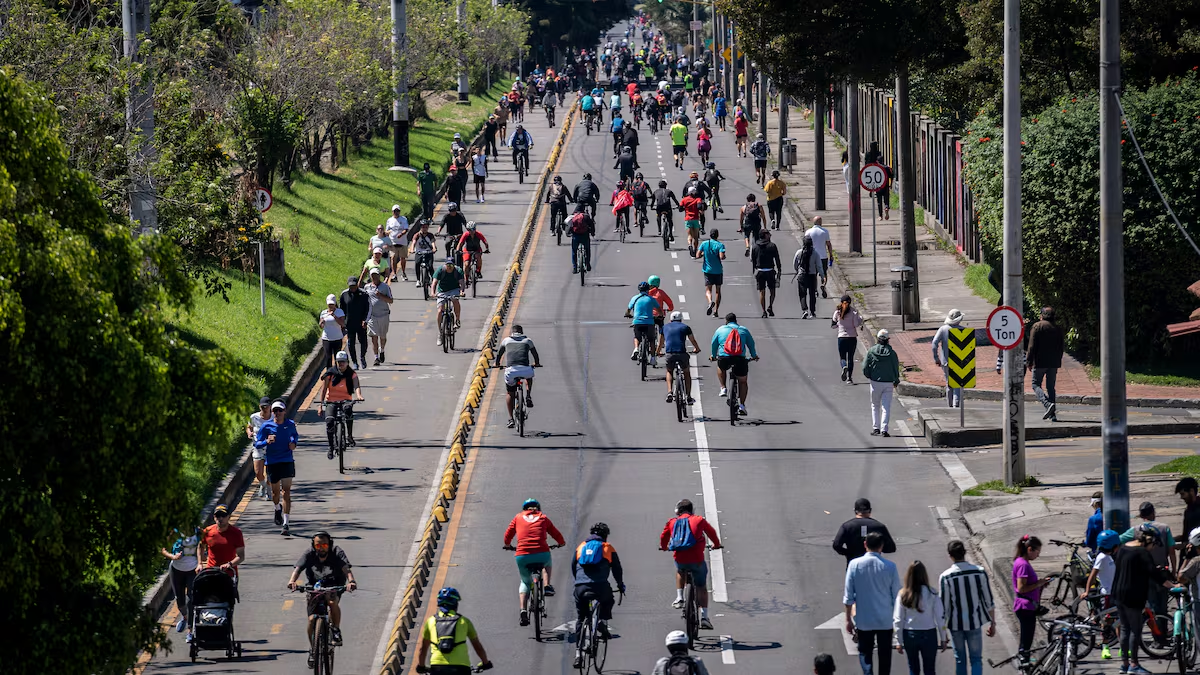
Look down on a six-lane road in the centre of a capital city on a Sunday morning, and you see something that should not be possible. The full width of the tarmac, the lanes built to move thousands of cars, is covered in people instead. Cyclists, runners, a family on rollerblades, a grandmother on a tricycle, children weaving through the crowd. Not one car. The road has not been turned into a park; it is still a road. It has simply, for one morning, been handed to people rather than traffic, and close to a quarter of the city has come out to use it.
This is the Ciclovía in Bogotá, and the image of it, a motorway with no cars and a river of people, makes the whole argument before a word is said. It is one of the clearest examples there is of designing behaviour rather than demanding it, and the mechanism behind it is the same one that decides whether people in your office take the stairs, whether your savings grow, and whether the change you keep asking for ever happens.
What Bogotá actually did
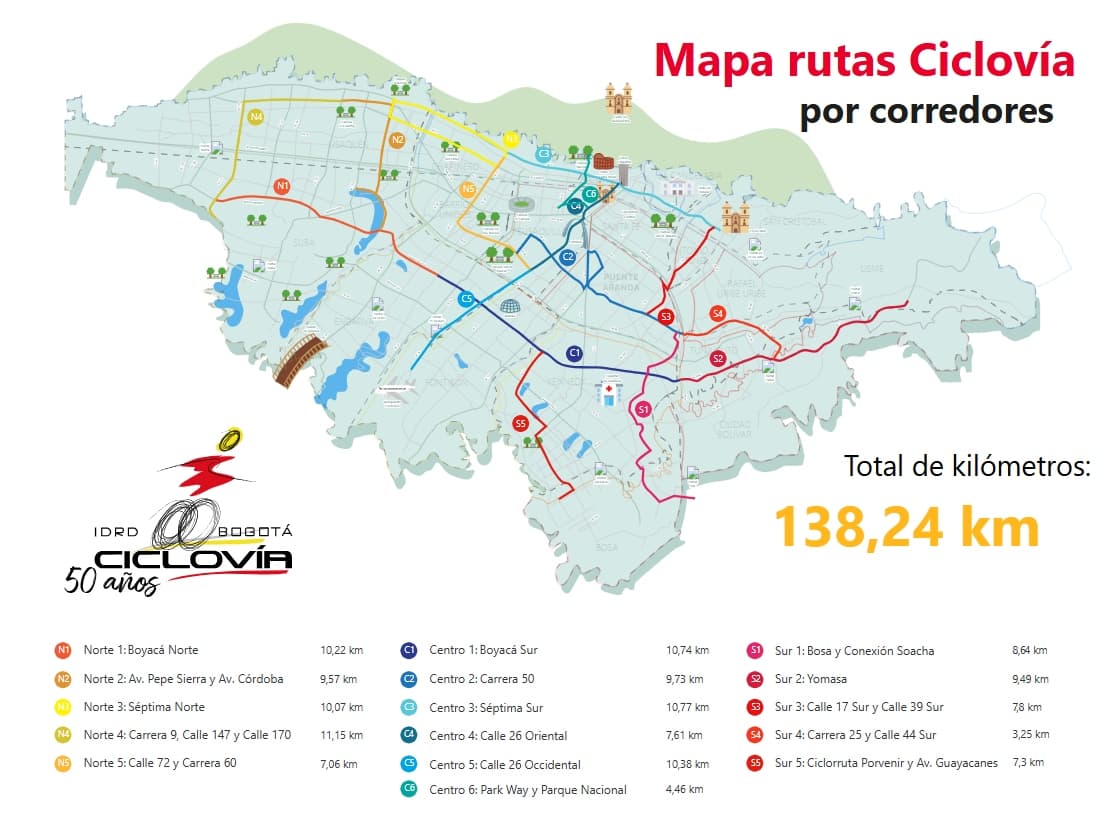
Every Sunday and on public holidays, Bogotá closes more than 120 kilometres of its main roads to motor traffic, from early morning until mid-afternoon. The streets are handed over to people on foot and on wheels. The programme has run in some form since the 1970s, and it has grown into a fixture of the city's life. On a typical week, somewhere between one and a half and two million people take part. In a city of roughly seven to eight million, that is close to a quarter of the population, out moving, in public, by choice.
No one is required to be there. There is no fine for staying home, no reward for showing up, no campaign of posters telling citizens that exercise is good for them. The thing that produces the behaviour is not a message. It is the road.
The wanting was never the problem
Bogotá never tried to make its people want to move more. It changed what was easy, and let the wanting take care of itself. That is the whole reversal. The instinctive approach would have been a health drive: the dangers of inactivity, the guidelines, the adverts with the upbeat music. We have all seen those campaigns fade into the background within a fortnight, because they work on the person and leave the environment, which is doing the real steering, untouched.
Bogotá did not try to change what people want. It changed what is easy. On an ordinary day, the path of least resistance in a car-dominated city is to drive, or to stay off roads that feel hostile to a person on a bike. On Ciclovía Sunday, that calculation flips. The cars are gone, the road is safe and open and inviting, and the easiest, most obvious thing to do on it is to move. People do not have to overcome anything. They follow the path that has been laid out for them, and that path happens to lead to two million people exercising.
This is the difference between motivation and design. Motivation works on the person and asks them to push against their environment. Design works on the environment so the person does not have to push at all.
The science: the path of least resistance
The behavioural principle underneath Ciclovía is the path of least resistance, sometimes discussed as the role of friction in behaviour. The core finding, repeated across decades of behavioural science, is uncomfortable for anyone who likes to think of themselves as a rational agent: we take the easy option far more reliably than we act on our stated intentions. The brain treats effort, even tiny amounts of it, as a cost to be avoided. A behaviour that requires one less step, one less decision, one less moment of friction, is dramatically more likely to happen, almost regardless of how much people say they want the alternative.
This is why the small things decide so much. Whether the healthy food is at eye level or on the bottom shelf. Whether signing up takes one click or five. Whether the bike is by the door or in the shed behind a locked gate. None of these touch how much someone wants the outcome. All of them change which behaviour is the path of least resistance, and the path of least resistance is the one most people take.
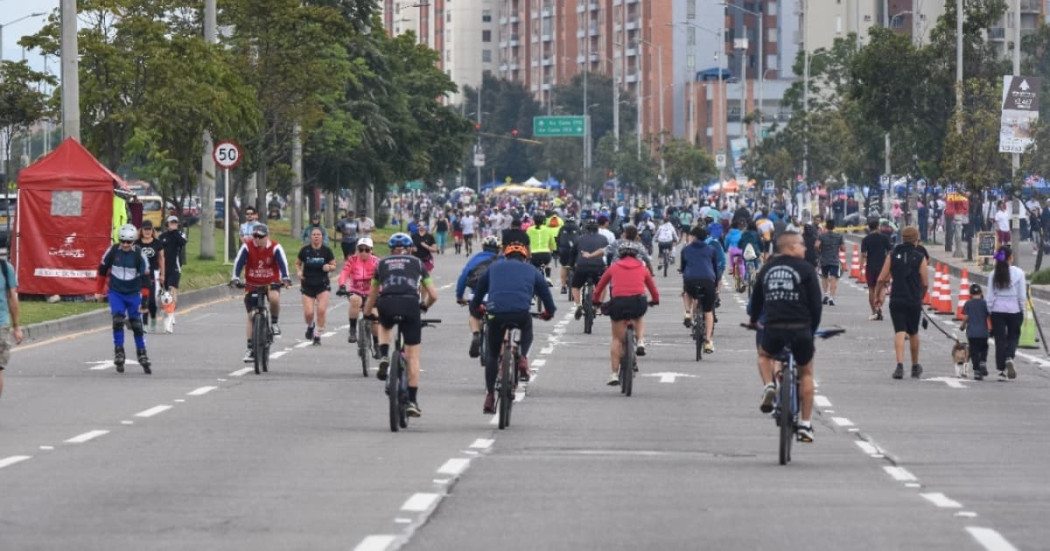
Ciclovía is this principle applied at the scale of a city, and the research has measured what it produces. A study by Andrea Torres, Olga Sarmiento and colleagues, published in the American Journal of Public Health in 2013, surveyed a thousand Ciclovía participants and a thousand users of the city's permanent bike-path network.[1] Most Ciclovía participants, around 60 per cent, were meeting the recommended level of physical activity in their leisure time, and they reported markedly higher social capital, the trust and sense of connection between people, than the comparison group, with roughly twice the odds. The open road does not just move bodies. It brings people into the same space, and connection follows.
Through a Behavioural Design lens
It is worth slowing down on what Bogotá actually did, because it is a clean example of how behaviour really changes, as opposed to how we usually try to change it.
Start with the person, not the policy. Before you can shift anyone's behaviour, you have to understand the progress they are actually trying to make, the real reason underneath the surface. A Sunday cyclist in Bogotá is not chasing "exercise". They want time with the family, a feeling of freedom, a healthier life that does not demand an expensive gym. Hold that real motive in view and you can see the forces acting on it. Two of them push a person towards moving: the frustrations of an ordinary week, the traffic and the noise, and the rewards of getting out, the air, the company, the sense of a day well spent. Two others hold them back: the worry of cycling among cars, and the simple pull of staying comfortably at home. Map those four forces around the real motive and something becomes obvious. The wanting was rarely the problem. The motive was already there. What stood in the way was practical and environmental, exactly what Ciclovía clears out of the road. This way of mapping a behaviour, the deeper motive plus the four forces around it, is what we call the Influence Framework at SUE, and it is where every intervention should start: with the human, before the fix.
Now to the fix itself. There are really only four buttons you can press to change a behaviour. You can make someone more able to do it, make them more willing, give them a nudge to act at the right moment, or help them repeat it until it sticks. We are all trained to reach for willingness, the better argument, the stronger campaign, the reason to care more. But willingness is exhausting and unreliable; it is a conscious effort, and conscious effort runs out. Ability is different. Make a behaviour genuinely easy and people do it almost without deciding to, because easy things slip past the part of the mind that weighs and resists. This is the quiet power Bogotá used. It barely touched willingness at all. It made moving so effortless, no traffic, no danger, no planning, just open road, that the willingness stopped mattering. Those four buttons, ability, willingness, the trigger and the repetition, are what we call the SWAC Tool, and the first of them, ability, is the one we treat as the hidden gem, because it works with how the mind actually runs rather than against it.
This is the move that travels, and it has nothing to do with bikes. A bank that wants people to save makes saving automatic, rounding up purchases and moving the change across, rather than lecturing them about thrift. A hospital that wants better hand hygiene puts the gel in the doorway, instead of adding another poster. The first question is never how do I make people want this more, but what is making the right thing hard, and how do I take that away. Find the barrier, remove it, and the behaviour you have been begging for often simply appears. That, in one line, is the whole discipline of Behavioural Design: you do not raise the willpower, you lower the friction, and the behaviour follows the easier path. At SUE, the Influence Framework and SWAC are the methods we teach in The Art of Influence© to systematically analyse how the built environment triggers behaviour and where you can redesign the path.
What this means in practice
It is tempting to file Ciclovía under city planning and move on, but the same lever sits underneath most of the behaviour we struggle to change, starting with our own. Think of something you keep meaning to do and do not. The standard advice is to want it more: more discipline, more motivation, a stronger reason. Bogotá suggests the opposite. You are far more likely to start exercising because the kit is laid out and the gym is on your route than because you summoned more willpower. Lower the friction and the behaviour follows. Most personal change that sticks is quietly a redesign of how easy or hard something is, not a victory of will.
The same move scales up to leading people. When a team will not adopt the new way of working, the instinct is to push: another briefing, another reminder of why it matters. Far more effective is to ask what makes the old behaviour the path of least resistance and remove it, so the new way becomes the easy one. A good leader changes what is effortless, not just what is expected.
And it scales again to the organisation and its customers. Why do users abandon the sign-up halfway? Rarely because they stopped wanting the product; far more often because one step asked too much. Why does the new system go unused, the change programme stall at week six? Because the surrounding environment still makes the old behaviour easier, and no amount of launch enthusiasm outlasts that. In every case, personal, team, organisational, the high-leverage question is the same: not how do I make people want this more, but what makes it hard to do, and how do I take that away.
Learn to apply this yourself
What makes Ciclovía so effective is that it works on ability rather than motivation: it removes the environmental barrier so completely that two million people act without being asked. In The Art of Influence©, you learn to use the Influence Framework and SWAC to map exactly those barriers in any situation and redesign the path so the behaviour you want becomes the easiest option available.
View The Art of Influence© onlineWhat you can design this week
The same move works on a habit of your own, a team you lead, or a customer you are trying to reach. Three ways to start:
Strip a step out of the behaviour you want. For yourself, remove one piece of friction from the thing you keep avoiding: lay it out the night before, delete the app that distracts you. For a team or customer, take out one click, approval or hand-off so the behaviour you want becomes the easy one.
Add friction to the behaviour you want less of. You rarely have to ban anything, in your own life or anyone else's. Make the unwanted option take one extra step, make the better option the default. A modest obstacle tips the choice, exactly as removing the cars tipped a whole city.
Read the situation before you blame the person, including yourself. When you keep failing at something, or a team will not adopt it, or a customer drops off, resist the conclusion that the will is missing. Walk through the actual steps and ask what the situation is making easy. The fix is usually in the path, not the person.
Bogotá did not persuade a quarter of its population to exercise. It built a situation in which moving was the easiest thing available, and got out of the way. That is exactly as useful for a habit you cannot stick to, a team you are trying to move, or a sales funnel that leaks, as it is for a Sunday in a Colombian city.
If you want to think this way about a behaviour you are trying to shift, our Behavioural Design training works through exactly this: how to read a situation, find the friction, and redesign the path.
If you want to learn how to design for behaviour rather than trying to motivate it, that's exactly what The Art of Influence© covers. View upcoming dates →
Frequently asked questions
What is Ciclovía in Bogotá?
Ciclovía is a weekly programme in Bogotá, Colombia, in which more than 120 kilometres of main roads are closed to motor traffic every Sunday and on public holidays. Between one and a half and two million people use the streets to cycle, run, skate and walk - close to a quarter of the city's population, with no obligation, reward or campaign to drive it.
What is the path of least resistance in behavioural science?
The path of least resistance is the observation that people tend to take the option that requires the least effort, almost regardless of their stated intentions. The brain treats even small amounts of friction as a cost to be avoided. Reducing friction from a desired behaviour, or adding it to an unwanted one, is one of the most reliable levers in behavioural design.
How does Ciclovía relate to behavioural design?
Ciclovía is a textbook example of designing behaviour rather than demanding it. Instead of running campaigns to motivate people to exercise, Bogotá changed the environment so that moving became the easiest option available. It works on CAN (capability) rather than WANT (motivation), which is usually the more powerful lever in behaviour change.