How do you design a building that helps people heal instead of holding them still?
How do you design a building that helps people heal instead of holding them still? It is not a question most hospitals ask. They are built for safety, throughput and infection control, and those are not small things. But somewhere in optimising for them, we built environments that communicate, on every square metre, a single message to the people inside: wait, lie still, we will handle it. And then we wonder why patients feel they have lost control of their own recovery.
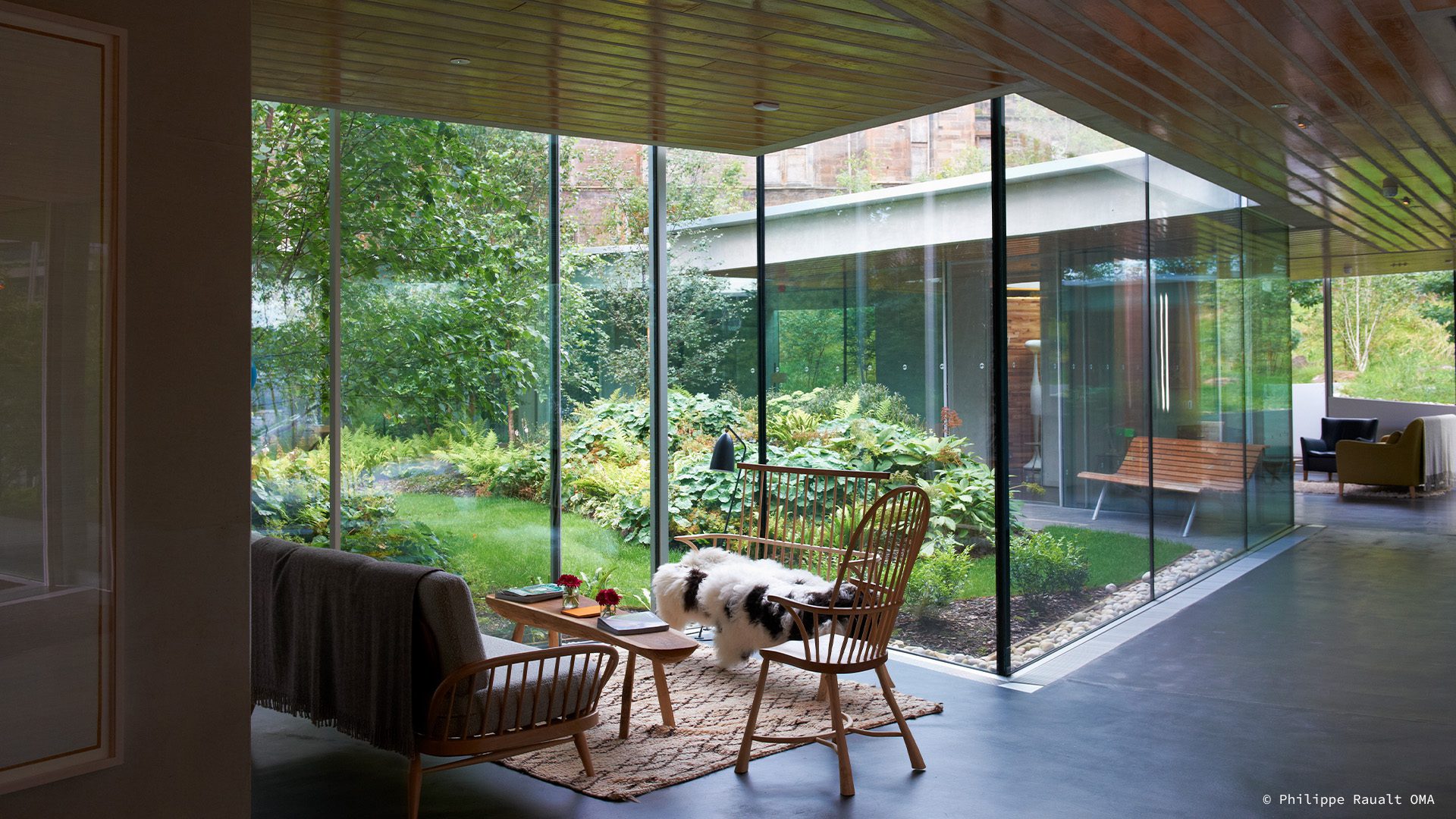
There is a different answer, and it began with a woman in a hospital corridor. In 1993, sitting in a bare hospital passage waiting for bad news about her cancer, she had a thought: if this building can demoralise me, could a building also lift me up? She did not survive her diagnosis. But the idea did. It became Maggie's Centres, small buildings on the grounds of NHS hospitals, designed by architects like Gehry, Hadid and Foster. No waiting rooms. An open kitchen. Daylight. Warm materials. A garden. Research at King's College found that visitors report significantly lower anxiety and a greater sense of control. Not despite the building. Because of it.
The hospital that tells you to wait
The conventional response to passive, slow-recovering patients is to add services. More psychological support. More counsellors. Awareness programmes aimed at patients. None of these are bad, but notice what they have in common: every one of them treats the patient, and none of them touches the building the patient is sitting in.
And the building is not neutral. The waiting room is called a waiting room. The corridor is bare. The whole environment communicates passivity: wait here, lie still, the experts are in charge. A person walks into that space and, without anyone saying a word, absorbs the message that recovery is something done to them rather than something they participate in. We then layer counselling on top, trying to restore a sense of agency that the architecture is quietly removing all day long.
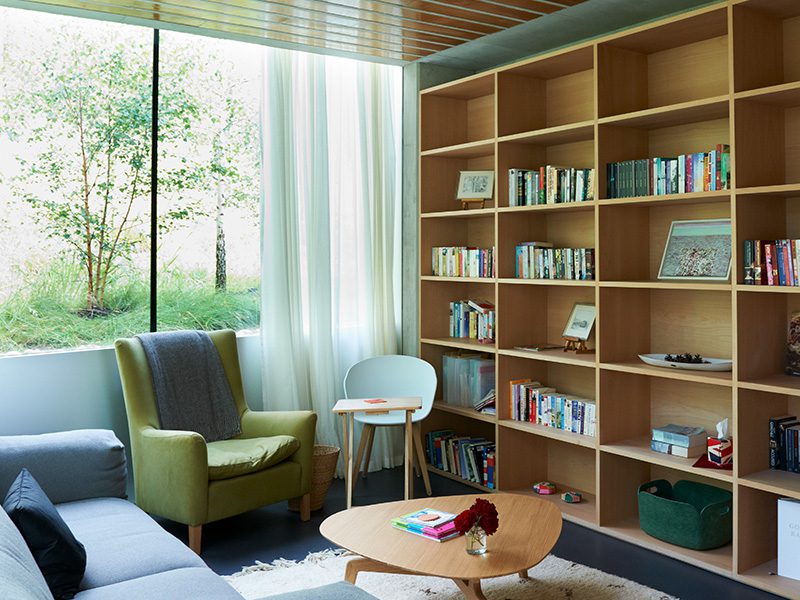
Maggie's inverted the question. Not how do we support patients who feel they have lost control, but what kind of building would give that control back? The answer was an environment that behaves nothing like a clinical waiting area. An open kitchen where you can make a cup of tea, an ordinary human act that says you are still a capable adult. Daylight and a garden, because the natural world steadies people. Warm materials instead of clinical surfaces. No reception desk processing you as a case. The building treats you as a person, and people who are treated as people recover differently from people who are processed as patients.
Why this is design, not motivation
It is easy to read Maggie's as a story about kindness, a gentler approach to cancer care. But that misses the mechanism, and the mechanism is what makes it more than goodwill.
Maggie's does not motivate patients to feel more in control. Nobody hands them a leaflet about taking ownership of their recovery. There is no programme urging them to feel empowered. The sense of control comes from the environment itself, from being in a place where ordinary human agency is possible: you can make tea, sit in the garden, choose where to be. The control is not asked for. It is built into the room.
That is the line between design and motivation, and in a healthcare setting it matters enormously. Motivation would try to teach an anxious, frightened person to feel calmer and more in control, an effortful thing to ask of someone facing a cancer diagnosis. Design changes the environment so the calm and the control come more easily, without the person having to manufacture them. A bare corridor asks the patient to summon composure against the grain of the room. Maggie's gives them a room that does the steadying for them.
The sense of agency was never only a matter of how resilient each patient happened to be. It was partly a property of the building they were standing in. At SUE, the Influence Framework and SWAC are the methods we teach in The Art of Influence© to systematically analyse how the environment drives health behaviour without relying on willpower.
The principle: the physical environment affects recovery, measurably
There is hard evidence underneath this, and it comes from one of the most cited studies in the field, which makes the soft idea concrete.
In 1984, Roger Ulrich published a study in Science examining patients recovering from gallbladder surgery in a Pennsylvania hospital.[1] Some patients had rooms with a window looking out onto a small stand of trees; others, in otherwise identical rooms, looked out onto a brick wall. The difference in outcomes was striking. Patients with the view of nature had shorter post-operative hospital stays and needed fewer doses of strong pain medication than those facing the wall. The study's own title was careful, noting that a view through a window "may influence" recovery, and that caution is worth preserving. But the finding was real: the same surgery, the same care, two different views, and two measurably different recoveries.
The implication is profound and slightly unsettling. The physical environment is not just a backdrop to medical treatment; it has direct physiological effects on how the body heals. A view of trees is not decoration. It is, in some measurable sense, part of the treatment. The body was responding to the window, not only to the medicine. And if the room matters that much for someone recovering from routine surgery, it matters everywhere care is given.
This is why Maggie's works, and why its anxiety and control findings are not surprising. The building is not a pleasant extra wrapped around the real work of care. For the people inside it, the building is part of the care.
Learn to apply this yourself
What makes Maggie's Centres effective is that they restore a sense of agency structurally, through the arrangement of the space itself, rather than asking people to summon it. The Art of Influence© teaches you to use the Influence Framework and SWAC to identify where your environment is removing agency and how to redesign it so the behaviour you want becomes the natural response.
View The Art of Influence© onlineWhat you can design this week
You do not need an architect of Gehry's stature to apply this. The principle, that the physical environment shapes how people feel and recover, operates in any setting where people are anxious, unwell or waiting.
Give people a view of something living. Ulrich's finding centred on a view of nature, and the effect has held up across much later research. Wherever people are recovering, waiting or under stress, ask what they can see. A view of greenery is doing measurable physiological work that a blank wall is not.
Restore small acts of agency. Maggie's gives people the ability to make tea, choose a seat, step into a garden. These ordinary acts of control matter to people who feel they have lost it. Ask where your environment strips agency away, and where you could hand even small choices back.
Audit what your waiting environment communicates. A space called a waiting room, arranged for passivity, tells people to be passive. Look at the environments where people wait under stress, and ask what message the room is sending before anyone speaks.
Treat the building as part of the intervention, not its container. This is the deeper shift. Care, recovery and wellbeing tend to be addressed entirely through services and staff, while the building, which is acting on every person inside it, is left out of the plan. The environment is doing something to people regardless. The only question is whether you have decided what.
It is worth dwelling on how far this reaches beyond cancer care, because the Ulrich finding is not really about hospitals. It is about the body responding to its surroundings, all the time, whether anyone designed those surroundings or not. The implication is that every environment where people are under strain - a waiting room, an office, a school, a courtroom - is already affecting the physiology of the people inside it. Most are doing so by accident, and often for the worse. The opportunity Maggie's points to is not limited to the dying. It is the simple recognition that no room is neutral, and that the choice to ignore the room is itself a choice with effects.
The thread is the one that runs through everything we do at SUE. You rarely improve how people feel or recover by asking them to try harder at it. You improve it by changing the environment that shapes the feeling. Maggie's did not teach cancer patients to feel in control. It built a place where control came more easily, and let the building do the work.
If you want to learn how to design for behaviour rather than trying to motivate it, that's exactly what The Art of Influence© covers. View upcoming dates →
Frequently asked questions
What are Maggie's Centres?
Maggie's Centres are small buildings on the grounds of NHS hospitals, designed for people with cancer and their families. Founded following an idea by Maggie Keswick Jencks, each building is designed by a major architect - including Frank Gehry, Zaha Hadid and Norman Foster - and features no waiting room, an open kitchen, natural materials, daylight and a garden. Research at King's College found visitors report significantly lower anxiety and a greater sense of control.
What did Roger Ulrich's window study find?
In 1984, Roger Ulrich published a study in Science comparing patients recovering from gallbladder surgery. Patients whose rooms looked onto a stand of trees had shorter hospital stays and needed fewer doses of strong pain medication than those whose rooms faced a brick wall. It was the first controlled evidence that the physical environment has measurable effects on recovery.
What is the difference between designing for wellbeing and motivating for wellbeing?
Motivation asks people to summon a feeling - calm, control, resilience - as an act of will. Design changes the environment so the feeling arises more naturally, without effort. Maggie's Centres do not encourage patients to feel in control. They build a place where agency is structurally possible: you can make tea, sit in the garden, choose where to be. The control is not requested. It is built into the room.