The SUE | 4C Influence Flow© Explained: From Attention to Behaviour Routine

Most behavioural interventions are really half-interventions. They are designed for the first step: standing out, grabbing attention, getting someone to click, buy, sign up, or register. And then?
Then the design stops.
The assumption is that once you have set someone in motion, the rest happens naturally. But behaviour that happens once is not behaviour change. It is an incident. Behaviour change is when it repeats, when it becomes automatic, when it becomes part of someone's routine. That means looking at the whole experience, not just the first step.
One good intervention is rarely enough. Someone first has to notice you, then take action, then feel it was a good choice, and then keep doing it. The SUE | 4C Influence Flow© shows you at which of those four moments it goes wrong: Catch, Convert, Confirm or Continue. That is how you turn separate interventions into an influence strategy. More about the SUE Method →
Why half-interventions always fail
Imagine a health app wanting to encourage people to exercise daily. They launch a campaign, invest in a polished onboarding experience, offer a free trial. The downloads are impressive. But after six weeks, only 8% of users are still active.
Recognise the pattern? It is not unusual. It is the norm. The campaign was perfectly designed for Catch: standing out, sparking curiosity, triggering the first download. But there was no design for what determines whether someone stays - the confirmation that they made the right choice, the building of a routine that makes the behaviour automatic.
The problem is not the campaign. The problem is that the campaign was the only thing that was designed.
Behaviour does not work like that. A person doing something for the first time is not there yet. They gain attention, turn that attention into action, experience that action, and then decide - consciously or not - whether to do it again. If the moments after that are not designed for, it does not go well by default. You lose people at precisely the moment they were almost won.
What is the SUE | 4C Influence Flow©?
The SUE | 4C Influence Flow© is one of the three tools of the SUE Behavioural Design Method. The SUE Influence Framework maps what drives people and what holds them back. The SUE | 4C Influence Flow© shows you where someone drops out, and with the SWAC tool you design the interventions for those moments. That is how you turn separate interventions into an influence strategy.
The four Cs are:
- Catch: how do we reach someone, and make sure they are open to what follows? Attention alone is not enough if they switch off straight away.
- Convert: how do we help someone take the step to the specific desired behaviour?
- Confirm: how do we help someone experience and understand that the choice they made is working out well?
- Continue: how do we help someone keep going, finish, or keep performing the desired behaviour?
The power of the SUE | 4C Influence Flow© lies in the sequence. The four Cs are not arbitrary. They follow the psychological logic of how people make decisions, experience behaviour, and form habits. That does not mean you always need four new interventions. Check which Cs are relevant. Perhaps you already have someone's attention, or the behaviour only needs to happen once. Design what is needed; do not fill in boxes to make the model look complete.
Behaviour that happens once is not behaviour change. It is an incident. The SUE | 4C Influence Flow© turns separate interventions into an influence strategy.
Catch: attention is the beginning, not the goal
Catch is the C most designers already know, and also the one they most often overestimate. Gaining attention is necessary, but it is only the first of the four Cs. Attention that leads nowhere is budget wasted.
Effective Catch works on two levels simultaneously. First, it interrupts an existing pattern: it breaks the autopilot on which people move through their day. Second, it immediately creates relevance: it makes clear why this matters for the person, right now.
The System 1 principle applies in full force here. People process most information automatically, quickly, and without conscious attention. Gaining attention means activating the automatic system: visual salience, emotional relevance, surprise, personal recognition. Abstract claims about product quality or organisational values do not do this. Concrete, sensory, recognisable stimuli do.
An effective Catch connects to the pains and anxieties that the Influence Framework has mapped. When you know what genuinely preoccupies someone, you can design a Catch that resonates immediately - not as an interruption that irritates, but as a recognition that makes them think: "this is about me."
Convert: the barrier to first behaviour
Attention is not the same as willingness, and willingness is not the same as behaviour. Between the moment someone notices that something is relevant to them and the moment they actually act, there is a gap. Convert is designed to bridge that gap.
Here the CAN principle from the SWAC tool applies in full force. Most designers think Convert is about persuasion: giving the best arguments, formulating the strongest proposition, making the value as clear as possible. But the real bottleneck is almost never that people are not convinced. The bottleneck is that the behaviour is too difficult.
Difficult can mean many things. Cognitively difficult: too many steps, too many choices, too much thinking required. Socially difficult: it feels awkward, risky, or requires saying or doing something that deviates from what your environment does. Practically difficult: it costs time, money, or effort that is not currently available. Each of these makes the desired behaviour less likely, regardless of how strong the motivation is.
Convert design means removing friction to the minimum required for the desired behaviour. Not simplifying the behaviour until it means nothing, but designing the path of least resistance towards the desired action. Those who do this best have understood it most clearly: Amazon's one-click checkout, Spotify's autoplay, bank transfers that repeat by default. None of these systems persuade you of anything. They remove obstacles.
A Convert intervention succeeds when someone acts before they have had the chance to doubt. That sounds manipulative, but it is the opposite: it makes it easier for people who already want to do something to do what they were already planning to do.
Confirm: validating the choice before doubt sets in
Someone has performed the behaviour. They have clicked, registered, purchased, taken the first step. Now begins one of the most underestimated moments in the influence strategy: the seconds, minutes, and hours immediately afterwards.
Behavioural economists call this post-decision dissonance: the doubt that arises after a decision, particularly when that decision required effort or commitment. People wonder whether they made the right choice. They look for confirmation. And when that confirmation does not come, the doubt grows, the sense of regret increases, and the likelihood of repeating the behaviour falls.
Most organisations leave this moment undesigned. After a purchase comes a confirmation email. After registration, a welcome message. But welcome messages about what the organisation offers confirm nothing. Confirmation is what the person feels about their own choice.
Effective Confirm interventions do two things. They explicitly validate the person's choice: you made the right decision, here is why. And they give the person an early win: a small, immediate success that shows them the choice is working. That success does not need to be large. It needs to arrive early.
An example: an insurance company wanting customers to store their policy documents digitally can send a message immediately after the download: "You've just secured your policy documents. That saves you an average of 47 minutes if you ever need them." That is Confirm. Not "thanks for using our app." But: your choice was smart, and here is the proof.
Continue: the habit that makes willpower unnecessary
Continue is the C that makes the difference between an incident and a habit. It is also the C most often absent from behavioural interventions, simply because organisations consider their work done the moment the first behaviour occurs.
But the first behaviour is the beginning, not the end. Habit formation takes an average of 66 days, with a range from 18 to 254 days, depending on the complexity of the behaviour and the consistency with which it is triggered. During that period, the behaviour is fragile. It depends on environmental cues, consistent triggers, a structure that keeps the behaviour running automatically when willingness fluctuates.
Continue design is design for the automatic. The goal is not to re-motivate someone repeatedly, but to embed the behaviour so thoroughly in the environment and the routine that it happens without a conscious decision being required. That is the definition of a habit: behaviour that occurs without deliberation.
In practice this means: building trigger structures that cue the behaviour at fixed moments (the SPARK from the SWAC tool), adapting the environment so that the desired behaviour becomes the default, and deploying social mechanisms that reinforce the new identity. Someone who begins to see themselves as a person-who-exercises needs less willpower to decide to go. The identity does part of the work.
A Continue intervention that works well eventually makes itself redundant. The habit has formed. The scaffolding can come down. The behaviour continues.
How the four Cs fit together
The SUE | 4C Influence Flow© is not a checklist. It is an architecture. Each C builds on the previous one, and a weak link in the chain breaks the entire influence strategy.
A beautiful Catch that leads to a Convert full of friction loses people at the hardest moment. A perfect Convert that results in first behaviour but has no Confirm moment leaves people in doubt. A good Confirm that does not lead to a Continue structure produces one-off behaviours that do not stick.
Imagine a municipality wanting more residents to separate their food waste. The Catch is a campaign that resonates emotionally: "Your kitchen is where new food production begins." The Convert is a free waste bin delivered to the home, with a fridge magnet showing what goes in and what does not. The Confirm is a letter two weeks later: "Your neighbourhood is separating 34% more food waste than last year. You are part of that." The Continue is a reminder every Thursday - the day before the collection round - via a push notification or a sticker on the bin.
Each C asks for design at a different moment in the influence strategy. Together they make the behaviour not just possible, but likely, repeatable, and ultimately automatic.
This is exactly what the SUE | 4C Influence Flow© structures: not the campaign, not the proposition, but everything from the first moment of attention to behaviour that lasts. That is how you turn separate interventions into an influence strategy.
SWAC and 4C: two questions on two levels
SWAC and 4C both help you design behaviour, but they answer different questions. With SWAC you design the interventions. With 4C you turn those interventions into an influence strategy.
SUE | SWAC Tool©
The level of a single moment
How can we prompt someone to act or to make a choice?
- You look at
- CAN (are they able to), WANT (do they want to), SPARK (are they prompted to) and AGAIN (do we help them keep it up).
- You design
- An intervention around a Moment that Matters: the moment someone decides, or has to decide, whether or not to do something.
- You check
- Can and will someone do this? What triggers the behaviour? How do we support repetition?

SUE | 4C Influence Flow©
The level of the whole influence strategy
Which thresholds do we need to bridge across the whole experience?
- You look at
- Catch, Convert, Confirm and Continue.
- You design
- An influence strategy with fitting interventions.
- You check
- Which threshold in the decision to do something or not, or to choose, do we need to help someone over? Where does the behaviour stall?
Both models follow on from research. Use the SUE | Influence Framework© to determine who you are helping, which specific behaviour you want to support and what is holding that behaviour back. Read the explanation of the SUE | SWAC Tool©.
How to use the SUE | 4C Influence Flow© in practice
You use the SUE | 4C Influence Flow© after completing the Influence Framework. At that point you know your audience, what drives them and what holds them back. The SUE | 4C Influence Flow© then shows you where someone drops out, and with SWAC you design the interventions for those moments. That is how you turn separate interventions into an influence strategy.
First step: Catch. Which touchpoints have the potential to break through the autopilot and immediately create relevance? Which pain or anxiety from your Influence Framework analysis can you address to generate immediate recognition? This is the moment to make the message as concrete and sensory as possible.
Second step: Convert. What friction currently exists between the attention and the first desired behaviour? Which steps can you remove, simplify, or automate? What is the smallest possible first action you can ask for that is still meaningful? Here the rule is: fewer steps is always better than more.
Third step: Confirm. What is the first thing someone sees, hears, or feels immediately after the first behaviour? Does that moment confirm the choice, or does it leave people in doubt? What is the first small win you can give, as early as possible in the experience? Every second of delay in Confirm costs you Continues.
Fourth step: Continue. Which triggers keep the behaviour alive in the moments when willingness is low? How do you embed the behaviour in the existing routine, so that it no longer requires a separate decision? Which social or identity mechanisms reinforce the new behaviour as a character trait rather than a task?
Check which Cs are relevant and design what is needed. Most budgets go to Catch. Most behaviour change happens in Convert, Confirm, and Continue.
The SUE | 4C Influence Flow© is one of the three tools of the SUE Method
The Influence Framework maps what drives people and what holds them back. The SUE | 4C Influence Flow© shows you where someone drops out. With the SWAC tool you design the interventions for those moments. That is how you turn separate interventions into an influence strategy.
View all articles on the SUE Method →


Learn to apply the SUE | 4C Influence Flow© in 2 days
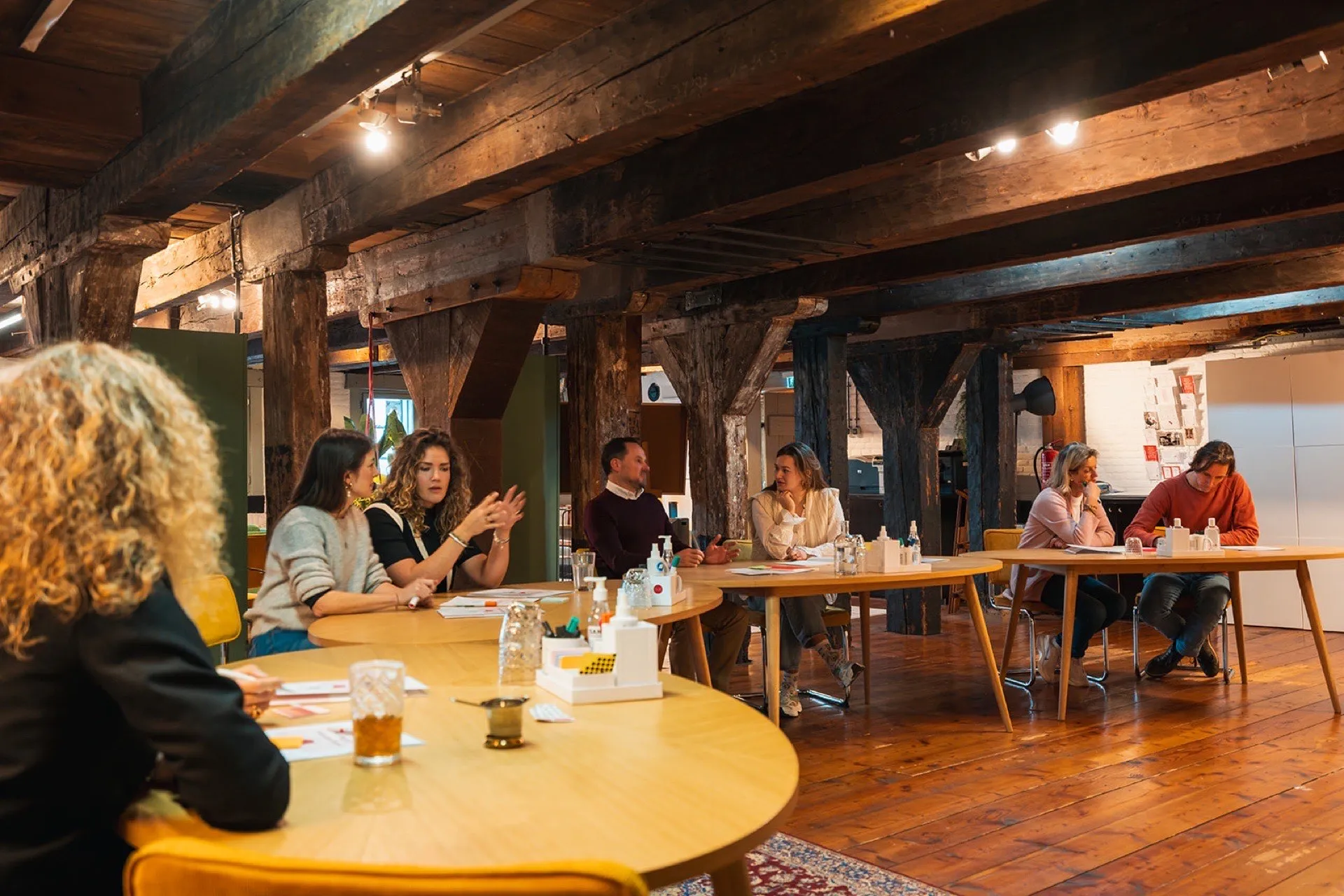
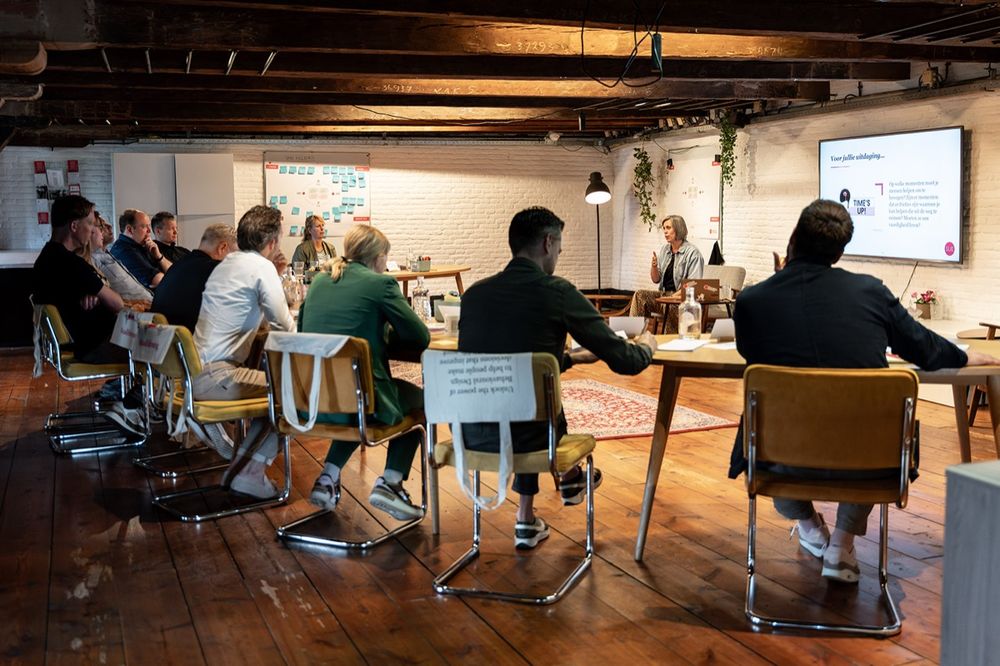
In The Art of Influence© you practise the full SUE Method - including the SUE | 4C Influence Flow© - on a real case, in a group of maximum 16 professionals. Reserve your spot and make a weekend of Amsterdam. Rated 9.3 by more than 10,000 alumni from 45+ countries.



Frequently asked questions
What is the SUE | 4C Influence Flow©?
One good intervention is rarely enough. Someone first has to notice you, then take action, then feel it was a good choice, and then keep doing it. The SUE | 4C Influence Flow© shows you at which of those four moments it goes wrong: Catch, Convert, Confirm or Continue. That is how you turn separate interventions into an influence strategy.
What is the difference between the SUE | 4C Influence Flow© and the SWAC tool?
SWAC and 4C both help you design behaviour, but they answer different questions. SWAC helps you determine what an intervention needs to make the behaviour possible. The SUE | 4C Influence Flow© helps you determine what support someone needs along the way and how your interventions follow on from one another. With SWAC you design the interventions. With 4C you turn those interventions into an influence strategy.
Why does behaviour change fail after the first step?
Because most interventions are designed for Catch only: standing out, grabbing attention, triggering the first behaviour. But behaviour that happens once is not behaviour change. Without a Confirm mechanism, people doubt their first step. Without a Continue design, the behaviour fades once the external prompt is removed. The SUE | 4C Influence Flow© shows you where someone gets stuck, also after the first step.
How do you use the SUE | 4C Influence Flow© in practice?
You use the SUE | 4C Influence Flow© after the SUE Influence Framework. At that point you know your audience, what drives them and what holds them back. The SUE | 4C Influence Flow© then helps you see where someone drops out: which touchpoints attract attention (Catch), which remove the barrier to first behaviour (Convert), which confirm the choice (Confirm), and which build the routine (Continue). With SWAC you design the interventions for those moments.