Behavioural Design for government

Increase the impact of policy by understanding how people really behave.

Most policy interventions don't fail because the objective is poor, but because they're designed for rational citizens who don't exist. With Behavioural Design and AI you'll learn to design interventions that fit how people actually make decisions and behave.

Fundamentals from €1,490 · EQAC-accredited · max. 16 participants

Participant of SUE Behavioural Design government training taking notes during a session
9.7/10 Average rating
10,000+ Professionals trained
EQAC Accredited training

Heineken Sony eBay European Commission Amnesty International UNHCR Medtronic Randstad Roche Adyen ING IKEA Orange Naspers T-Mobile Aramco Heineken Sony eBay European Commission Amnesty International UNHCR Medtronic Randstad Roche Adyen ING IKEA Orange Naspers T-Mobile Aramco
Who is this for?
Policy advisors You write policy that looks good on paper but doesn't land in practice. You want to understand how to design interventions that genuinely trigger the intended behaviour.
Government programme managers You run programmes that depend on behaviour change in citizens or staff. You're looking for a proven method to make that change happen rather than hoping it will.
Behavioural experts and advisors You work on nudging or behavioural interventions but lack a structured framework for developing and testing hypotheses before you roll anything out.
Government communications advisors You create campaigns and materials that inform people, but you can see that informing doesn't lead to behaviour change. You want to learn how to design communications that also activate.

Behavioural Design × AI: the combination that makes you effective

Government policy doesn't fail through lack of good intentions. It fails because it's designed for a rational citizen who doesn't exist. People act on context, habit and emotion, not on information and regulation. With Behavioural Design you'll learn to take that reality as your starting point. With AI as your research and design partner, you can apply those insights to concrete policy challenges faster than ever. The difference is never in the technology. It's in the people.

BD x AI Guru tool used for Behavioural Design government training
Understand why citizens don't respond as intended You learn the psychology behind compliance, participation and behaviour change: which barriers hold people back, what context triggers behaviour and why information is rarely enough.
Learn the SUE Influence Framework SUE's proven behavioural method: map your target group's pains, gains, anxieties and comforts. Use it as the foundation for every policy intervention, campaign or service delivery step.
Design interventions that change behaviour You translate behavioural insights into concrete intervention designs: nudges, defaults, social norms and adjustments to choice architecture. Policy implementation aligns with how people actually behave.
Become AI-native in policy research and intervention design With behavioural frameworks as your foundation, you use AI for target group analysis, barrier research and prototyping interventions. More effective policy development in less time.
Behavioural science Behavioural science
+
Power of AI Power of AI
=
Policy that works Policy that works
How can you learn?

Choose the path that suits you

As an individual, with your team, or organisation-wide: there are several ways to take a training.

What is Behavioural Design for government and public sector? Behavioural Design is the application of behavioural science to policy design and citizen engagement. Rather than relying on information campaigns alone, it teaches you to understand what truly drives and blocks citizen behaviour, and design interventions that genuinely move people to act. The SUE Influence Framework gives you a repeatable, evidence-based method for doing this in practice.

Government professional taking an individual Behavioural Design training at SUE
For myself

Learn the fundamentals on your own or go deeper. Live in Amsterdam or online at your own pace.

  • Fundamentals CourseLearn a method for understanding, predicting and influencing behaviour
  • Advanced CourseDeepen your expertise in an intensive 6-month programme
  • Deep DivesChoose from 10+ specialisations for a focused deep dive
Individual training options → Or view available dates directly →
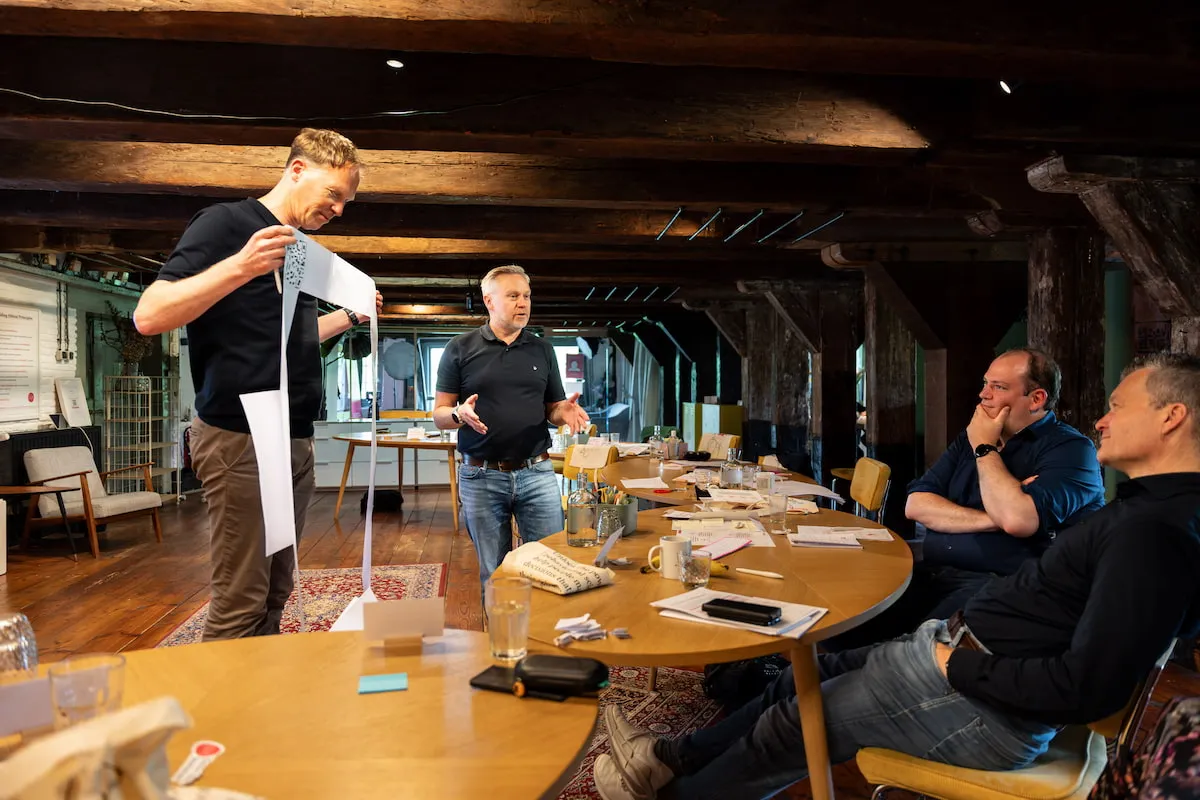
Government team taking a Behavioural Design team training at SUE
With my team

Train your policy team together. In-company, at your location or at our place in Amsterdam.

  • Behavioural Design SprintLearn behavioural thinking and apply it directly to your own policy challenges, spread across six sessions over three months
  • Fundamentals for TeamsLearn a method for understanding, predicting and influencing behaviour, in 2 intensive training days

  • Deep Dives in-companyA focused day on a behavioural topic of your choice
  • Leadership TrackEmbedding behavioural thinking into leadership over 5 months
View team training options →
Organisation-wide Behavioural Design learning journey at SUE

For my organisation

Embed behavioural thinking across your organisation with a tailored, multi-year learning and development programme.

  • Learning JourneysA fully bespoke programme of 4 to 8 months
  • ApproachDiagnosis → Co-creation → Coaching → Embedding
  • Themes include AI adoption (the technology is there, the behaviour isn't yet) Retaining and growing talent (people don't leave because of salary) Change that sticks (three-quarters of it is a behaviour problem) Team wellbeing (a well-designed work environment makes all the difference)
View Learning Journeys →
Google 4.8/5 Bloomville 5 stars Springest EQAC accredited
What the training gives you

What you'll actually do differently
after the training

Four shifts that government professionals mention again and again after completing the training.

1

You design interventions around behaviour, not assumptions

You shift from "how do we communicate this" to "what behaviour do we want to activate and which barrier is blocking it". You learn to map out your target group as a behavioural challenge. Your policy choices are no longer based on what people say they'll do — they're based on how people actually behave.

Policy advisor designing an intervention based on behavioural analysis
2

You increase participation and compliance without extra enforcement

You understand which barriers stop people from participating or complying with rules, and how to remove them through choice architecture, social norms and defaults. Behaviour change doesn't depend on extra enforcement or communications budget.

Government professional designing choice architecture for higher participation
3

You back up policy choices with behavioural science

You brief colleagues, directors and politicians not on gut feeling but on behavioural insights. You use the Influence Framework to show which barriers you're removing and which desired behaviour you're activating. You get buy-in for interventions that once seemed too unconventional.

Policy advisor backing up a policy choice with behavioural science
4

You combine BD and AI for sharper policy analysis

With behavioural frameworks as your foundation, you prompt AI for target group research, barrier analysis and generating and testing intervention hypotheses. You develop policy with the analytical depth of a behavioural scientist and the speed of an AI assistant.

Government professional combining Behavioural Design and AI for policy analysis
Results

What participants say about the Behavioural Design training

"I have learned many new insights that I can implement in our strategies but also in other areas like team building and the organisation. The BDA is perfect for anyone who wants to know what really moves people and how to tap into that knowledge to persuade others."

"A nice course that walks you through the key concepts and theories in this field. Practical methods, feasible techniques and brilliant examples. I enjoyed the vibe and the nicely designed workshop a lot."

"The BDA provides a great structure to apply behavioural insights into real-world applications. It created an open atmosphere in which to truly understand how people think and what can be done to influence their behaviour."

"The mix of theory and practice worked really well. I liked that you could immediately apply the material in practice. The summary and take-away moments of each chapter helped enormously. One of the best trainings I've ever done."

"The workshop was consistent and fun. I really liked the combination of design thinking and behavioural psychology. I'm bringing back to Brazil new tools to grow my work and create more value for the people I serve."

"This course gave me great insights. Pragmatic but still with a diligent approach, and very practical and effective. Exactly what I needed to make our communications land with the people we're trying to reach."

"A truly human-centred approach, backed up by a sound method. The training brings together insights from multiple disciplines into a scalable process. Looking forward to experimenting further with what I've learned."

"The course gives you a broader perspective on how behaviours can be designed based on a clear goal for a targeted audience, after a deep understanding of the problem and empathy for the people involved."

"The methodology framework ties everything together and provides you with concrete tools and best practices for applying behavioural insights to your work and the people you serve. This will bring great value."

For your line manager

What your manager wants to know

Need to convince your line manager? Here's what concretely changes:

Demonstrably more effective interventions

Staff who design policy interventions based on behavioural science consistently achieve higher participation and compliance rates. Not through bigger communications budgets, but through better design that fits how people actually make decisions.

Buy-in for unconventional approaches

Behavioural science gives policymakers a language and evidence base to propose interventions that go beyond information campaigns. They can show which behaviour they want to activate, which barriers they're removing and why that works.

Behavioural knowledge embedded in the organisation

Rather than hiring in behavioural expertise from expensive external consultancies, you build internal capability. Staff can independently develop and test policy interventions, leading to shorter turnaround times and lower costs.

Last updated: March 2026
Frequently asked questions

We think you might still want to know this

Most participants start without any prior knowledge, and that's exactly the point. The training teaches you the behavioural science you need, linked directly to your own policy work. No academic theory for theory's sake, just actionable insights you can apply the very next day in your intervention design.

Government professionals are one of the most enthusiastic groups in our training. The method maps directly onto policy challenges: why don't citizens comply with rules, how do you increase participation, how do you design an enforcement strategy that actually works? You learn how to use behavioural science to design policy interventions that genuinely trigger the intended behaviour.

Experienced policymakers tend to get the most out of the training. You've already got the domain knowledge. The training gives you the behavioural science framework that validates and sharpens your intervention intuition. Many participants say afterwards: I knew that information campaigns don't work, but now I finally understand why and what to do instead.

You're deliberately placed in a mixed group, with professionals from all kinds of sectors and disciplines. Policy advisors, communications consultants, HR professionals and managers all mixed together. Maximum 16 participants per group. That mix makes the training valuable: you also learn from how people outside government tackle the same behavioural challenges.

Start with the Fundamentals. It gives you the complete Behavioural Design framework: the Influence Framework, the JTBD method and all the core tools. The Advanced Course builds on that with deeper persuasion psychology and framing techniques. Without the Fundamentals, the Advanced lacks its foundation.

Most public sector organisations allow this through a personal development or training budget. The training is EQAC-accredited, which makes it easier to get reimbursed. In the section for your line manager you'll find concrete arguments to help start that conversation. Get in touch with us if you need a quote or additional information.

You leave with a complete Behavioural Design Toolkit: the SUE Influence Framework Canvas, the JTBD method, cheat cards for CAN, WANT and AGAIN interventions, the Behavioural Interview Guide, Behavioural Statement worksheet, System 1 and 2 guide and the Prototyping Guide. You also get lifetime access to the BD Club, the BD x AI Guru and an EQAC-accredited certificate. Live training includes a follow-up session after 6 weeks.

Ready to design policy that genuinely changes behaviour?

Rated 9.7/10 · 10,000+ professionals trained · max. 16 participants per group

Further reading

Insights for government professionals

The science behind compliance, participation and policy interventions that actually work.

Behavioural Design Fundamentals, limited places per group · 9.7/10

See next available date →