People do not decide on arguments, but on the situation they are in. In two days you learn to read and design that situation, so that colleagues, clients and directors say yes and act on it. Without hierarchy, without tricks.
For advisers, project leads, policy makers, account managers and managers who need to bring others along without being in charge of them.
Behavioural Design Fundamentals · next English edition to be announced (Dutch editions monthly) · € 1,490 excl. VAT · max 16 participants
9.3 out of 10 (Springest) · 10,000+ trained · EQAC-certified · practitioner trainers
10,000+ professionals trained, including people from
You backed the proposal with numbers. The director says "interesting" and it disappears into a drawer.
The client was enthusiastic in the meeting. Then you hear nothing more.
Your colleague from the other department says yes in the meeting and then simply works around you.
Classic influencing courses teach you to talk better. The problem is not your story, but the situation in which the other person decides.
Programme, dates, price and what you take home, in one PDF you can also forward to your manager.
You see which fears and habits hold the other person back, even when they do not name them themselves.
You design the moment at which the other person decides, instead of rewriting your pitch for the tenth time.
You use social proof, friction and framing deliberately, and recognise when someone applies them to you.
You bring people along without authority, and without them feeling played: they choose for themselves.
You learn this with Behavioural Design and the SUE Influence Framework: first understand why someone is not saying yes now, then design the situation in which they do.
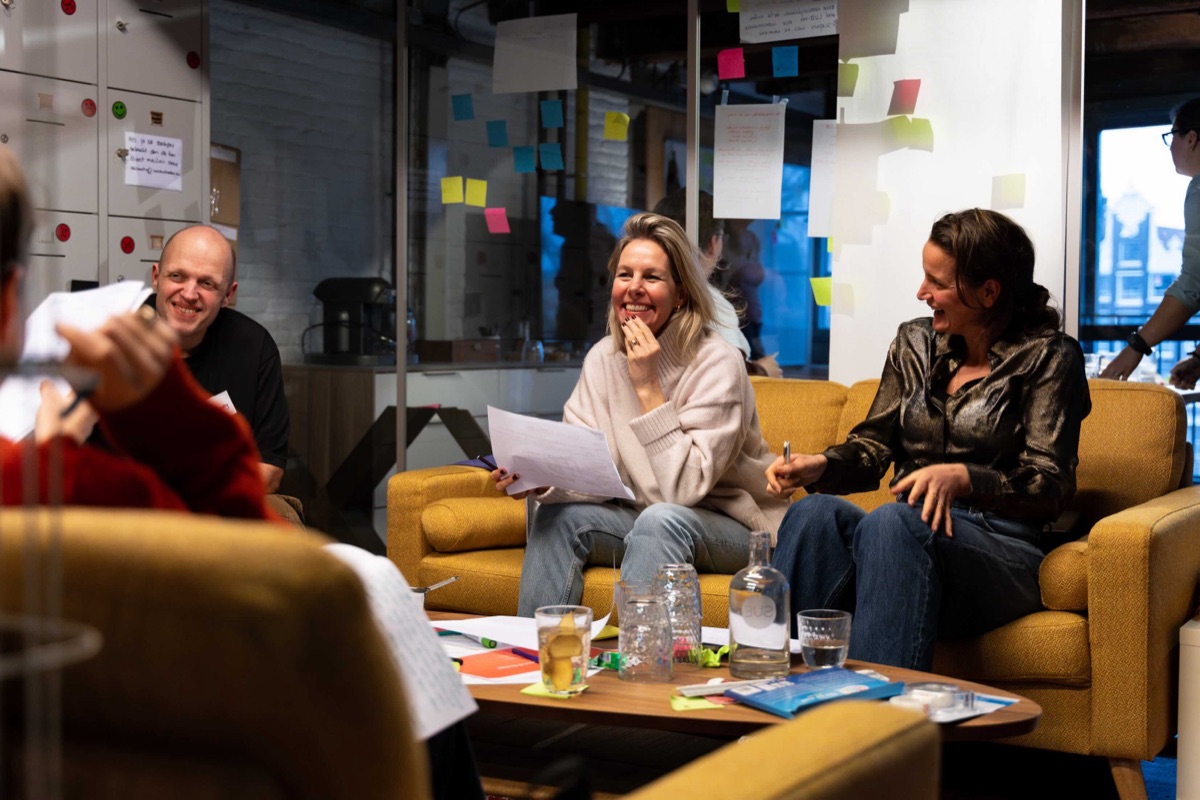
A maximum of 16 participants. Both days you work on someone you need to bring along now, not on a case from a textbook.
| Classic influencing course | Behavioural Design Fundamentals | |
|---|---|---|
| What you practise | Your own behaviour in the conversation: listening, arguing, body language, influencing styles | The situation in which the other person decides |
| What you take home | A styles model | A design method plus the Behavioural Design Toolkit |
| When it works | When you are at the table yourself | Also when you are not in the room: in an email, a proposal, a process or a policy |
| Duration and price (excl. VAT) | Two to three days, usually € 1,200 to € 2,000 | Two days, € 1,490 |
| Recognition | Varies per provider | EQAC-certified certificate |
If what you mainly want is confidence in difficult conversations, a conversation skills course is the better choice. If you want your proposal adopted this month, you are in the right place.
Trainer & consultant
Works at the intersection of Behavioural Design, people & culture strategy and wellbeing programmes. Helps organisations understand and positively steer human behaviour.
Trainer & consultant
Combines behavioural science with sustainability and healthcare. Specialist in sustainable change at individual, organisational and societal level.
Product designer & UX strategist
Translates behavioural science into smart, practical solutions. Helps teams innovate faster, smarter and more effectively.
Trainer & consultant
Founder of the Behavioural Design Circle at ABN AMRO. More than 25 years of experience at the intersection of CX, propositions and behaviour change.
Co-founder & trainer
Has spent more than 15 years making behavioural science practical for organisations worldwide. A practitioner, not an academic researcher. Author of The Art of Designing Behaviour.
Astrid is an experienced trainer who keeps you interested with knowledge and humour until the last minute. She is not only telling information, but also applying it immediately and that makes the training very valuable.

Super, I got clear and practical guidance on Behavioural Design. It's never a one trick pony.

In two days we got the basics of how to apply Behavioural Design in practice. Astrid can convey the importance of outside-in thinking in a clear, informative and interesting way. I now feel like applying this in my own daily practice.


Maps, in one overview, what holds the other person back and what tips them over the line.
Translates your diagnosis into interventions that make the desired choice the easiest one.
Shows what the other person is really trying to get done, and why your proposal does not fit that yet.
The questions that let you hear what the other person does not say in the meeting.
Pins down exactly which decision you want and how you test it small before you use it at scale.
After purchase you receive the AI Mentor, after the training your certificate and lifelong membership of the Behavioural Design Club.
Next English edition to be announced (Dutch editions monthly) · € 1,490 excl. VAT · max 16 participants · EQAC certificate
Does your whole team need to bring stakeholders along? Then the two-day Sprint at your location is the format.
Influencing without authority is getting people to choose what you propose while you are not in charge of them. It does not work through better arguments, but through the situation in which the other person decides: what they see, what others do, how much effort it takes and what risk they feel. In the training you learn to read and design that situation.
Both, with a difference. Persuasion is about what you say; influencing is about the context in which the other person decides. You learn both, but the emphasis is on designing the decision, because that also works when you are not in the room.
For advisers, project leads, policy makers, account managers and managers who need to bring others along without hierarchy. No background in psychology required.
Two consecutive days in Amsterdam, a maximum of 16 participants. English-language editions run several times a year; the next date is at the top of this page and all dates are on the training page.
€ 1,490 excluding VAT, including the Behavioural Design Toolkit, lunch, the EQAC certificate, the AI Mentor after purchase and lifelong membership of the BD Club.
No. Manipulation works against the interest of the other person and stops the moment they see through it. Behavioural Design designs situations in which people find it easier to choose what they already want. In the training we discuss the ethical line explicitly.
Yes. For teams there is the Sprint: the same two days at your location, with your own case, for 5 to 24 participants.
How to get directors and colleagues from other departments to choose your proposal, even when you are not in charge of them.
Read the guide →Why a better-substantiated proposal rarely gets a better result, and what actually tips the balance.
Read the guide →How to turn a yes in the meeting into a yes on the work floor, without having to keep pushing.
Read the guide →You do not need to become more convincing. You need to learn to design the other person's decision.