You are responsible. You are not the boss.
The project has your name on it. The people who have to do the work sit in other teams, with their own manager and their own list of priorities. You cannot tell them to do anything. You can ask, remind and ask again.
And when it stalls, you do what nearly everyone does: you send an email with their manager in copy. That helps for a week.
This is leading without authority, or informal leadership. Project leads, programme managers, coordinators and senior specialists do it every day. With no rank to fall back on, you have one thing left. Influence.
Influence without authority is giving direction to people over whom you have no formal say, such as colleagues in other teams, professionals or your own manager. You cannot impose anything, so everything depends on influence: understanding what the other person is weighing up and making it easy for them to join in. More on influencing without authority →
What is influence without authority?
Influence without authority is getting people to move when you cannot instruct them. You are responsible for a result and you lack the hierarchy that normally comes with it. No appraisal, no budget, no final say.
It is more common than the name suggests. The project lead with a team drawn from five departments. The policy adviser who needs operations on board. The senior who guides juniors without being their manager. And anyone who wants something from their own board.
Informal leadership is the same thing seen from the other side: someone colleagues follow although the organisation chart gives them no reason to. That is also where authority and influence part ways. Authority comes with your job title. Influence has to be given to you by the other person.
Why does pushing fail when you are not the boss?
Without rank, people reach for substitutes for rank. Reminding more often. Bringing in the other person's manager. Pointing to what the leadership team decided. It feels logical, because these are the only means of pressure you have.
In 1992 organisational psychologists Gary Yukl and Bruce Tracey studied which ways of influencing people at work have an effect.[1] They did not ask the managers themselves. Each manager's subordinates, peers and boss filled in a questionnaire on nine tactics. Three worked best: persuading with sound arguments, appealing to what someone cares about, and consulting people on the plan.
On the other end of the list they write:
"... the least effective tactics were pressure, coalition, and legitimating."
Gary Yukl and J. Bruce Tracey, Journal of Applied Psychology (1992)
Applying pressure, enlisting allies to outvote someone, and invoking rules or decisions from above. Those are the three things you do with that email and that copy line.
Why this achieves so little was described by psychologist Kurt Lewin back in 1947. For Lewin, behaviour is an equilibrium between forces that push and forces that hold back. You can shift that equilibrium in two ways: push harder, or remove what holds back. Pushing harder works too, only the tension rises. Lewin linked that tension to more fatigue, aggressiveness and emotionality, and for that reason called the second route preferable as a rule.[2]
You will recognise it. The colleague who finally delivers after three reminders delivers the minimum. And next time they do not pick up the phone.
Do you have more influence than you think?
People without authority quickly assume they have little influence either. That turns out to be wrong.
Francis Flynn of Columbia Business School and Vanessa Lake ran a series of studies, in the lab and outside it, on how well people can predict whether someone will say yes to a direct request for help.[3] Badly, it turned out. Those asking underestimated the chance of a yes by as much as half.
The explanation lies in what you pay attention to. The person asking thinks about what it costs the other to say yes: time, effort, hassle. The person being asked mostly feels how awkward it is to say no.
For anyone leading without authority this is good to know. You take the detour through the group email or the manager because you expect a no. That expectation is too gloomy. A direct request to one person gets a yes more often than you think.
What is your colleague weighing up? Four forces
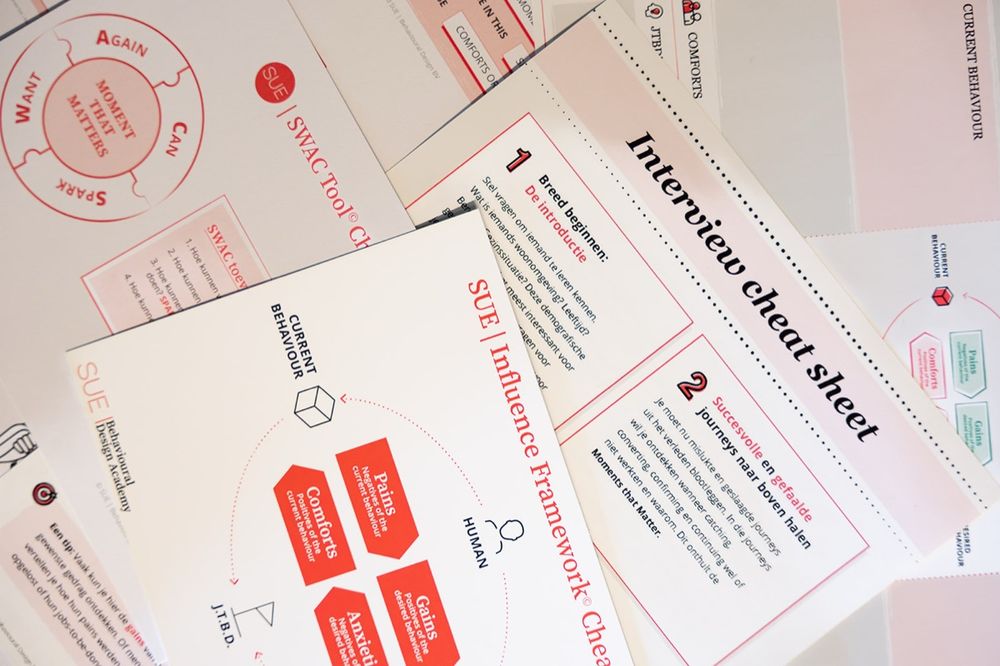
A yes to a request is a start. A project that runs for months needs more: people who keep taking part when their own team gets busy. For that you need to know what they are weighing up. At SUE we use the SUE | Influence Framework©, the model from Behavioural Design that builds on Lewin's force field and works it out into four forces you map per person.[4]
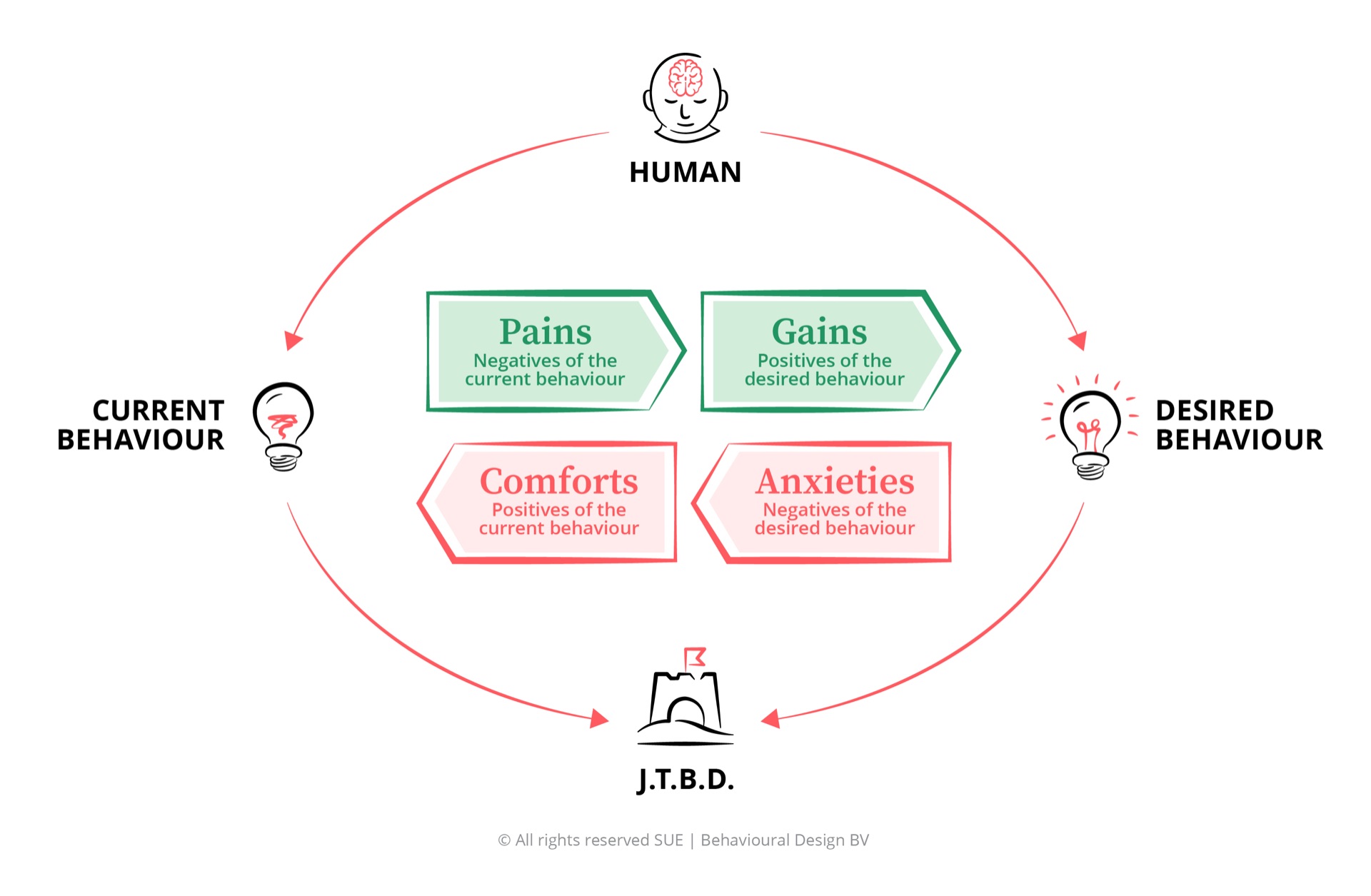
Two forces push. The pains: what does your colleague run into in their own work, and does your project solve any of it? The gains: what does taking part give them? Fill in their gain here, and leave out the organisation's. Visibility with the board, one problem fewer, learning something new.
Two forces hold back. The comforts: their own work is familiar, their own manager appraises them on it, and nobody in their team sees the hours spent on your project. The anxieties: what if this project runs aground with their name on it? What if it takes more time than you say now?
Someone who leads with authority can skip those last two, because the instruction pushes through them anyway. You cannot. That looks like a disadvantage. It simply forces you into the approach Lewin already considered the better one.
Without authority you cannot push harder. What remains is what works better: removing what holds people back.
How do you lead without authority?
Five things you can do differently tomorrow.
1. Ask it yourself, directly, of one person
Walk over or call. Say what you need, from whom and by when. A request to six people in one email is a request to nobody. And the chance of a yes to a direct request is higher than you estimate.
2. Involve people before the plan is finished
Consultation was one of the three tactics that worked best for Yukl and Tracey. Show your plan while it can still change, and ask what makes it hard for their team. You get information you need. And a plan that contains someone's own remark is harder for them to drop.
3. Remove what makes it hard
Ask everyone what makes taking part difficult, and solve as much of it as you can. Too little time? Ask for less, or arrange the hours with their manager. Unclear what is expected? Make the task smaller and more concrete. This is what removing restraining forces looks like in practice.
4. Find out what their manager steers on
Your colleague has a boss, and that boss decides what counts for them. Once you know what that manager is held to account for, you can show where your project contributes to it. Then you are no longer asking for a favour.
5. Give back what you can give
You have no salary or promotion to hand out. You can make sure someone's contribution is seen: in the steering group, by their own manager, in the presentation of the result. Yukl and Tracey found that exchange works moderately well with peers. Recognition is a currency you always carry.
Does this also work upwards and with professionals?
Leading professionals looks a lot like leading without authority, even when you are formally their manager. A doctor, a lawyer or a developer works on their own judgement. An instruction they do not see the point of gets carried out in their own way, and in their own time.
Upwards the same applies, with one difference. In Yukl and Tracey's study, exchange and ingratiation worked moderately well with peers and subordinates, and not with one's own boss. What people used most in an upward direction was persuading with arguments. Only your director will rarely tell you what makes it hard for them to say yes. You have to find that out yourself.
If you are dealing with several parties who each want something different, read on about stakeholder management. If you advise a client who makes the decision, the article on becoming a trusted advisor will help. And for why a better story seldom makes the difference: why facts and arguments rarely persuade.
Frequently asked questions about influence without authority
What is influence without authority?
Influence without authority is giving direction to people over whom you have no formal say. Project leads, coordinators, advisers and senior specialists do it daily. Because you cannot impose anything, the result depends on influence: knowing what the other person is weighing up and making it easy for them to join in.
What is the difference between authority and influence?
Authority comes with a role: you may decide, appraise and instruct. Influence is given to you by the other person, when they do what you propose of their own accord. Authority can enforce behaviour while you are present. Influence also works when you are not.
What is informal leadership?
Informal leadership is leadership that does not come from the organisation chart. Colleagues follow someone because of their knowledge, their relationships or the way they involve people. It is the other side of leading without authority: the same influence, seen from those who follow.
How do you get colleagues on board who do not report to you?
Ask directly and ask one person, involve people before your plan is finished and remove what makes taking part hard. Find out what their own manager steers on and show where your project contributes. According to research by Yukl and Tracey, pressure and escalation are the tactics that achieve the least.
Can you learn to lead without authority?
Yes. It is a way of working rather than a character trait. You learn to map which forces get someone moving and which hold them back, and to shape your request or plan around that. The SUE | Influence Framework© gives you a fixed structure for doing so.
Conclusion
Leading without authority feels like working with one hand tied behind your back. You lack the final say, so you compensate with reminders, copy lines and references to those above. The research points the other way. Those are the tactics that achieve the least, and people say yes to a direct request far more often than you expect.
What is left is influence: knowing what someone else is weighing up, removing what holds them back and making it easy for them to take part. In the online training The Art of Influence© you learn how people choose and how to design your request, plan or project around that.
Once you can get people on board without authority, you stop missing it.