Daily Dose of Influence
Distraction theory: how to manage interruptions at work
 By Astrid Groenewegen · 2 min read
For me, it’s just two more weekdays, a weekend, and a couple of hours until my daughter's summer break is over. Am I counting? Absolutely! Having her around for six weeks has been wonderful, but I'll be honest, it’s also brought its share of frustration with the constant stream of (micro) interruptions.
To turn this experience into something positive, I dove into some behavioural psychology research. What I found was really insightful, and I think it could be helpful for all of us as we get back to work, because, let’s face it, our workplaces are far from peaceful sanctuaries.
The Science Behind Distraction
I learned how our minds naturally wander, especially during tasks that require sustained attention. It turns out, distractions aren’t just random: they follow patterns we can design around.
The Impact of Interruptions on Focus
Our brains are wired to seek out novelty and avoid monotony. So, when we're doing repetitive tasks, it's easy to get tempted by distractions like checking our phones. Interestingly, a little distraction can actually boost creativity, giving our subconscious time to process things differently and spark new ideas. But frequent interruptions are a different story.
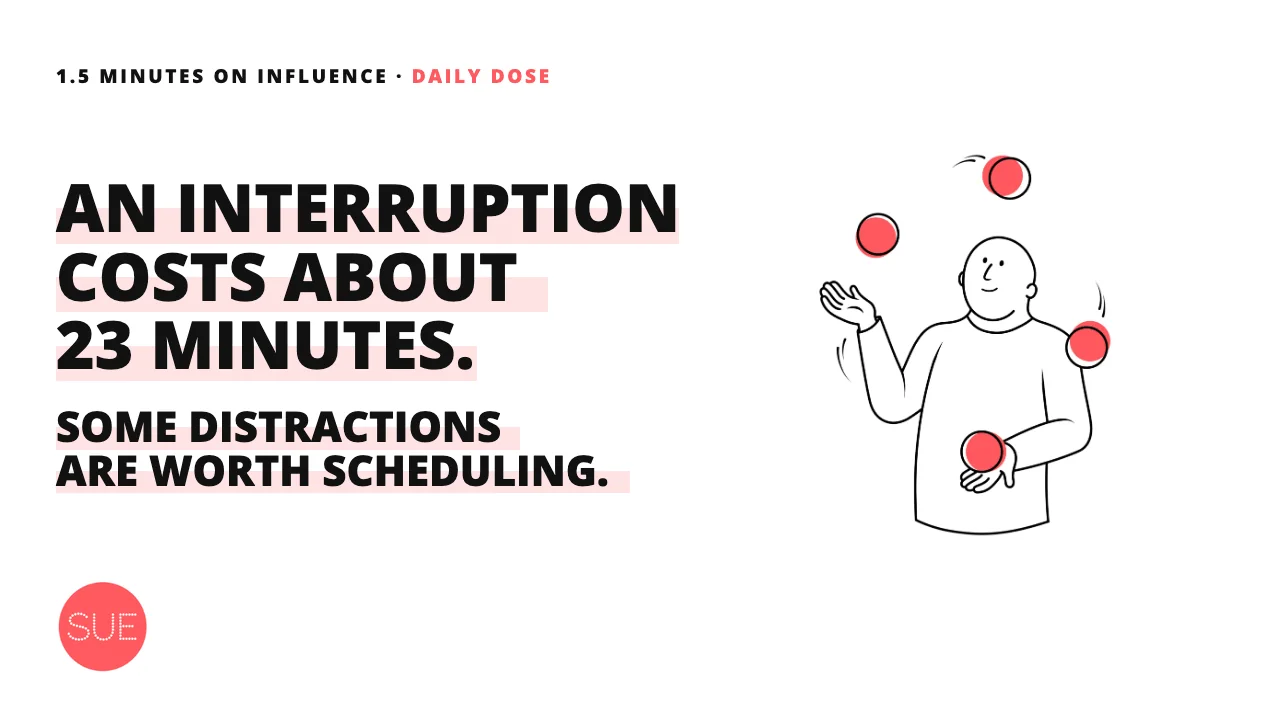
Research by Dr. Gloria Mark, a professor at the University of California, Irvine, found that interrupted work is resumed after about 23 minutes on average, although much of that time goes to other work in between. And organisational researcher Sophie Leroy (2009) showed that the lingering "attention residue" from an unfinished task lowers our performance on the next one.
How to Manage Distractions and Interruptions
So, how can we manage these distractions? Here are 4 behavioural insights that I’ve found helpful:
Temptation Bundling: This strategy involves pairing a task you need to do with a reward or activity you enjoy. It leverages your natural inclination for immediate gratification. For instance, allow yourself to check social media only after you’ve completed a significant portion of work or listen to your favourite podcast while doing routine tasks.
Choice Architecture: "Choice architecture" suggests our environment shapes our behaviour. Rearranging your workspace to minimise distractions, like turning off notifications and decluttering, can help you stay focused naturally.
If-Then Intentions: Research shows that setting specific intentions can help you stay on track. For example, forming an “if-then” plan like “If I receive a non-urgent email, then I’ll only check it after my current task” helps preemptively manage distractions.
Embrace Positive Distractions: Not all distractions are bad. Schedule regular breaks to indulge in small distractions, which can refresh your mind, listen to music or step outside for some fresh air to recharge.
In the end, distractions are inevitable, but how we handle them makes all the difference. Understanding how distraction works has helped me manage my attention better, and I hope it can do the same for you.
And speaking of distractions… I’ve got just two more days, a weekend, and an hour until summer break is officially over, and guess who’s just asked for a sandwich right now? Yep, my daughter!
Sources
Mark, G. (Gallup Business Journal interview, 'Too Many Interruptions at Work?'). https://news.gallup.com/businessjournal/23146/Too-Many-Interruptions-Work.aspx
Leroy, S. (2009). Why is it so hard to do my work? The challenge of attention residue when switching between work tasks. Organisational Behaviour and Human Decision Processes, 109(2), 168-181.