Daily Dose of Influence
How to change someone's mind: identity before facts
 By Astrid Groenewegen · 3 min read
I don't know about you, but watching the news and reading the newspaper can get me down sometimes. There seems to be such a great divide between people. But in an attempt to turn things around, I decided to search for answers to a challenge we face constantly: Why is it so hard to convince people to change their minds, especially when opinions clash? And even more importantly: How can we bridge the differences? This week, I was fortunate to come across the book 'Good Reasonable People' of Keith Payne, which gave me insight, hope, and inspiration to apply some Behavioural Design principles to find solutions, something I’d love to share with you this week. The writer explored how group beliefs can lead to dangerous behaviour, but what struck me was is that the he found that:
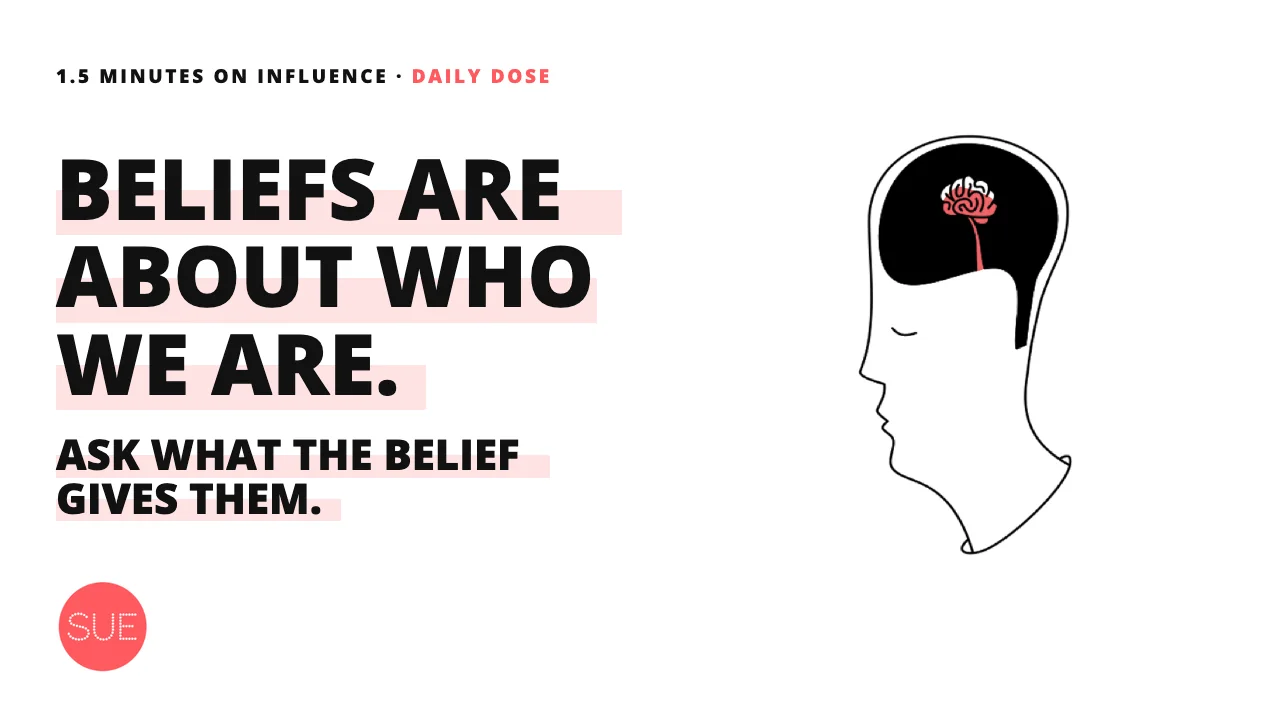
Beliefs aren’t so much based on ideology, they’re rooted in a shared identity.
It’s not just about what people believe; it’s about who they are when they believe it. We see this every day. Whether in discussions with colleagues, friends, or even clients, trying to change someone’s mind often feels like hitting a brick wall.
And it’s no wonder, when we challenge a belief, we’re not just challenging facts or opinions. We’re threatening the sense of belonging that comes with identifying with a group. People stick to their beliefs because changing them feels like a betrayal of that group identity. This reminded me of a core principle from my book 'The Art of Designing Behaviour':
You can’t shift behaviour (or beliefs) by attacking the logic behind it.
If you want to influence someone’s thinking, you have to work with the emotional and social undercurrents that keep them stuck to those beliefs. Let’s see if we can come up with solutions using the SUE | SWAC Tool:
WANT To shift beliefs, you first need to ask, what does this shared identity give them? People often cling to beliefs because they signal who they are and which group they belong to. The key isn’t to argue over facts but to understand what role their identity plays in keeping them attached to those beliefs. If you can show them how a new belief could align with or even enhance their identity, change becomes less threatening. For instance, if someone’s identity is tied to tradition, showing them how new ideas can preserve or strengthen those traditions can create a powerful motivation to change.
CAN Once you understand the identity connection, the next step is making it possible for them to shift. Social identity is reinforced by behaviours and practices. If changing beliefs feels like a threat to their social belonging, they won’t budge. You need to show them how adopting a new belief can actually strengthen their place within the group. For example, how can embracing a new idea make them a better version of who they already see themselves as in their community?
SPARK The spark is the cue that triggers action, something that can be noticed by one of our senses and pushes us to act. But a cue can also be a person. The "messenger effect" plays a crucial role in sparking change. People are more likely to respond to a message when it comes from someone they trust or admire. A respected figure within their community or a relatable peer can serve as the spark that nudges them to reconsider their beliefs, without making them feel like they’re betraying their group.
AGAIN Once someone starts to entertain new ideas, reinforcement is key. Social identity is reinforced through repetition, by seeing others in their group adopt similar changes or by receiving consistent signals that the new belief is compatible with their identity. The more they see these shifts happening around them, the more likely they are to internalise the new perspective as part of their evolving identity.
At the heart of this is the realisation that when we resist change, it’s not because the facts don’t add up, it’s because our identity feels at risk. So, if you’re struggling to influence someone who holds a different perspective, it’s important to step back from arguing over logic. Instead, ask yourself: What does this belief give them on a personal or social level?And how can we present new ideas in a way that feels safe and empowering, rather than threatening?
In the end, shaping behaviour, and beliefs, isn’t about being right. It’s about understanding the deep emotional and social forces at play and designing change that respects and aligns with people’s identities.
Only then can we start to bridge the divide, one behavioural design intervention at a time.