Behavioural science consulting vs training: which does your organisation actually need?
Every year, organisations spend significant budgets on behavioural science consultancies to solve behaviour problems they will encounter again and again. The consultant arrives, runs workshops, delivers a report with behavioural recommendations, and leaves. Twelve months later, a similar problem arises, and the same consultant is invited back.
This is not necessarily a failure of the consulting work. The insights may be excellent. The interventions may have worked. But the capability walked out of the door when the engagement ended.
The question of whether to hire a behavioural science consultancy or invest in training your own people is genuinely consequential. The answer depends on what you are actually trying to solve, and over what time horizon.
Short answer: A consultant gives you their insights for your problem. A training gives you the skill to develop your own insights for every future problem. The right choice depends on whether you are solving a one-off challenge or building a lasting capability.
| Dimension | Behavioural Science Consulting | Behavioural Design Training |
|---|---|---|
| What you get | Expert analysis + recommendations for your project | The skill to do the analysis yourself |
| Who does the work | The consultant | Your team |
| Duration | Project-based (weeks to months) | 2 days to 4 months, then permanent |
| Where the knowledge lives | In the consultant's firm | Inside your organisation |
| Cost model | High per project, recurring | One-time investment, compounding returns |
| Best for | Single high-stakes project, tight deadline | Recurring challenges, long-term capability |
| Risk | Dependency - capability leaves with the consultant | Requires internal motivation to apply |
What behavioural science consulting delivers
A good behavioural science consultancy (firms like the Behavioural Insights Team, Irrational Labs, and Ideas42) brings deep expertise to a specific challenge. They know the research literature. They have applied behavioural interventions across many contexts. They can move quickly when you cannot afford to build knowledge from scratch.
The consulting model makes genuine sense in specific situations. When you have a single, high-stakes project with a fixed deadline and no time to develop internal expertise. When you need an independent external voice to make a recommendation credible to leadership. When your challenge is genuinely novel: you face a problem where your team has no reference points and the learning curve is simply too steep for the time available.
In these situations, the premium of consulting is justified. You are buying speed and expertise on demand.
But the consulting model has a structural limitation that is rarely discussed honestly: the knowledge lives in the consultant's firm, not in your organisation. When the project ends, so does the capability. There will always be a next behaviour challenge, and it will require another engagement.
What behavioural design training delivers
Training inverts the model. Instead of bringing external expertise in to solve a specific problem, you build the expertise inside your team so they can solve every future problem themselves.
What this means practically: after two days of Behavioural Design training, a marketing manager can diagnose why a campaign is not converting, using the same frameworks a consultant would use. An HR professional can map the behavioural forces driving resistance to a new performance process. A product manager can identify why users abandon a flow that tested beautifully in prototype.
The economics of this are straightforward. A consulting engagement for a single behaviour challenge might cost €30,000 to €80,000. A team training that gives twelve people a working framework costs a fraction of that, and the framework applies to every challenge those twelve people encounter for the rest of their careers. The return compounds with every application.
There is also a qualitative difference in the output. A consultant who has spent two weeks on your challenge will produce a well-informed recommendation. But your own people who apply the Influence Framework to a challenge they have lived with for two years will surface insights no external party can reach. Deep contextual knowledge combined with a rigorous behavioural method is exceptionally powerful.
| Scenario | Better fit | Why |
|---|---|---|
| One-off high-stakes project, tight deadline | Consulting | Speed and specialist depth outweigh cost |
| Recurring behaviour challenges across the organisation | Training | Compounding returns on a single investment |
| Need external credibility for sensitive recommendation | Consulting | Independence adds weight to the finding |
| Want the method to live in the organisation long-term | Training | Knowledge stays when the project ends |
| Team needs a shared language and framework | Training | Alignment is a side effect of learning together |
| No internal motivation to learn and apply the method | Consulting | Training requires engagement; consulting delivers despite it |
The dependency trap
The biggest risk of defaulting to consulting is dependency. Each engagement solves the immediate problem while simultaneously reinforcing the belief that behavioural expertise must come from outside. The consultant becomes a necessary recurring cost rather than a transitional resource.
This dynamic is familiar in many professional domains. Organisations that rely on external legal counsel for every contract negotiation never develop internal legal judgement. Organisations that outsource all data analysis never develop internal analytical capability. The pattern repeats in behavioural science: each consulting project is valuable in isolation, but the accumulated cost of not building internal capability is substantial.
The professionals who recognise this pattern earliest, who invest in building their own capability rather than renting it, become disproportionately valuable within their organisations. They can do in an afternoon what used to require weeks of external engagement. They become the person who understands both the domain challenge and the behavioural method. That combination is rare and increasingly sought after.
When to use both
The consulting-versus-training framing is useful but not absolute. The most effective organisations often use both, in sequence.
A common and effective pattern: begin with a consulting engagement to solve an urgent, high-visibility problem. Use the success of that project to demonstrate the value of behavioural thinking to leadership. Then invest in training to build the capability internally, so that the next ten versions of that problem can be handled without external support.
This is how the most sophisticated L&D leaders approach it. The consulting engagement is the proof of concept. The training is the scaling mechanism.
At SUE, we operate both models. SATA - SUE & The Alchemists handles consulting engagements for organisations that need expert-led behaviour change projects. SUE Behavioural Design Academy builds the practitioner capability for professionals and teams who want the skill to do it themselves. Many clients use both: SATA solves the urgent problem, the Academy builds the lasting capability.
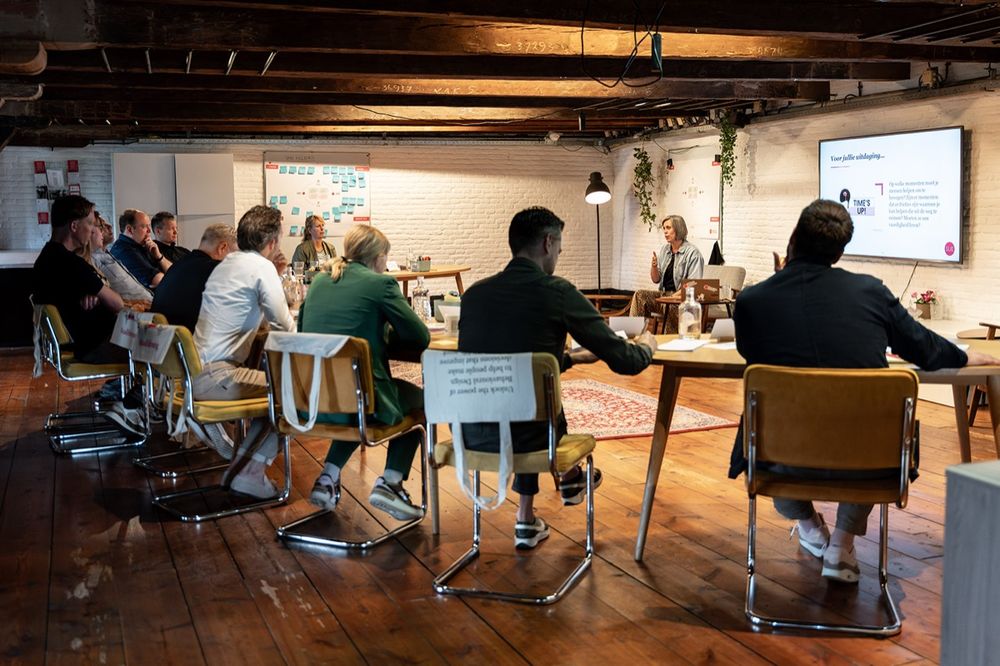
The honest difference in what you walk away with
After a consulting engagement, your organisation has a solution to one problem. The solution may be excellent. But the capability to generate solutions stays with the consultant.
After a training, your organisation has a method. The method applies to every behaviour challenge your team will ever face. It scales without additional cost. It improves with every application as practitioners develop judgement alongside the framework.
The consulting model is renting expertise. The training model is building it. Both are legitimate, but they answer different questions. The question worth asking is: what does your organisation actually need?
If the answer is one specific problem solved quickly: consult. If the answer is ongoing behavioural capability across your organisation: train.
Frequently asked questions
What is the difference between behavioural science consulting and behavioural design training?
Behavioural science consulting delivers expert-led analysis and recommendations for a specific project. The consultant does the behavioural diagnosis and designs the intervention. Behavioural design training builds that capability inside your own team. Your people learn to do the diagnosis, design the interventions, and apply the method independently to every future challenge.
When should you hire a behavioural science consultant?
Hire a consultant when you have a single high-stakes project with a tight deadline, when no internal expertise exists and building it is not a priority, or when you need external credibility for a sensitive recommendation. Consulting is right when speed matters more than long-term capability.
When is behavioural design training the better choice?
Training is the better choice when you face recurring challenges that require behavioural thinking, rather than a one-off project. When you want your team to apply the method independently. When you want to build institutional knowledge that stays with your organisation rather than leaving with the consultant. Training typically delivers five to ten times more ROI per euro spent than consulting for ongoing capability needs.
Can you combine behavioural science consulting and training?
Yes. The most effective model is to start with a short consulting engagement to solve an urgent problem and demonstrate the value of the approach, then follow with training to build lasting internal capability. SUE offers both: consulting through SATA and practitioner training through SUE Behavioural Design Academy.
Conclusion
The consulting-versus-training decision is ultimately a question about where you want behavioural expertise to live. If the answer is "in an external firm we can call on when needed," consulting is the right model. If the answer is "inside our own organisation, applied daily by our own people," training is the right investment.
Most organisations that have thought carefully about this end up choosing both, in sequence. They consult to prove the value; they train to scale it.
Want to explore building internal behavioural capability? The Behavioural Design Fundamentals Course teaches the complete method in two days, rated 9.3 by 10,000+ professionals from 45+ countries. For teams, the in-company Learning Sprint embeds the method across your organisation in three months.