How do you design a conversation where opponents stop seeing enemies?
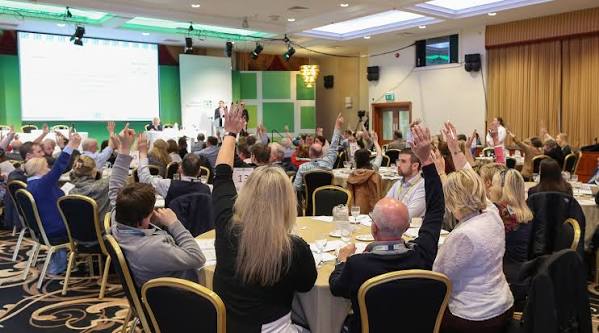
Walk into a large room with round tables, the kind you find at a wedding, and at each one sits a handful of ordinary people: a farmer, a student, a retired nurse, a taxi driver. They have been brought together to talk about the most divisive question their country has faced in a generation. By every expectation, this should end in a shouting match. Instead the room is quiet and attentive. People are leaning in to listen, not to win. Over a weekend, some of them will quietly change their minds about a question they walked in certain about.
This is the Citizens' Assembly of Ireland, and the picture of it, sworn opponents sitting elbow to elbow and actually hearing each other, makes the argument before a word is said. It is one of the clearest examples there is of designing a behaviour, in this case the rare behaviour of genuinely listening across a divide, rather than demanding it. And the mechanism behind it is the same one that decides whether your team meeting produces honesty or posturing, and whether the hardest conversations in your own life go anywhere at all.
What Ireland actually did
Between 2016 and 2018, Ireland faced questions it had avoided for decades, abortion chief among them, issues so charged that ordinary political debate could only inflame them. Rather than put them to a straight referendum campaign of slogans and adversarial television, the country tried something unusual. It convened a Citizens' Assembly: ninety-nine members of the public, chosen by lot to mirror the country in age, gender, region and background, plus a chair.
They met over many weekends across more than a year. They heard balanced evidence from experts with opposing views, read submissions from the public, and, crucially, discussed everything in small groups at those round tables, as equals, with a trained facilitator keeping the conversation fair. There was no audience to play to, no camera hunting for a soundbite, no party line to hold. The recommendations that emerged helped shape a national referendum that followed. The thing that produced the listening was not an appeal to people's better nature. It was the design of the room.
The hostility was never simply in the people
Ireland did not try to make its citizens more tolerant before sitting them down. It built a situation in which tolerance was the natural thing to do, and let the rest follow. That is the reversal worth pausing on. The instinctive approach to a divided public is to appeal to character: calls for civility, pleas to respect the other side, campaigns about listening. We have all watched those fade, because they work on the person and leave the structure of the encounter, which is doing the real steering, untouched.
Think about the encounters we usually design for contested issues. A panel show with two opponents and a host hunting for conflict. A comment thread where the audience is the point. A debate with a winner and a loser. Put people into those structures and they perform, harden and defend, not because they are bad people but because the situation rewards exactly that. The Assembly changed the structure. Take away the audience, the scoreboard and the spokesperson role, seat people as equals with the same information and enough time, and the work shifts from winning to understanding. The same human being behaves differently because the situation around them is different.
This is the difference between exhorting and designing. Exhortation works on the person and asks them to rise above their circumstances. Design changes the circumstances so the person does not have to.
The science: deliberative design and the conditions for contact
The behavioural principle underneath the Assembly is sometimes called deliberative design, and it draws on a much older finding in social psychology about what it actually takes for opposing groups to stop seeing each other as enemies. Simply putting hostile groups in the same place does little; contact alone can even deepen division. What changes things is the conditions of the contact. Decades of research, beginning with the psychologist Gordon Allport, found that contact reduces hostility when a few conditions hold: the parties meet as equals, they share a common task or goal, the encounter is cooperative rather than competitive, and it is supported by a legitimate authority or structure that everyone accepts as fair.[1]
Look at the Assembly against that list and it reads almost like a checklist made real. Equal status, because selection was by lottery and no one represented a faction. A shared task, namely to reach a recommendation together. A cooperative rather than adversarial format, with facilitation instead of a referee. And a legitimate structure, since the Assembly's process was transparent and its findings carried real weight. The depolarisation was not luck or national temperament. It was the predictable result of meeting conditions that behavioural science had already identified.
There is a second, quieter mechanism at work, and it sits in the lottery. When you are selected at random, you arrive with no constituency watching and no reputation staked on a position. Researchers on deliberation have noted that this freedom from having to perform for an audience is part of what lets people update their views. The absence of a gallery is not a detail. It is part of the design.[2]
Through a Behavioural Design lens
It is worth slowing down on what Ireland actually did, because it is a clean example of how behaviour changes across a divide, as opposed to how we usually try to force it.
Start with the person, not the position. Before you can move anyone, you have to understand the progress they are really trying to make. Someone defending a hard line in a public fight is not only arguing about the issue; they are protecting their standing, their belonging to a group, their sense of being a reasonable person. Hold that real motive in view and the forces around it come into focus. Two pull a person towards openness: the discomfort of being locked in conflict, and the relief and dignity of being genuinely heard. Two hold them back: the fear of losing face in front of their own side, and the comfort of the certainty they walked in with. Map those four forces around the real motive and the problem reframes itself. People were rarely unwilling to listen in principle. They were trapped in situations that made listening costly. This way of mapping a behaviour, the deeper motive plus the four forces around it, is what we call the Influence Framework at SUE, and it is where any attempt to bridge a divide should begin: with the human underneath the hardened position.
Now to the intervention. A useful way to see what the Assembly did is as a sequence: it captured attention, it held people in a fair and credible process, it created the conditions for a genuine shift, and it carried that shift onwards into a national vote. Most attempts to change minds collapse at the first or second of these. A confrontational debate grabs attention but immediately puts people on the defensive, so no real shift is ever possible. The Assembly was built the other way round. It earned attention quietly, then spent its real effort on the middle: a credible, equal, cooperative space in which changing your mind was safe rather than humiliating. Only once that shift was possible did the structure carry it forward into action.
This is the move that travels, and it has nothing to do with constitutional reform. The first question is never how do I make these people more reasonable, but what about this situation is making reasonableness impossible, and how do I change it. Remove the audience, level the status, give a shared task, and the listening you have been pleading for often simply appears. That, in one line, is the discipline of Behavioural Design here: you do not lecture people into open-mindedness, you build a room in which open-mindedness costs nothing. At SUE, the Influence Framework and SWAC are the methods we teach in the Behavioural Design Fundamentals Course to systematically analyse how institutional and situational design builds or erodes the conditions for trust and genuine dialogue.
What this means in practice
It is tempting to file the Citizens' Assembly under national politics and move on, but the same lever sits underneath almost every difficult conversation, starting with the ones in your own week.
At the personal level, think of a disagreement you keep having with someone that never goes anywhere. The standard move is to prepare a better argument. The Assembly suggests something else: change the setting before you change the script. A charged conversation held in front of others, or squeezed into a tense moment, is built to fail no matter how good your points are. The same conversation, one to one, without an audience, framed as figuring something out together rather than settling who is right, becomes a different encounter entirely. You are not winning harder. You are removing the reasons the other person has to defend rather than think.
The same move scales up to leading people. When a team splits into camps, the instinct is to referee the argument or call for more respect. Far more effective is to redesign the encounter. Take the debate off the stage, break it into small equal groups, give everyone the same brief before anyone argues, and assign a shared problem rather than two sides. A good leader does not demand that people stop posturing; they build a situation where posturing has no audience and no reward, and the honesty appears on its own.
And it scales again to the organisation. Why do town halls produce safe questions and silence rather than real concerns? Rarely because people have nothing to say; far more often because the format, a big room, a visible leadership panel, an audience, makes speaking honestly feel risky. Why do consultations harden positions instead of softening them? Because they pit groups against each other for a fixed outcome. In every case the high-leverage question is the same: not how do I make people more open, but what about this structure is making openness costly, and how do I take that cost away. That question is a learnable skill, and it transfers to every divide you will ever try to bridge.
Learn to apply this yourself
What makes deliberative design effective is not goodwill or facilitation technique alone: it is the structural removal of the conditions that make defensiveness rational, so that the person's real motive (to be heard and to understand) can surface. The Influence Framework and SWAC in the Behavioural Design Fundamentals Course give you a repeatable method to map those structural forces in any dialogue and redesign the situation so the behaviour you want becomes the easiest response.
View the online Fundamentals CourseWhat you can design this week
The same move works on a stuck disagreement of your own, a divided team, or a difficult organisational conversation. Three ways to start:
Take away the audience. Conflict hardens when people are performing for someone. For a tense conversation, move it out of the group chat or the meeting and make it one to one. When you are the one others are watching, speak last or step out, so the room can be honest without calibrating to you.
Give people a shared task, not two sides. Opposition softens when there is a common problem to solve. Reframe the conversation from "who is right" to "what would actually work", and hand everyone the same information before anyone takes a position. People argue differently when they are building something together.
Level the status before you start. Listening across a gap needs equal footing. Strip the titles and the seating that signal rank for the duration of the conversation, and make explicit that every view in the room carries the same weight. Equality is a condition you design, not a mood you hope for.
Ireland did not persuade ninety-nine strangers to be tolerant. It built a situation in which listening was the easiest and safest thing to do, and got out of the way. That is exactly as useful for a conversation you dread, a team pulling apart, or a consultation that keeps inflaming the thing it was meant to settle, as it was for a country deciding its future.
If you want to think this way about a conversation you are trying to shift, our Behavioural Design training works through exactly this: how to read a situation, find what is making the behaviour you want impossible, and redesign the room.
If you want to learn how to design for behaviour rather than trying to motivate it, that's exactly what the Behavioural Design Fundamentals Course covers. View upcoming dates →
Frequently asked questions
What did Ireland's Citizens' Assembly actually do?
Between 2016 and 2018, Ireland convened ninety-nine citizens chosen by lottery to deliberate on deeply contested questions including abortion. Members met in small groups at round tables, heard balanced expert evidence, and discussed as equals with trained facilitation, no audience, no party lines. The process produced recommendations that fed into a national referendum. The listening was designed in, not demanded.
What is deliberative design in behavioural science?
Deliberative design refers to structuring an encounter so that the conditions for genuine dialogue are present: equal status, a shared task, cooperative rather than adversarial format, and legitimate oversight. Based on Gordon Allport's contact hypothesis, it holds that hostility between groups falls not when people are told to get along, but when the situation makes getting along the natural and easiest response.
Why does the format of a conversation matter more than people's intentions?
Because the structure of an encounter determines what behaviours it rewards. A debate rewards performance and hardening of positions; a small-group discussion with a shared task rewards listening and updating. The same human beings behave differently in each, not because their character changes, but because the situation changes what the smartest thing to do is. Design the situation, and the behaviour follows.