How do you design an office where people connect without losing their focus?
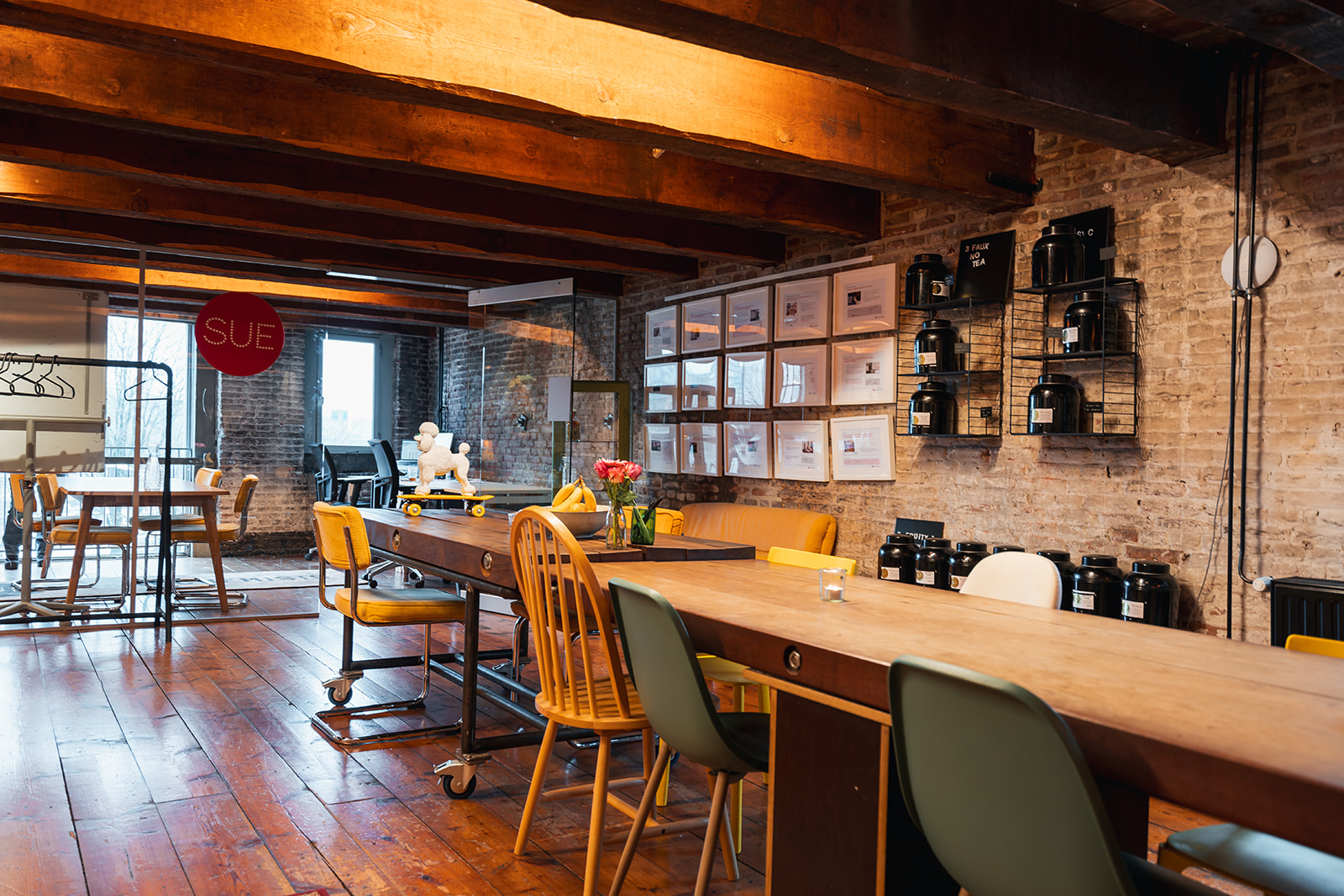
Step into an open-plan office that was built to make people talk, and listen to what is actually there. Silence. Rows of people a metre apart, headphones on, eyes down, typing messages to each other rather than turning their heads. The walls came down so collaboration could flow, and what flowed instead was retreat. It is one of the most reliable findings in workplace design, and it is the opposite of what everyone expected.
The image makes the argument: a room with no barriers, full of people who have built their own. And the reason it happens is not that these are antisocial people in a badly run company. It is that the room is making an argument to them all day, and they are answering it the only way they can.
What the research actually found
When two Fortune 500 companies redesigned their headquarters, tearing out cubicles to create open, transparent floors, the Harvard researcher Ethan Bernstein saw a rare chance to measure what really happens. He fitted employees with wearable sensors that tracked face-to-face interaction, and pulled the data on their email and instant messaging, before the redesign and after.
The logic of the redesign seemed airtight: remove the walls and people will talk more. The result was the reverse. Face-to-face interaction did not rise. It fell by around seventy per cent, while electronic messaging went up.[1] People who had sat behind partitions and spoken freely now sat in the open and went quiet, emailing the colleague a metre away rather than being seen to talk. The room built for contact had produced withdrawal.
The silence belonged to the room
The silence was not a fact about the people in the room. It was a fact about the room. The instinctive explanation blames the people: train them to collaborate, run a culture programme, remind everyone the space is there to be used, and all of it misses the cause sitting in the architecture.
But the silence was not a failure of willingness. It was a rational response to the room. Strip away every wall and you do not remove a person's need for privacy; you remove their control over it. Constantly visible, never sure who is watching or listening, people reclaim the privacy the design took away the only way left to them, by putting on headphones, avoiding the overheard conversation, withdrawing into a screen. The behaviour follows the environment, not a shortage of team spirit. Tell those same people to collaborate more and nothing changes, because the thing driving them to hide is still there in the architecture.
This is the difference between motivation and design. Motivation asks the person to push against the room. Design changes the room so they no longer have to.
The science: privacy and control
The principle underneath the silent office is the human need for privacy and control. We have a deep, constant need to regulate when we are observed, to decide for ourselves when we are on show and when we are not. It is not a preference; it is close to a basic condition for feeling safe enough to act freely. When that control is taken away, we do not simply accept the exposure. We claim the control back however we can.
This is why the totally open floor backfires. It maximises one thing, proximity, on the assumption that proximity produces contact. But it destroys another, control over exposure, and that turns out to be the thing connection actually depends on. People reach out from a position of safety, not from a position of being watched. Take away every refuge and you do not get more reaching out; you get people building private bubbles in public, with headphones and hunched shoulders, because that is the only privacy left to them. The counterintuitive move, then, is not to remove boundaries to force contact. It is to give people enough control over being seen that they feel safe enough to seek contact on their own terms.
Through a Behavioural Design lens
It helps to slow down on why a well-meant open office produces the opposite of what it intended, because it is a clean example of looking at the wrong thing.
Start with the person, not the floor plan. What is someone in an office actually trying to do? Not "collaborate" in the abstract, but get good work done, be seen as competent, feel in control of their day. Hold that real motive in view and look at the forces acting on it. Some pull a person towards reaching out, the frustration of working in isolation, the reward of a quick, easy exchange with a colleague. But others hold them back, and in an open office one of them is large: the unease of doing everything in full view, every call overheard, every screen visible, every pause noticed. There is also the quiet comfort of just keeping your head down. When the thing blocking the behaviour is that strong, the reward of contact cannot overcome it, and people retreat. This way of reading a behaviour, the real motive plus the forces pushing for and against it, is what we call the Influence Framework at SUE, and the lesson here is blunt: the open office poured all its effort into proximity and ignored the force that was actually in charge, the need to feel unwatched.
Now the fix. Of the handful of levers you can pull to change a behaviour, the most overlooked is also the simplest: make the thing you want easier to do, and remove what makes it hard. Connection was not failing for lack of willingness; it was failing because the environment made being seen feel costly, and people spent their energy managing exposure instead of collaborating. So the intervention is not a campaign urging people to talk. It is to hand control back: a few enclosed rooms, quiet corners, doors that close, a desk that is genuinely someone's own, a signal others respect when focus is needed. Each of these lowers the cost of being in the space, and a person who feels in control of their exposure has the safety to reach out. That focus on capability and on removing the real barrier, rather than on motivation, is what we call working on a person's ability in the SWAC Tool, and it is usually where the leverage hides.
This generalises far beyond office walls. Whenever you want people to do something brave or open, a junior speaking up, a team sharing a half-formed idea, a customer trying something new, ask what the situation is costing them, and lower that cost, rather than exhorting them to be bolder. People act from safety. Build the safety into the environment and the behaviour follows. That is the whole of Behavioural Design here: you fix the room, not the people. At SUE, the Influence Framework and SWAC are the methods we teach in The Art of Influence© to systematically analyse which structural conditions make the desired behaviour easier than the alternative.
What this means in practice
The open office is a warning that travels straight into how you lead and how you build. Start with yourself. When you want to think or create, you probably already know that total exposure kills it; you seek out the quiet carriage, the early morning, the closed door. That instinct is the principle in miniature. Honour it, and design your own conditions for focus rather than assuming willpower will carry you through an environment built against it.
For anyone leading a team, the lesson cuts against a popular instinct. When collaboration drops, the reflex is to work on the people: a team-building day, a values poster, a talk about psychological safety. Far more often it is the room talking. Before you touch the culture, walk the space and ask what it is making easy and what it is making costly. Give people places to retreat to, not just places to gather, and control over when they are seen. You will get more genuine connection from a few quiet rooms than from another open zone, because connection comes from safety, and safety is something you can design.
And for the organisation, this reframes a great deal of expensive workplace strategy. The open-plan boom spent fortunes maximising visibility in the belief that visibility breeds collaboration. The evidence says the opposite past a certain point: people need refuge to engage. The same logic applies wherever you ask people to be exposed, the all-hands where dissent is invited but never comes, the feedback tool no one uses. The question is not how do we make people more willing to be open, but what about this situation is making openness feel unsafe, and how do we change that. That is a learnable skill, and it transfers to every behaviour that depends on people feeling secure enough to act.
Learn to apply this yourself
What makes the privacy-and-control principle so powerful is that it shifts the design question from "how do we motivate people to collaborate?" to "what is the environment making costly, and how do we change that?" Once you can read a space for the forces it creates, you can intervene at the point that actually drives behaviour. The Influence Framework and SWAC give you a structured way to map those forces and identify the smallest change to the environment that removes the real barrier.
View The Art of Influence© onlineWhat you can design this week
The move works on your own focus, a team you lead, or a space you are responsible for. Three ways to start:
Add places to retreat, not just places to gather. People reach out from safety, not exposure. Whether for yourself or a team, make sure there is somewhere to be unwatched, a closed room, a focus slot, a do-not-disturb signal others honour. The refuge is what makes the reaching out possible.
Give people control over being seen. The need is to regulate exposure, so hand that control back: a screen they can angle, a desk that is theirs, a clear way to signal heads-down time. Control lowers the urge to hide and frees people to engage.
Read the room before you judge the person. When a team will not collaborate, or you cannot focus, resist the conclusion that the will is missing. Walk through the actual conditions and ask what the environment is making costly. The fix is usually in the space, not the spirit.
Two companies tore down their walls to spark collaboration and got silence instead. They did not have the wrong people. They had a room that made being seen feel expensive, and people paid the only way they could. Fix the room, and the connection you wanted often appears on its own.
If you want to learn how to read a space for the behaviour it produces and redesign it, that is exactly the kind of work our Behavioural Design training is built around.
If you want to learn how to design for behaviour rather than trying to motivate it, that's exactly what The Art of Influence© covers. View upcoming dates →
Frequently asked questions
Do open offices increase collaboration?
Research by Ethan Bernstein and Stephen Turban found the opposite: when two Fortune 500 companies removed their walls, face-to-face interaction fell by around seventy per cent, while email and instant messaging rose. The open office strips away people's control over their exposure, so they manufacture privacy by withdrawing.
Why do people put headphones on in open offices?
Headphones are a privacy-manufacturing tool. When an environment removes all control over exposure - no walls, no doors, no private space - people reclaim that control the only way left to them: by signalling they are unavailable. It is a rational response to an environment that stripped away privacy, not a sign of antisocial behaviour.
How do you design an office that produces real collaboration?
Give people places to retreat to. People connect from a position of safety, not exposure. Enclosed rooms, quiet corners, doors that close, and a desk that is genuinely someone's own are not obstacles to connection - they are the conditions for it. Restoring control over exposure removes the urge to hide, freeing people to connect on their own terms.