Most CX programmes fail because they're built on what customers say, not on what customers do. That gap is what this page addresses: how you design experiences that match how people actually decide.
"We mapped the journey. Customer behaviour barely moved."
10,000+ professionals trained, including people from
You measure satisfaction, draw journey maps, test interfaces. Three months later customer behaviour has barely moved. That's rarely about the quality of the work your team delivers. These four patterns were simply never addressed, and each one has a proven behavioural fix.
Surveys and interviews measure intentions, not behaviour. People rationalise decisions after the fact, often without noticing. Build a CX programme on that data and you're designing for a customer who doesn't exist.
Most journey maps are drawn from internal systems and departments. Customers experience moments of doubt, relief and frustration that rarely line up with your org chart, not touchpoints and channels.
CX teams design for the conscious, reasoning customer. But the large majority of decisions run on fast, automatic thinking. Miss that layer and you're arguing with a part of the brain that was never listening.
Risk, doubt, decision fatigue, the fear of choosing wrong: these anxieties are what actually stop a purchase or a renewal. Teams rarely measure them, and what you don't measure, you can't design for.
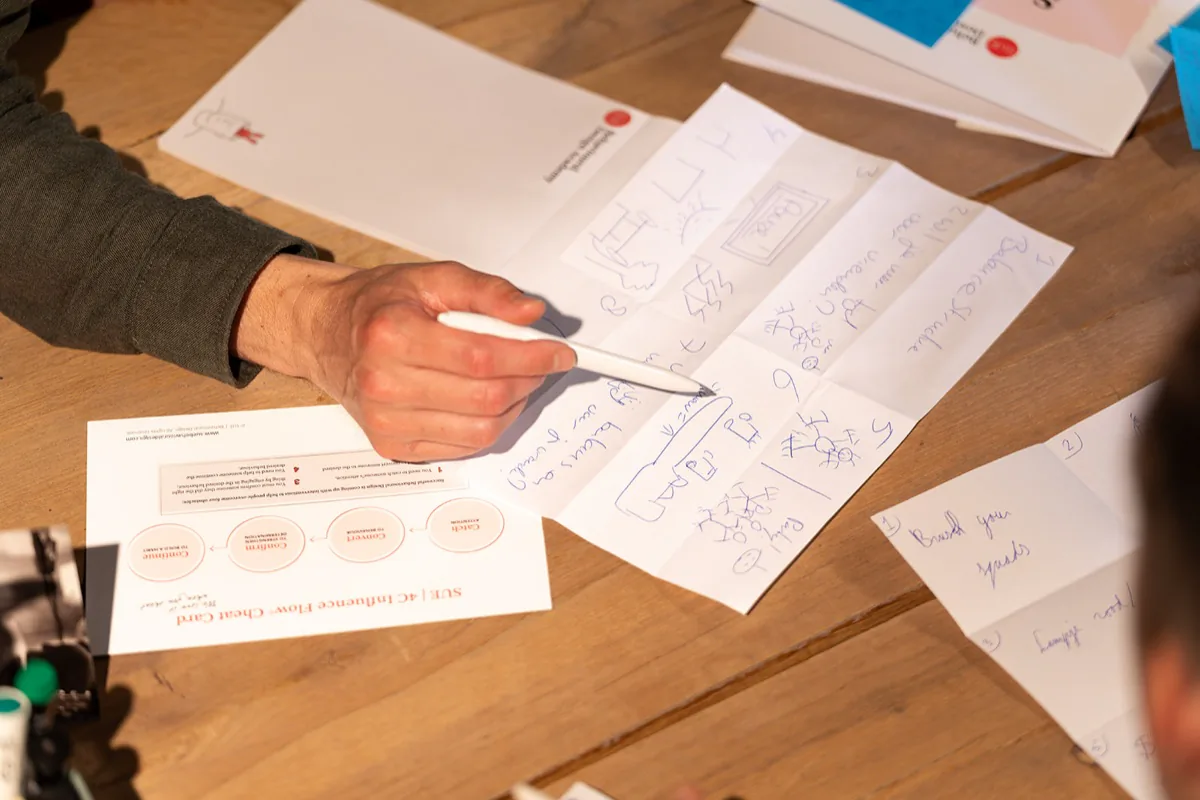
Customer experience design is the practice of shaping the context around a purchase, a service moment or a renewal, so the experience you intend becomes the experience customers actually have. It starts with diagnosing why customers do what they do, not with another round of journey mapping, and it designs the touchpoints, defaults and moments that make the desired behaviour the easy choice.
The professionals among our 10,000+ alumni say the same thing afterwards.
At the Academy you learn a lot about behavioural change and how to apply it in a short period of time. The training flew by and was very well put together. Amazing how complicated material comes to life in a fun and interactive course. I am definitely going to apply it in my work.

The programme with SUE taught me the importance of thinking about the human behind the client, because a client will not act from expected rational thinking patterns. As an organisation it is important that we start thinking outside-in at the right moments to create that much needed added value.

I am so happy with these results. The order of first doing a Behavioural Design Sprint, then testing and running an effect measurement worked very well. We are now in a position to roll this out with confidence. The numbers and effects help us to truly convince people.

Take the Deep Dive Designing the 9+ Customer Experience and learn the behavioural science behind experiences people genuinely love. Online at your own pace, or as a 1-day Masterclass with your team.
Prefer the full method first? See the Fundamentals Course, or the in-company formats ↓
Three in-company formats, depending on how deep you want to go and how long you want to build. Always applied to your own customer experience challenge.
Most behavioural science knowledge sits locked in academic papers. SUE built the Influence Framework, a practical step-by-step method that any CX manager, UX designer or product owner can apply without a scientific background.
“ SUE Behavioural Design was a real experience that led me to look differently at behaviour. They take you along a very pragmatic way under challenging themes. I think the Influence Framework will solve many problems in the world. It is more than just a method, it is a fundamentally different way of thinking.
In-depth articles on the behavioural science behind customer experience, written from SUE's practice.
The invisible force turning loyal customers into lost ones, and how to find and remove it.
Read article →How behavioural science changes what you map and where you intervene in the journey.
Read article →Why customers 'hire' a product or service to get a job done, with examples you can apply directly.
Read article →Most organisations measure satisfaction obsessively while scores barely move. Here's the behavioural reason why.
Read article →Customer experience design is the practice of shaping the context around every interaction a customer has with your organisation, so the experience you intend is the experience they actually have. It goes beyond journey mapping and NPS tracking. It starts with diagnosing why customers behave the way they do, then designs the touchpoints, defaults and moments that make the desired behaviour the easy choice.
Customer behaviour is driven by context, not by stated preference. Behavioural Design gives you the tools to diagnose which forces actually shape a customer's decision, such as anxieties, defaults and social proof, and to redesign the experience around them so satisfaction and retention improve as a result.
Yes. Most organisations choose an in-company programme, where we apply the Behavioural Design method on site to your own customer experience challenge. That can be a one-day Masterclass for a team, a multi-day Sprint, or an organisation-wide Learning Journey. Your team works on the customer problem that is actually costing you retention, not a case study from a book.
It depends on the format. An individual Deep Dive on customer experience starts from €690 and the two-day Fundamentals Course from €1,190. For teams and organisation-wide programmes, we design an in-company Masterclass (€7,990), a Sprint or a Learning Journey. In a no-obligation call we look together at which format fits your challenge and scale.
CX managers, UX and product designers, marketers, customer service leads and anyone responsible for how customers experience your organisation. You need no prior knowledge of behavioural science to start.
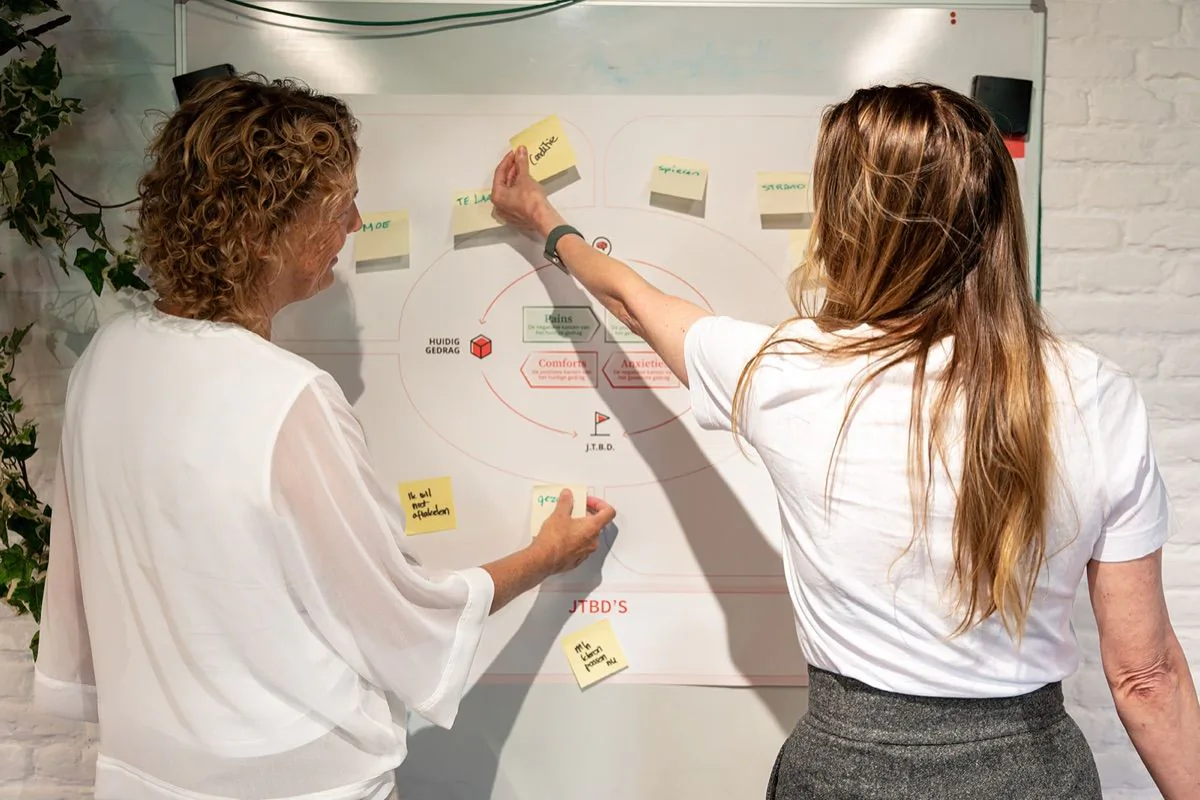
From the journey map on the wall to the moment a customer actually decides. The Behavioural Design Method gives you the framework to design it.