Daily Dose of Influence
Meeting fatigue: a behavioural design approach
 By Astrid Groenewegen · 2 min read
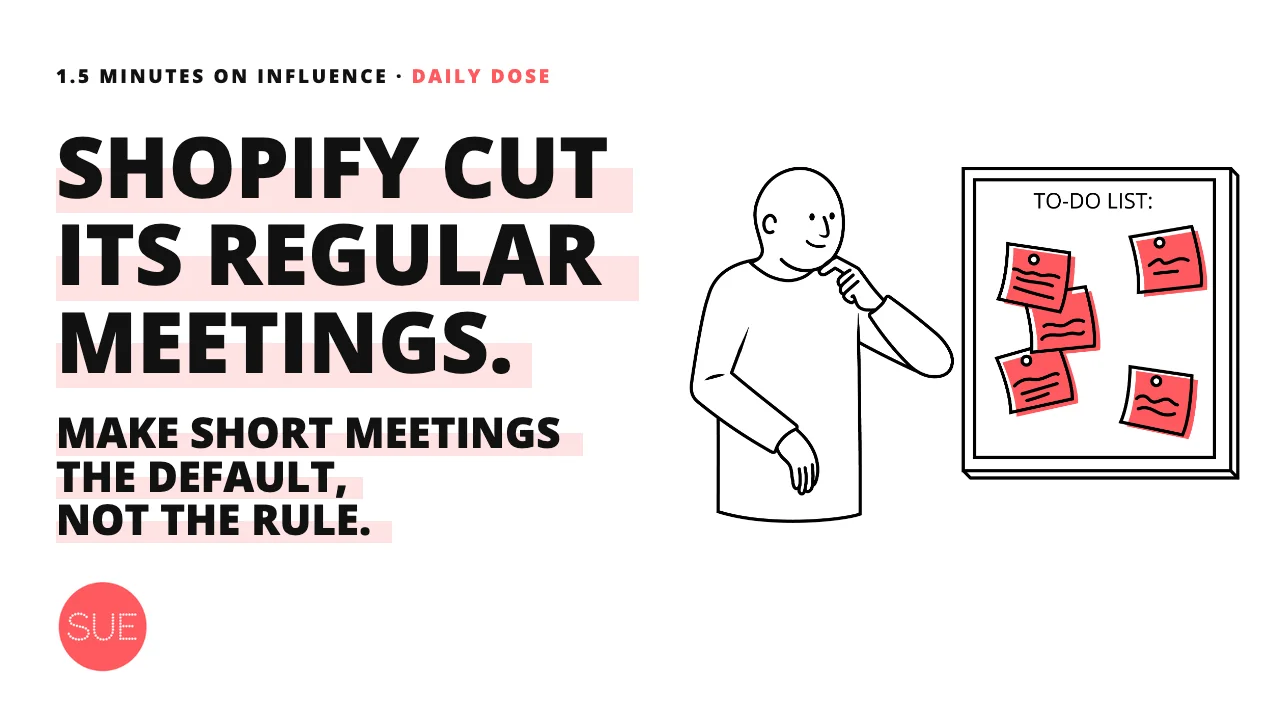
Have you ever had a week where most of your schedule was filled with meetings? Imagine if your company announced that all regular meetings with more than two people were canceled. Shopify did exactly that a while ago, putting the whole company on a 'meeting diet.'
My first reaction was, "Wow, that would free up a lot of space." However, from a behavioural psychology standpoint, this isn't just a gentle nudge; it's a strict limitation.
I don’t know about you, but I struggle with restrictions. Behavioural psychology explains this through reactance theory, which suggests that when our freedom is limited, it negatively affects us psychologically. Often, we might ignore the rules or even do the opposite, similar to how we're tempted to pick the forbidden fruit.
Yet, the issue of meeting fatigue is real and widespread. So, I started thinking. Could other research from behavioural science help us address this problem?
First, we need to understand the problem correctly. It’s not that we have meetings; it's that we have ineffective meetings. They are often unprepared, focus too much on trivial details, or include people who don’t contribute.
Looking at it from a 'job-to-be-done' perspective, meetings have much more potential. They can inspire us, spark collaboration, and help us make progress.
What if we prioritised these human needs? For example, what if part of the company culture was to hold shorter meetings? This would change the social norm. Making it much more encouraging for employees to come up with ways to implement this themselves. This could activate the Ikea Effect: if you invest effort in creating something yourself, you're more likely to appreciate and follow through with it.
Perhaps we could also make the desired behaviour easier, rather than mandatory. I appreciate how, when you schedule a meeting using Calendly, the default meeting time is set to 30 minutes. You can change it, but the default encourages shorter meetings.
Consider Jeff Bezos' 'six-pager memo' approach at Amazon, which transformed the way meetings are conducted. These memos establish a new standard for presenting ideas and facilitate deeper, more informed discussions on complex topics. Each meeting begins with a 30-minute period dedicated to reviewing the memo, ensuring all attendees are well-prepared and aligned. This setup leads to focused discussions, with time for thorough questions, analysis, and debate.
We at SUE, have decided not to share any to-dos in meetings, but to only discuss where we need help from other team members. This has made our meetings much shorter but foremost much more valuable.