Daily Dose of Influence
Overcoming resistance to change: remove the obstacles, not add the benefits
 By Astrid Groenewegen · 2 min read
I wanted to share a thought that hit me while looking back at all the problems we've solved at SUE and studying other projects in behavioural design.
We often think the best way to persuade people is to show them the good things they'll get if they change their behaviour. We traditionally do this by highlighting the benefits or pointing out unique selling points.
However, I've learned that the core of effectively influencing people isn't in highlighting the benefits. It's in eliminating the obstacles to change.
Let me explain with an example from our work. During the Covid pandemic, a local health service sought our help to increase flu vaccination rates among healthcare workers. They were worried about a Covid surge happening at the same time as the flu season, and they wanted healthcare workers to be as protected as possible (to be clear, this initiative was about protection, not obligation or coercion).
When we talked to the healthcare workers, Most healthcare workers understood the flu vaccination's benefits. They even said it would help them keep working, which was their main goal during the tough Covid times. They wanted to stay healthy for their patients and colleagues, who were all under a lot of stress. However, the very motivation to be a stable contributor to the workforce faced a significant barrier, an obstacle that hindered the desired behaviour of getting a flu shot, which needed to be addressed.
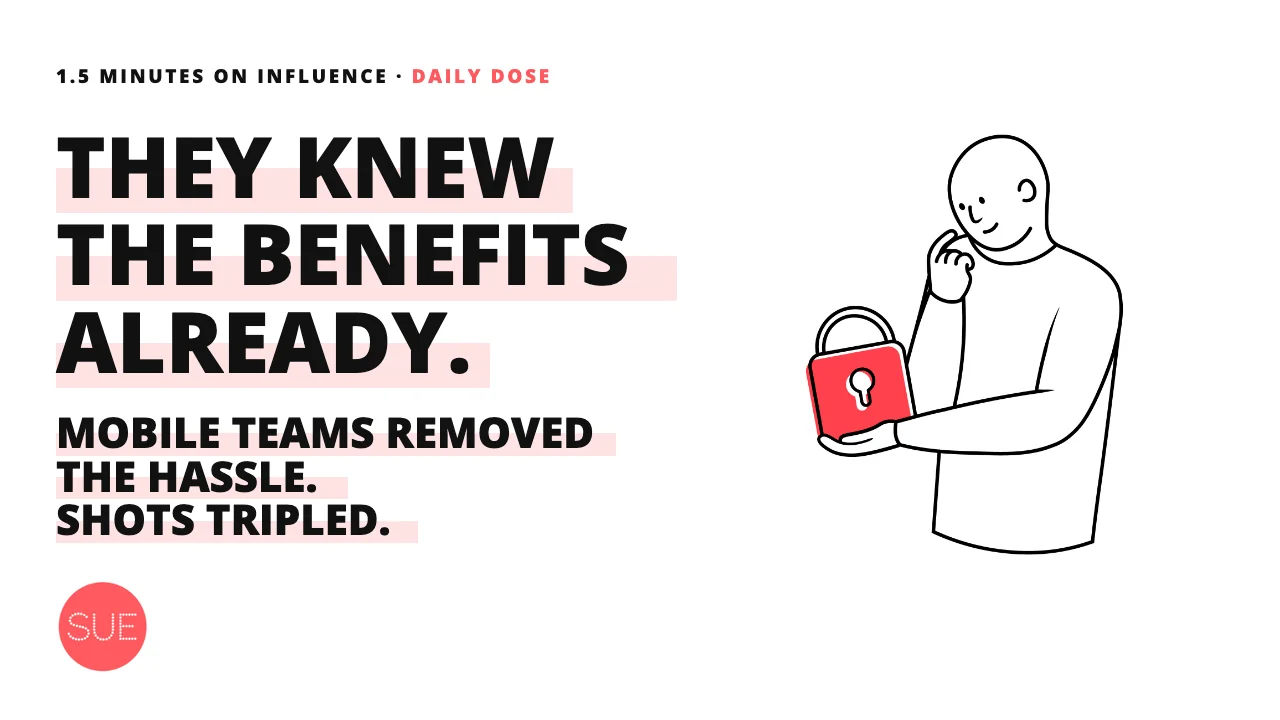
The obstacle to vaccination wasn't doubt about the flu vaccine's benefits, but the inconvenience of accessing it. Many healthcare workers hesitated to leave their busy workplaces and colleagues to get vaccinated.
We tripled the number of healthcare workers getting the flu shot by directly addressing this barrier: by introducing mobile vaccination teams to their workplaces. This straightforward and effective strategy eliminated the hassle of getting vaccinated.
This experience underscores a crucial lesson: before you start talking about the good things that come with a behaviour change, first think about what might be stopping people from making that change.
With this insight, what steps can you take on your own? To boost your success in behavioural change, reflect on these four categories of potential obstacles in your projects:
· Barriers from within: These are internal anxieties such as a lack of self-confidence, misalignment with one's self-image or beliefs, feelings of insecurity, or simply not seeing oneself as the type of person who engages in the desired behaviour.
· Barriers from others: This category includes anxieties about what others will think, the perception that the majority are not engaging in the behaviour, or that it contradicts what one has been taught by others.
· Barriers from you: Anxieties can also stem from a lack of trust in the person or organisation advocating for the change, not liking them, or not knowing them well enough.
· Barriers from the desired behaviour itself: Doubts about one's ability to perform the new behaviour, previous failures, disbelief in its effectiveness, or concerns about affordability are also significant sources of anxiety
Remember, making things easy for people is often more effective than trying to boost their motivation. Capability to change eats willingness to change for breakfast!
Read the full guide:
Dealing with resistance to change as a manager →