How do you design a street that gives children back to the outdoors?
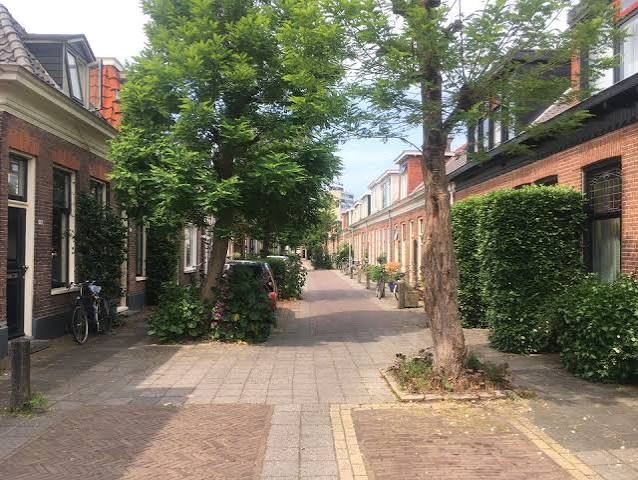
We worry a great deal about children and screens. The awareness lessons, the screen-time campaigns, the phone bans. And meanwhile, right at the age when children are finally independent enough to go outside on their own, the outdoors quietly disappears for them. Playgrounds are built for toddlers. Benches get associated with loitering teenagers and designed away. The street itself pushes a twelve-year-old back indoors, and then we run campaigns about screen addiction.
So here is a more useful question than how to get children off their phones. How do you design an outdoor space that pulls them back into it, without a single campaign? The Dutch answered this decades ago, and the answer is built into thousands of ordinary streets.
What the woonerf did
The woonerf, roughly a living street or home zone, was developed in the Netherlands in the 1970s, after a rising number of children were being hit by cars in residential streets.[1] The obvious response would have been more signs, more warnings, more rules. The Dutch did something else. They redesigned the street itself so that the car was a guest rather than the owner. They removed the kerb and the hard line between road and pavement, so there is no longer a strip that belongs to cars and a strip that belongs to people. They made the surface uneven and winding, so cars instinctively slow to a crawl. There are now more than six thousand of these streets in the Netherlands.
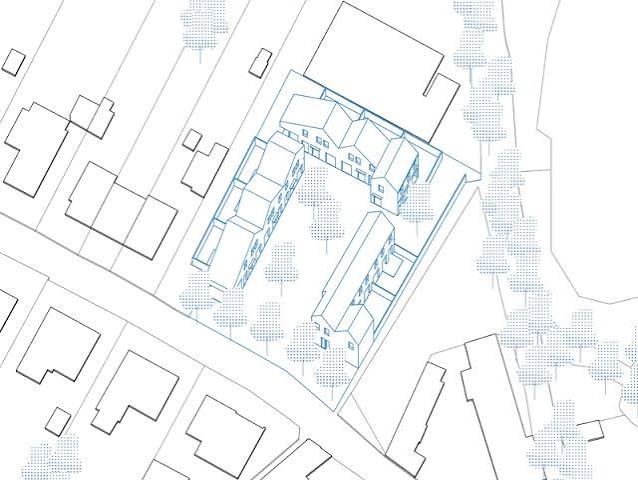
And then, without any campaign or app, something happens on its own. Children of all ages play on the paving. Teenagers hang around. Neighbours stop and talk. The street, redesigned, simply produces the outdoor life that no amount of urging had managed to.
Why this is design, not parenting
It is easy to frame children staying indoors as a failure of willpower, theirs or their parents'. The woonerf shows how much of it is really the street. The same child who has nowhere safe or inviting to be outdoors goes outdoors when the space invites it. The child is unchanged; it is the environment that shifted, and the behaviour followed it onto the paving.
Which reframes the whole screen-time worry. A lot of what looks like children choosing screens is children responding to an outdoors that has quietly been designed to exclude them.
The science: when the hierarchy disappears, behaviour shifts
The principle underneath the woonerf is best captured by the Dutch traffic engineer Hans Monderman, who pioneered what is often called shared space.[2] His insight was that people read the design of a street and behave accordingly. When the infrastructure draws a clear, hard hierarchy, wide road here for cars, narrow pavement there for people, everyone behaves as though the car owns the space and moves fast through it. But when you deliberately remove that clear hierarchy, when it is no longer obvious whose space this is, drivers lose their certainty, slow right down, and start negotiating the space with everyone else. Pedestrians, and children, become full users of the street rather than tolerated guests on its edge.
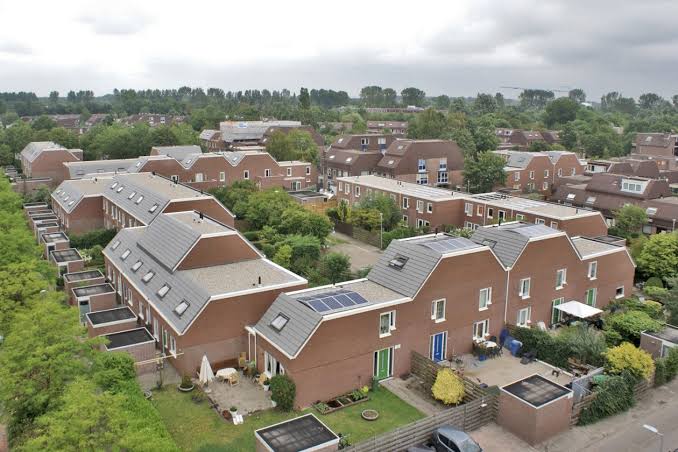
The uncertainty is the tool. By taking away the visual cues that told the car it was king, the woonerf changes how everyone behaves, without a single instruction being given.
Through a Behavioural Design lens: changing the cue, not the person
It is worth naming the discipline here, because the woonerf is a clean example of designing for the automatic mind. Driving is not a deliberate, carefully reasoned activity moment to moment. It runs largely on autopilot, on the fast, automatic System 1 that reads the environment and responds without conscious thought. A wide, clear, well-marked road is a cue that says drive normally, this is yours, and System 1 obeys. No safety campaign aimed at the driver's conscious mind competes with that cue for long.
The woonerf works because it changes the cue itself. The uneven surface, the missing kerb, the ambiguity all signal something different to System 1: slow down, be careful, you are a guest here. The driver does not decide to be more considerate. The street makes the careful behaviour automatic. That is the behavioural design move in its purest form, and it is why it succeeds where signs and warnings, aimed at the slow, ignorable conscious mind, keep failing. You change what the autopilot is responding to, and the behaviour changes with it. At SUE, the Influence Framework and SWAC are the methods we teach in the Behavioural Design Fundamentals Course to systematically analyse how the built environment triggers behaviour and where you can redesign the path.
What this means in practice
Start with your own environment and the cues it sends you. So much of what you do at home or at your desk runs on autopilot in response to the layout around you, where things are placed, what is in reach, what the space silently invites. If you keep doing something you would rather not, the useful move is rarely more willpower. It is to change the cue: rearrange the space so the automatic response is the one you actually want.
For anyone who leads people, the woonerf is a lesson in how much behaviour you can shape without a single rule. The instinct, when a team behaves in a way you do not want, is to issue an instruction or a policy, aimed squarely at the conscious mind that is so good at ignoring instructions. The more powerful move is to change the environmental cues that drive the automatic behaviour: how a space is laid out, what is easy and what is awkward, what the setup silently signals is normal here. Change the cue and you change the behaviour, with nothing to rebel against.
And at the level of the organisation, this is about recognising that your systems and spaces are constantly cueing behaviour, for better or worse. The layout of a process, the design of a form, the arrangement of a room are all System 1 cues shaping what people do automatically. The skill this teaches, and it is genuinely learnable, is to stop relying on rules and reminders aimed at the deliberate mind, and to redesign the cues that the automatic mind is actually responding to.
Learn to apply this yourself
What makes the woonerf so instructive is that it works on System 1 directly: the physical layout removes the cues that produce unwanted behaviour, and replaces them with cues that produce the behaviour you want, without anyone having to think about it. In the Behavioural Design Fundamentals Course you learn to use the Influence Framework and SWAC to map exactly which environmental cues are driving current behaviour and where a deliberate redesign of the context can change the outcome.
View the online Fundamentals CourseWhat you can design this week
You will not be ripping up a street, but the underlying move works on almost any behaviour driven by its environment. Three ways to start:
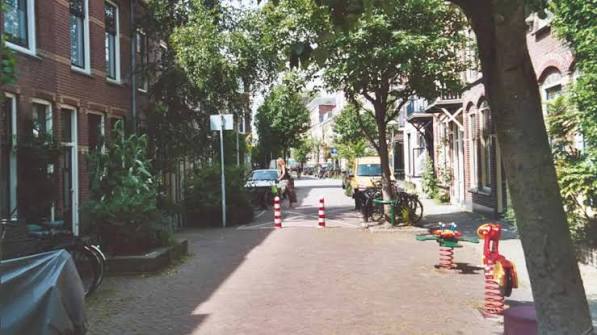
Change the cue, not the rule. Instead of a new instruction nobody reads, change what the space or setup silently signals. Make the wanted behaviour the one the environment quietly invites.
Use a little friction on purpose. The woonerf slowed cars by making the surface awkward. Where you want to slow an unwanted behaviour, a small, deliberate piece of friction does more than a warning.
Remove the hard hierarchy where you want negotiation. Clear divisions tell people to stay in their lane and stop thinking. Where you want people to pay attention and share a space, fairly and consciously, a little less rigid structure can make them do exactly that.
The Dutch did not lecture drivers into caring about children, or children into going outside. They redesigned the street so that careful driving and outdoor play were the natural things to do there. That is the difference between demanding behaviour and designing for it, and the same logic works on a home, a team or a whole organisation.
Want to learn to read a space for what it does to the people inside it, and design it on purpose? That is the heart of our Behavioural Design training. Details on the SUE website.
Frequently asked questions
Why did removing the kerb change how children use the street?
The kerb was not just a physical edge; it was a signal. It told cars they owned the road and told everyone else they were confined to a narrow strip at its margin. Once you remove it, the boundary between car space and human space disappears, and drivers lose the visual certainty that the road is theirs. Hans Monderman showed that this uncertainty is the mechanism: without a clear hierarchy, drivers slow down and start negotiating the space with pedestrians, which makes the full width of the street available to children again. The child's behaviour did not change; the cue did.
How do I apply woonerf logic in a workplace or team setting?
The practical move is to audit what your space or process silently signals before issuing any new instruction. If a meeting room is arranged in a lecture layout with one person at the front, it cues deference and passivity; rearranging it into a circle changes who speaks and how much, without a single facilitation rule. The same applies to any workflow: where the default path makes the unwanted behaviour effortless, a small piece of deliberate friction (an extra click, a different placement, an awkward default) does more than a policy aimed at people's conscious minds.
What does Monderman's shared space work show about safety rules versus design?
Monderman's insight was that more signage and clearer rules often make streets less safe, not more, because they shift responsibility to the sign and let drivers stop paying attention. In his shared space designs, removing traffic lights, road markings, and kerbs forced every road user to read the situation in real time and negotiate with the people around them. The counterintuitive result is that accident rates fell. Rules aimed at the deliberate mind are easy to ignore once they become wallpaper; a space that withholds certainty keeps System 1 alert and cautious throughout.
Why do screen-time campaigns fail when outdoor spaces are the real problem?
Because they target the wrong variable. A campaign asks children to choose the outdoors over screens, but if the outdoor environment offers nothing for a twelve-year-old (playgrounds designed for toddlers, benches removed to deter teenagers, streets that are fast and hostile), the choice is already made by the design of the space before any conscious decision happens. Screen time is often the outcome of an outdoor environment that has quietly excluded older children, not a cause in itself. Fixing the cue fixes the behaviour; moralising about the symptom does not.
If you want to learn how to design for behaviour rather than trying to motivate it, that's exactly what the Behavioural Design Fundamentals Course covers. View upcoming dates →