How do you design a prison that people do not come back to?

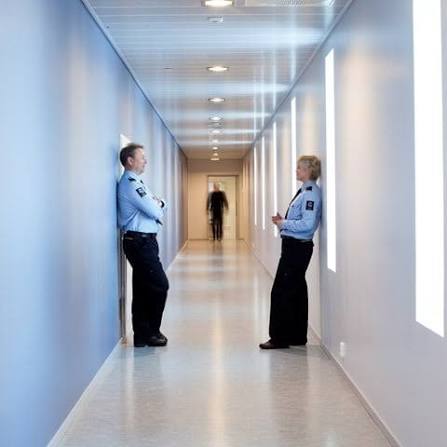
There is a prison in Norway where the windows have no bars, and the cells look more like spare rooms in a modest flat, with proper furniture and a private bathroom. The guards wear no obvious uniform and eat their meals alongside the inmates. There is a kitchen where prisoners cook, a library, a workshop, paths between buildings that wind through trees. It does not look like punishment. And the people held here, many of them convicted of serious crimes, are markedly less likely to return to prison after release than those leaving harsher systems elsewhere.
This is Halden, in Norway, and the picture of it, a maximum-security prison that looks almost ordinary, makes the argument before a word is said. It is one of the most striking examples there is of designing for who a person can become rather than punishing who they have been. And the mechanism behind it, the way a setting quietly assigns an identity that people grow into, reaches well beyond prison walls, into every place where we decide who someone is allowed to be.
What Norway actually did
By the 1980s, Norway's prisons were producing the same dismal result as most of the world's: a large majority of released prisoners, somewhere between sixty and seventy per cent, were reoffending and returning. The country undertook a deep reform of how it imprisons people, and built that reform on what it calls the normality principle. The idea is that life inside should resemble life outside as closely as security allows, because the loss of liberty is the punishment, and nothing more should be added to it.
Halden, opened in 2010 as a high-security prison, became the clearest expression of this. The architecture, the daily routine, the relationships between staff and inmates are all designed to keep a person's life recognisably human: work, study, cooking, exercise, contact, responsibility. Guards are trained to build relationships rather than simply control. The aim, stated plainly, is to release a better neighbour than the one who came in. Norway's reconviction rate is now among the lowest in the world, around eighteen per cent within two years of release.[1] The thing that lowered it was not a harsher deterrent. It was a setting that treated people as citizens.
The deterrent was never the point
Norway did not try to frighten people out of reoffending. It built a situation that offered them a different identity to grow into, and let behaviour follow. That is the reversal worth pausing on. The instinctive approach to crime is more punishment: harsher conditions, fewer comforts, on the theory that unpleasantness deters. We have watched that theory fail across decades and countries, because it works on the assumption that people calculate their way out of crime, and leaves untouched the thing that actually shapes behaviour, which is who a person believes they are and is treated as being.
Halden did the opposite of dehumanising. It deliberately preserved the ordinary furniture of a life, and in doing so it offered a different role. A place that treats someone as a dangerous prisoner, stripped of dignity, choice and trust, quietly confirms exactly that identity, and a person tends to leave as the thing they were treated as. A place that treats someone as a citizen who happens to be serving time makes a different identity available, and people grow towards the one the setting holds out to them. The walls, the rules, the daily interactions are never neutral. They are always telling a person who they are.
This is the difference between deterring and designing. Deterrence works on a person's fear and assumes they will reason their way to better behaviour. Design changes the identity the situation assigns, and behaviour follows the identity, often without any conscious decision at all.
The science: identity, labelling and the expectations a context sets
The behavioural principle underneath Halden draws on labelling theory and on a wider body of research showing how powerfully the expectations embedded in a situation shape behaviour. Labelling theory, developed in sociology, holds that when a person is labelled, criminal, dangerous, a lost cause, and treated accordingly, the label tends to become self-fulfilling. Stripped of other roles and offered only the identity of offender, people come to act in line with it. The label does not merely describe; it produces.[2]
This connects to one of the most reliable findings in behavioural science, the way expectations become reality, often called the Pygmalion effect after studies in which people performed up or down to the level others believed of them. When a setting communicates an expectation, especially through how people are treated day to day, behaviour drifts to meet it. Treat people as untrustworthy and you tend to get untrustworthiness; treat them as capable of responsibility and responsibility becomes more likely. The effect runs quietly through tone, architecture, rules and a thousand small interactions, below the level of anyone's conscious choice.
Halden is this principle built into a building. Every design decision, the unbarred window, the shared meal, the real kitchen knife in the cooking class, communicates an expectation: you are a person capable of handling ordinary life responsibly. The reconviction figures suggest that many people, given an identity worth growing into, do exactly that. The lower reoffending was not softness rewarded. It was the predictable result of a setting that assigned a better identity than the one a harsher prison assigns.

Through a Behavioural Design lens
It is worth slowing down on what Norway actually did, because it is a clean example of how behaviour really changes through identity, as opposed to how we usually try to force it through fear.
Start with the person, not the punishment. Before you can change anyone's behaviour, you have to understand the progress they are really trying to make. A person leaving prison is not weighing deterrents; they want, like anyone, to be someone worth being, to belong, to have a life that holds together. Hold that real motive in view and the forces around it come into focus. Two pull a person towards going straight: the exhaustion and shame of the old life, and the pull of dignity, work and belonging on the outside. Two hold them back: the fear that they are marked for good, that no other identity is available to them, and the grim comfort of the criminal identity they already know how to inhabit. Map those four forces around the real motive and the problem reframes itself. Many people are not unwilling to change; they are trapped in a setting that offers them no other identity to change into. This way of mapping a behaviour, the deeper motive plus the four forces around it, is what we call the Influence Framework at SUE, and it is where any attempt to change a person should begin: with the human under the label.
Now to the intervention. A useful way to see what Halden does is as a sequence: it gets a person's attention through how radically differently it treats them, it holds them in a sustained, relational environment rather than a merely custodial one, it makes a different identity genuinely available and safe to step into, and it reinforces that identity day after day until it begins to stick and carry beyond release. Harsh prisons fail somewhere in that sequence, usually by offering no alternative identity at all, only confinement. Halden is built the other way round: its real work is in the middle, holding people long enough in a setting that consistently treats them as citizens for a new self to take hold.
This is the move that travels, and it has nothing to do with prisons. The first question is never how do I make this person behave better through pressure, but what identity is this situation assigning them, and is it the one I want them to grow into. Offer people the version of themselves you hope for, treat them as that consistently, and the behaviour you were trying to force often follows the identity. That, in one line, is the discipline of Behavioural Design here: you do not threaten people into changing, you build a setting that assigns a better identity, and people grow towards it. At SUE, the Influence Framework and SWAC are the methods we teach in the Behavioural Design Fundamentals Course to systematically analyse which identity a situation assigns and how to redesign it to make the desired behaviour the natural outcome.
What this means in practice
It is tempting to file Halden under criminal justice and move on, but the same lever sits underneath how we shape people every day, starting with how we treat them after a mistake.
At the personal level, think of someone you have quietly filed under a label, the unreliable friend, the difficult relative. The Halden lesson, turned personal, is that we tend to treat people as the label, and the treatment confirms it. Try extending, just once, the identity you would rather they had: trust them with something the label says they cannot handle, respond to them as the better version. People often rise towards the identity we hold out, just as they sink towards the one we impose.
The same move scales up to leading people. When someone slips, the instinct is to tighten the leash, to monitor, check and restrict. Far more effective, and far harder, is to ask what identity that tightening assigns, and whether it confirms the very behaviour you want gone. A good leader, after a mistake, often widens trust rather than narrowing it, handing the person the responsibility the label says they are not ready for, so a better identity has somewhere to grow. Surveillance tends to produce the untrustworthiness it expects.
And it scales again to the organisation. Why do cultures of tight control so often breed exactly the irresponsibility they guard against? Because treating people as if they cannot be trusted assigns them that identity, and they meet it. Why do the labels we attach to teams or individuals, the problem department, the weak performer, prove so sticky? Because the label shapes how everyone treats them, and the treatment produces the behaviour. In every case the high-leverage question is the same: not how do I control this behaviour, but what identity is the situation assigning, and how do I design it to assign a better one. That question is a learnable skill, and it transfers to everyone whose behaviour you will ever try to shape.
Learn to apply this yourself
What makes Halden's approach so powerful is that it changed the identity the environment assigned before trying to change behaviour: the architecture, the daily routine, and the relationships between staff and inmates all communicated a single consistent expectation that made a different self available to grow into. In the Behavioural Design Fundamentals Course, the Influence Framework and SWAC give you a structured method to map which identity any situation is currently assigning and where you can intervene to redesign it.
View the online Fundamentals CourseWhat you can design this week
The same move works on a relationship of your own, a person you lead, or a team carrying a label. Three ways to start:
Extend the identity you want, not the one you fear. Find someone you have filed under a negative label, and treat them, in one concrete way, as the better version you would prefer. Trust tends to call out the behaviour that suspicion suppresses.
After a mistake, widen trust rather than narrowing it. The instinct to tighten control confirms the identity you are trying to lose. Where it is safe, hand the person the responsibility the label says they are not ready for, and let a better self have somewhere to go.
Read what your setting is silently telling people. Look at the rules, the monitoring, the tone of a place you shape, and ask what identity it assigns to the people in it. No setting is neutral; design it to hold out the identity you want them to grow into.
Norway did not frighten its prisoners into reform. It built a setting that treated them as citizens and let them grow into it. That is exactly as useful for a strained relationship, a colleague after a slip, or a team weighed down by a label, as it was for a maximum-security prison.
If you want to think this way about behaviour you are trying to change, our Behavioural Design training works through exactly this: how to read what identity a situation assigns, and redesign it to hold out a better one.
If you want to learn how to design for behaviour rather than trying to motivate it, that's exactly what the Behavioural Design Fundamentals Course covers. View upcoming dates →
Frequently asked questions
What makes Halden prison different from conventional prisons?
Halden is a Norwegian maximum-security prison built on the normality principle: life inside should resemble life outside as closely as security allows, because the loss of liberty is the punishment and nothing more. Windows have no bars. Guards wear no uniform and eat with inmates. There is a kitchen, a library, a workshop. The aim is to release a better neighbour than the one who arrived. Norway's reconviction rate is now around 18 per cent within two years.
What is labelling theory and how does it apply to behaviour?
Labelling theory holds that when a person is categorised, as criminal, dangerous or a lost cause, and treated consistently with that label, the label tends to become self-fulfilling. Stripped of other roles and offered only the identity of offender, people act in line with it. A setting that consistently treats someone as untrustworthy produces untrustworthiness. A setting that treats someone as a citizen capable of responsibility tends to produce responsibility.
What is the Pygmalion effect?
The Pygmalion effect is the finding that people tend to perform up or down to match the expectations others hold of them, as conveyed through daily treatment and tone. High expectations, communicated consistently through how someone is treated, tend to raise performance; low expectations lower it. The effect runs through architecture, rules, relationships and small interactions as much as through explicit messages, which is why designing the environment to assign a specific identity matters as much as what is said directly.