How do you design an outdoors that competes with a screen?
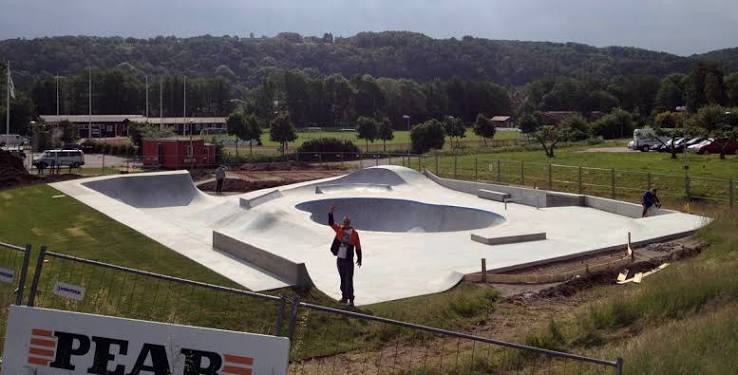
Sweden offers an answer built to compete rather than forbid. Organically designed skateparks integrated into a park, with seating, lighting and a kiosk, draw young people of all ages, including non-skaters. They work because they offer the three things every screen also offers: real excitement, social feedback, and a sense of progression. The outdoors wins back not by being mandated, but by competing on the things that made the screen attractive in the first place. The best anti-screen policy is not a ban. It is a better offer outside.
The ban that only moves the behaviour
The conventional response to teenagers spending their lives behind screens is to restrict and warn. Awareness campaigns about screen time. Bans on phones. Parents' evenings about digital safety. The logic assumes the problem is the screen itself, and that limiting access will send young people back outdoors.
But a ban does not change the desire; it only changes where the behaviour happens. Forbid the screen and the underlying pull, towards excitement, social connection, a sense of getting better at something, remains, unmet, ready to reassert itself the moment the ban lapses. Meanwhile the outdoors that should be the alternative has been designed as though for eight-year-olds or eighty-year-olds, a playground or a park bench, never for a twelve-year-old who wants challenge, status and progression. The outdoors does not compete, because it was never designed to offer what the screen offers. So the ban fails twice over: it leaves the desire intact and offers nothing outside that could genuinely satisfy it.
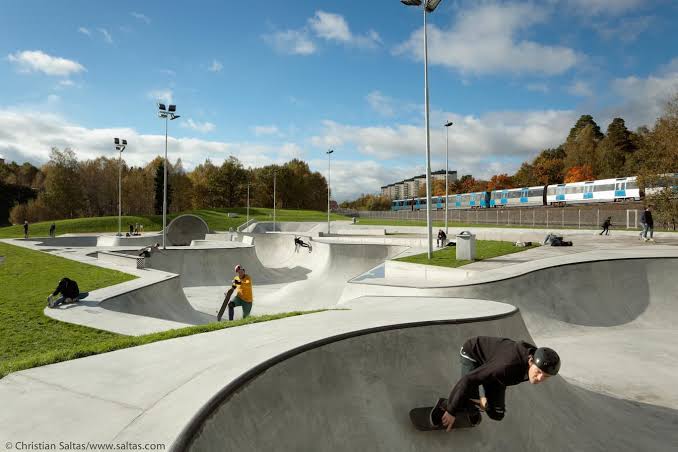
Sweden's skateparks are designed to compete rather than to forbid. By offering real excitement, genuine social feedback, and a clear sense of progression, getting better, landing the trick, being seen to improve, they provide outdoors exactly the three things that made the screen attractive. And by integrating the skatepark into a park with seating, lighting and a kiosk, they make it a social destination for young people of all ages, not just skaters. The outdoors wins back not because screens were banned, but because the outdoors was redesigned to offer what the screen offers, so the desire that drove young people indoors can now be met outside.
Why this is design, not a ban
You could read the skatepark as simply a fun amenity for young people. But the behavioural lesson is about competing affordances, and that competition is the mechanism.
The skatepark does not motivate young people to go outside by telling them screens are bad. There is no campaign against screen time doing the work. The behaviour comes from the environment offering a genuine alternative that competes on the screen's own terms: excitement, social feedback, progression. Young people go outside not because they were persuaded to, but because the outdoors now offers what they were getting from the screen. The behaviour is not exhorted. It is produced by an environment designed to compete.
That is the difference between design and motivation, and with screen time it is decisive. Motivation, in the form of bans and warnings, tries to suppress a desire while offering nothing to satisfy it, so the desire simply waits. Design offers a genuine alternative that meets the same desire outdoors, so the behaviour shifts of its own accord. You cannot reliably ban a desire out of existence. You can build something that satisfies it better, and let the behaviour follow.
The retreat indoors was never only about the appeal of screens. It was about an outdoors designed to offer young people nothing that could compete. At SUE, the Influence Framework and SWAC are the methods we teach in the Behavioural Design Fundamentals Course to systematically analyse how the built environment triggers behaviour and where you can redesign the path.
The principle: competing affordances
The research underneath this is well established, and naming it turns the skatepark from an amenity into a usable principle.[1]
The idea of competing affordances holds that screens do not win because they offer more, but because they offer the same things with less friction. The pull of a screen, towards excitement, social feedback and progression, is real, but those rewards are not unique to screens; they are simply available there with almost no effort, while the outdoor versions have been made effortful or designed away. The outdoors wins back not by offering more than the screen, but by offering the same three things, immediate gratification, social feedback, and progression, with comparable ease. When the outdoor option delivers those rewards with low enough friction, it competes, and young people choose it.
This is exactly why Sweden's skateparks succeed where bans fail. The ban tries to remove the screen without addressing the desire or the friction; the skatepark offers the same rewards outdoors, with low friction, so it genuinely competes. By delivering excitement, social feedback and progression in an accessible, social outdoor setting, it gives the desire that drove young people indoors a better, lower-friction outlet. Screens win on friction, not on substance, so the outdoors wins back by matching the substance and lowering the friction.
The retreat to screens was never only about their irresistible appeal. It was about an outdoors that offered the same rewards with far more friction, or not at all.
There is a quietly important correction buried in this, and it is worth making explicit because it reframes a whole anxious conversation. The dominant story about screens and young people is a story about willpower and temptation: screens are addictive, children lack self-control, and the answer is restriction. The competing-affordances view tells a more useful and less moralising story. Young people are not weak; they are rational. They go where the rewards are richest and the friction is lowest, which is exactly what we would all do, and for most of them the screen simply wins that comparison because the outdoor alternatives have been allowed to become impoverished or effortful. This shifts the responsibility from the child's character to the designer's choices. The question stops being how to make children resist the screen and becomes how to design an outdoors good enough that they do not have to.
Learn to apply this yourself
The competing-affordances principle works because it shifts attention from suppressing unwanted behaviour to redesigning the environment so the preferred behaviour wins on rewards and friction - the same logic that makes Swedish skateparks outperform phone bans. In the Behavioural Design Fundamentals Course, the Influence Framework and SWAC give you a structured method to map what any competing behaviour actually offers people, and to design alternatives that match those rewards with less friction.
View the online Fundamentals Course
What you can design this week
You do not need to build a skatepark to apply this. The principle, that you win by competing on rewards and friction, not by forbidding, works wherever a behaviour you dislike is outcompeting the one you want.
Compete, do not forbid. A ban leaves the desire intact and offers nothing to meet it. Wherever a behaviour is winning, ask what reward it offers and how to deliver that reward through the alternative, rather than trying to suppress the behaviour.
Identify the rewards you are up against. Screens offer excitement, social feedback and progression. Naming the specific rewards a competing behaviour provides tells you exactly what your alternative has to deliver to compete.
Lower the friction of the better option. Screens win on friction. The outdoor alternative competes only when it delivers its rewards with comparable ease. Reducing the friction of the option you want is often what decides the contest.
Offer a better deal, not a prohibition. This is the deeper shift. People, and especially young people, move towards rewards, not away from prohibitions. Designing an alternative that genuinely offers a better deal beats any ban, because it works with the desire rather than against it.
The thread is the one that runs through everything we do at SUE. You rarely change behaviour by forbidding the thing people are drawn to. You change it by offering something that competes on the same rewards with less friction. Sweden did not ban screens. It built an outdoors worth choosing, and let the better offer win.
If you want to learn how to design alternatives that genuinely compete with the behaviours you want to displace, that is exactly the kind of work our Behavioural Design training is built around.
Frequently asked questions
Why does forbidding screens not reduce the time young people spend on them?
A ban targets the behaviour without touching the desire underneath it. Screens offer excitement, social feedback and a sense of progression; those rewards do not disappear when the device is removed. The desire simply waits, intact, until the ban lapses or the young person finds another route to the same reward. Suppressing access without providing an alternative leaves the motivational equation unchanged, which is why restriction-based policies tend to produce short-term compliance at best and resentment at worst.
What makes Sweden's skatepark design work where a phone ban does not?
The Swedish skateparks compete on the screen's own terms rather than trying to override the desire. They are built with progression in mind: beginner slopes that open naturally onto more demanding lines, so the sense of getting better is built into the physical environment. Seating, lighting and a kiosk make them social destinations, not just sports facilities, which delivers the social feedback element that screens also provide. The behaviour shifts because the outdoors now offers the same three rewards the screen offers, with comparable friction to access them.
How do I apply the competing affordances principle to a behaviour problem in my organisation?
Start by naming the specific rewards the unwanted behaviour provides. People repeat behaviours because those behaviours deliver something: ease, status, stimulation, social approval. Once you have named the rewards, ask whether your preferred alternative delivers the same rewards with comparable friction. If it does not, redesigning the friction is usually more effective than adding persuasion or consequences. The question to keep asking is not "how do we stop people doing X?" but "what would make the alternative genuinely attractive on the same dimensions X already wins on?"
Is reducing friction really the deciding factor, or is it about making things more fun?
The article makes a precise claim on this: screens do not win because they are more rewarding in substance, but because they deliver comparable rewards with far less effort. The outdoors already offers excitement, social connection and progression; the problem is that those rewards require more friction to reach than the same rewards on a screen. Making the skatepark more fun matters, but it is the reduction in access friction that decides the competition. You can build something genuinely excellent and still lose to a mediocre alternative if the friction differential is large enough.
If you want to learn how to design for behaviour rather than trying to motivate it, that's exactly what the Behavioural Design Fundamentals Course covers. View upcoming dates →