How do you design a space where strangers actually talk to each other?
Cities spend a fortune on loneliness. Campaigns, awareness weeks, community coordinators, apps to connect neighbours. And then those same cities build squares with no shade, no seat that invites you to stay, and nothing to give two strangers a reason to linger near each other. The place itself pushes people apart, and then we are surprised it has to be patched up with a campaign.
So what would it take to design a space where people stay long enough, and feel comfortable enough, that they start talking to someone they have never met? There is a tiny park in New York that answers this almost perfectly, and it has been quietly teaching the same lesson since 1967.
What Paley Park did
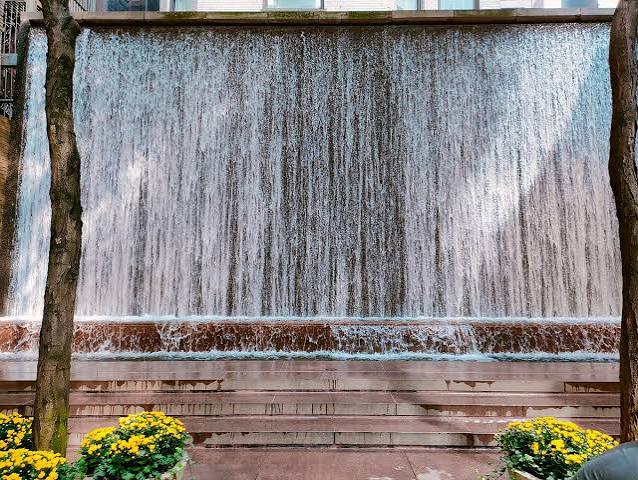
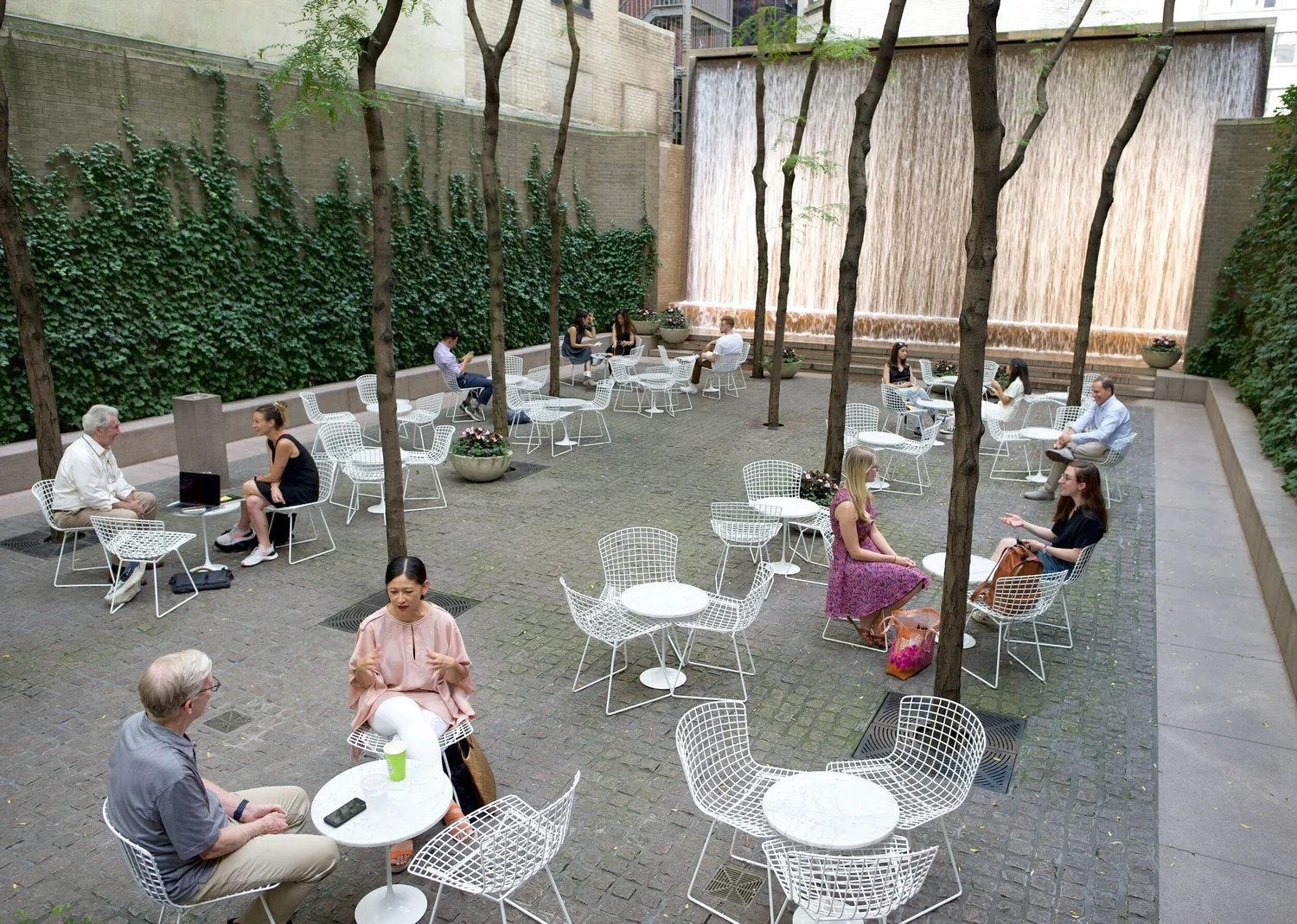
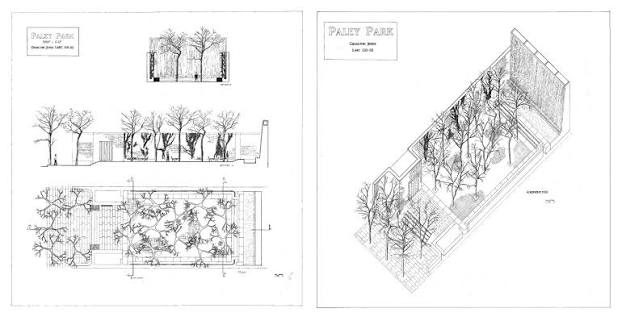
Paley Park sits on a single small lot in midtown Manhattan, hemmed in on three sides by tall buildings, no bigger than a generous living room. It opened in 1967, designed by the landscape architects Zion and Breene. At the back, a wall of water some twenty feet high pours down continuously. Honey locust trees throw a thin, dappled shade overhead. And scattered across the space are light, movable chairs that anyone can pick up and rearrange.[2]
None of that is accidental, and we know in unusual detail why it works, because the urbanist William Whyte spent hours filming this park and others like it for his 1980 study, The Social Life of Small Urban Spaces.[1] He found that people came, stayed, and fell into conversation here far more than in grander, emptier plazas nearby. Whyte noted that visitors described Paley Park as one of the pleasantest, quietest places in New York, even when it was packed and the waterfall was roaring.
Why this is design, not sociability
It is tempting to think the people talking in Paley Park are just the friendly sort. Whyte's filming showed otherwise. The same kinds of New Yorkers who hurry past each other on the pavement slow down, settle, and open up inside this particular space. Their personalities did not change at the gate. The design did the work, lowering the barriers to staying and to contact, and the sociability followed.
Which means connection between strangers is not only a matter of luck or character. It is something a space can quietly make more or less likely, depending on how it is built.
The science: the four things that make a space work
Whyte's central finding was almost embarrassingly practical. Whether a public space lives or dies came down to a small number of physical factors, and the most powerful was sittable space, places to sit, and crucially the freedom to move while sitting. He found that the number, flexibility and placement of seats directly shaped how long people stayed and how likely they were to interact. Movable chairs mattered most of all, because a chair you can shift two feet into the sun or angle towards someone hands you a small piece of control over your own experience, and people who feel in control of a space stay in it.
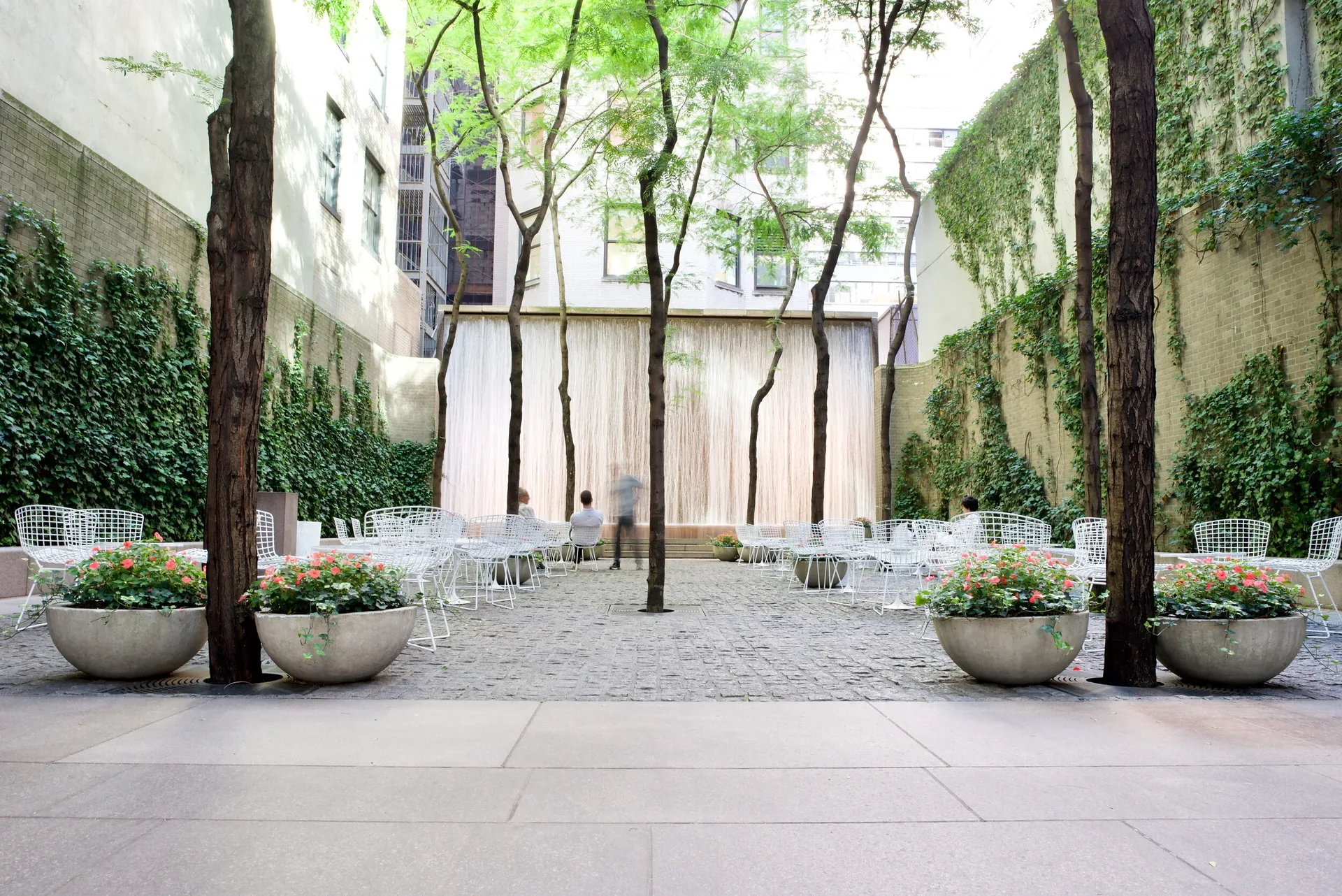
Three other things mattered too: the choice between sun and shade so people could find their own comfort, the presence of food nearby, which turns a space from one you pass through into one you go to, and a direct, easy relation to the pavement so the park pulls people in rather than walling them out. The twenty-foot waterfall adds one more thing Whyte prized, a blanket of sound that covers the traffic and gives two people talking a pocket of auditory privacy in the middle of the city.
Through a Behavioural Design lens: removing the barriers to contact
It is worth naming the discipline here, because Paley Park is a clear example of how behavioural design approaches a problem like loneliness. The instinct, faced with people who do not connect, is to push: tell them community matters, run the campaign, urge them to reach out. Behavioural design starts somewhere else. It assumes people already have the inclination, and asks what in the situation is blocking it. The barrier to a stranger striking up a conversation is real: the discomfort of being watched, the awkwardness of having nowhere to settle, the exposure of an open plaza where you feel like a fly in a stadium.
Paley Park does not exhort anyone to be sociable. It quietly removes those barriers one by one. The movable chair gives you control over how close you sit. The waterfall gives you privacy to speak. The food and the shade give you a reason to stay long enough for contact to happen. Take away enough of the friction, and the connection people were already capable of simply emerges. That is the central move in behavioural design: not adding a push, but finding and removing what stands in the way. At SUE, the Influence Framework and SWAC are the methods we teach in the Behavioural Design Fundamentals Course to systematically analyse how design triggers connection rather than leaving it to chance.
What this means in practice
Start with the spaces you control yourself. If you want people to talk, in your home, your team's corner of the office, an event you run, look at whether the space lets them. Fixed seating in rows, no comfortable place to pause, nowhere to get a coffee and stand a while, all of it quietly suppresses contact. The fix is rarely a forced icebreaker. It is movable chairs, a reason to linger, a pocket of comfort that lets conversation start on its own.
For anyone leading a team, this is a sharper lens on why people do or do not connect at work. The instinct, when a team feels fragmented, is to schedule the social event and hope. Whyte's lesson is that the everyday environment matters more than the occasional party. Where people sit, whether there is a comfortable spot to pause near where they work, whether the layout gives them small, low-stakes reasons to cross paths, shapes connection far more than the annual outing. Design the daily space and the bonding takes care of itself.
And at the level of the organisation, this is about treating informal contact as something you design rather than hope for. The coffee point that brings people together, the way a floor is laid out, the spaces that invite people to stay versus the ones that move them along, all of it is shaping how much your people actually talk. The skill this teaches, and it is a learnable one, is to stop asking how to make people more sociable, and start asking what your space is doing to make contact easy or hard.
Learn to apply this yourself
What makes Paley Park work is not goodwill or sociability, but the removal of physical barriers that normally prevent contact: nowhere comfortable to settle, no sense of privacy, no reason to linger. The Behavioural Design Fundamentals Course teaches you to map those barriers with the Influence Framework and use SWAC to design the conditions that make the behaviour you want the easiest path available.
View the online Fundamentals CourseWhat you can design this week
You do not need a waterfall and a row of trees. The underlying moves scale to almost any space where you want people to connect. Three ways to start:
Make the seating movable. A chair people can pick up and rearrange hands them control, and control makes them stay. Wherever you want people to settle and talk, choose flexible seating over fixed rows.
Give people a reason to linger. Food, warmth, something pleasant to be near, Whyte found these turn a space people pass through into one they stay in. Contact needs time, and time needs a reason to stay.
Create a pocket of privacy in the open. The waterfall let strangers talk without feeling overheard. A bit of background sound, a softer corner, a sense of enclosure does the same. People reach out from somewhere that feels safe, not from the middle of a stage.
Paley Park did not tell a single New Yorker to be friendlier. It built a space where staying was comfortable and talking felt safe, and let the rest happen. That is the difference between campaigning for connection and designing for it, and it works on a living room, an office floor or a city square alike.
Want to learn to read a space for what it does to the people inside it, and design it on purpose? That is the heart of our Behavioural Design training. Details on the SUE website.
Frequently asked questions
Why do movable chairs make such a difference to whether people stay and connect?
William Whyte's filming across New York's public spaces showed that the number and flexibility of seats directly shaped how long people stayed and how likely they were to interact. A chair you can shift two feet hands you a small piece of control over your own experience, and that control matters enormously. When people can adjust their distance, angle towards someone, or turn slightly away, they are no longer exposed or locked in. The discomfort of being unable to manage your own position is a silent reason to leave, and movable seating removes it.
How do I apply Whyte's findings to an office or workplace?
Whyte found that the everyday environment shaped connection far more than the occasional social event. In an office, that means asking where the comfortable spots to pause are, whether the layout gives people low-stakes reasons to cross paths, and whether fixed rows of seating quietly prevent the small adjustments people need to feel at ease. The coffee point that brings two people to a standstill, the flexible corner where someone can sit at an angle rather than in a row, the place where it is natural to linger without looking like you are wasting time, these are the actual levers. The annual away-day cannot compensate for a floor plan that works against contact every other day of the year.
What does the waterfall actually do, behaviourally?
Whyte observed that visitors described Paley Park as one of the quietest places in New York even when it was packed, because the waterfall lays a continuous blanket of sound over the traffic noise around it. That acoustic cover gives two people talking a pocket of auditory privacy in the middle of a crowded city. People reach out from somewhere that feels safe, not from the middle of a stage where they feel overheard. The waterfall is not decoration; it is a privacy mechanism built out of sound.
Why do campaigns to reduce loneliness so often fail?
Because they address the person and leave the situation untouched. The underlying assumption is that lonely people need to be told that connection matters, or encouraged to reach out, when in practice the barrier is rarely motivation. Paley Park shows that the same New Yorkers who ignore each other on the pavement slow down, settle, and talk when the space makes it easy to do so. Their willingness was there all along; the environment was blocking it. A campaign that runs alongside a square with no shade, nowhere comfortable to sit, and nothing to draw people back does not solve that problem. Removing the physical friction does.
If you want to learn how to design for behaviour rather than trying to motivate it, that's exactly what the Behavioural Design Fundamentals Course covers. View upcoming dates →