How do you design a country that stops throwing its food away?
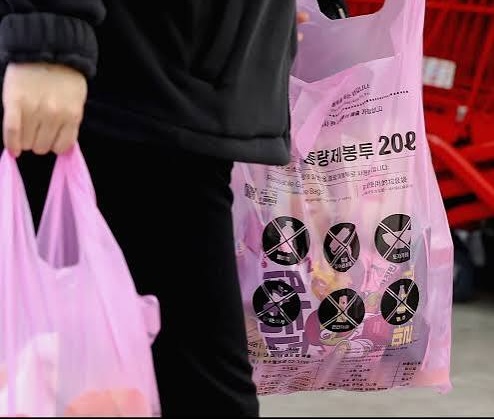
In a Seoul apartment, there is a kitchen bin with a small machine beside it. When the household scrapes leftovers away, they do not simply vanish into a free, invisible stream. They are weighed. The cost of that food waste is recorded and charged back to the household, by the kilo, every single time. It is a small, almost mundane thing, a bin that keeps count. And yet this quiet change helped turn one of the most wasteful food cultures into one of the most efficient recyclers of food waste on earth.
This is South Korea's volume-based food waste system, and the picture of it, a bin that charges you the moment you throw food away, makes the argument before a word is said. It is a clean example of designing behaviour by changing the structure of a choice rather than appealing to people's conscience. And the mechanism behind it decides far more of our behaviour than we like to admit, from how a team spends money to how an organisation wastes its own time.
What South Korea actually did
By the 1990s, South Korea had a serious food waste problem. Dense cities, a cuisine rich in side dishes, and rising affluence produced enormous quantities of discarded food, most of it heading to landfill. Rather than run a campaign urging people to waste less, the country rebuilt the structure around the act of throwing food away.
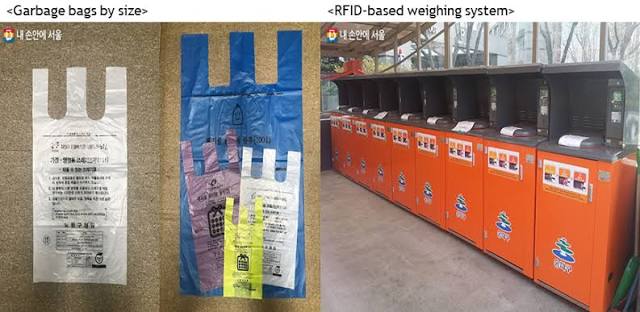
It introduced a volume-based waste fee system, starting in the mid-1990s and tightening over the following decades, eventually moving to charging households for food waste specifically by its weight. People pay through metered bins, prepaid bags or card-based collection machines, so the more food waste you produce, the more you pay, and the cost lands on the household that produced it. Alongside this, the country built the infrastructure to turn collected food waste into compost, animal feed and energy. The recycling rate for food waste climbed from a few per cent in the late 1990s to around ninety-five per cent.[1] The thing that changed behaviour at scale was not a message about virtue. It was the price showing up at the moment of the choice.
The caring was never the lever
South Korea did not try to make its citizens care more about food waste. It made the cost of wasting visible and personal at the exact moment of throwing away, and let the behaviour follow. That is the reversal worth pausing on. The instinctive approach to waste is moral and informational: posters about the hungry, reminders to finish your plate, awareness weeks. We have all watched those wash over us and change almost nothing, because they work on attitude and leave the actual structure of the decision, where the real steering happens, untouched.
The Korean system did the opposite. It barely mentioned virtue. It simply moved the cost from hidden and shared to visible and personal, and placed it at the precise instant the choice is made: the moment the food goes in the bin. When a cost is invisible, we genuinely do not register it; it does not enter the quick, automatic calculation that drives most everyday behaviour. When the same cost is made visible and lands on you, personally, at the point of decision, the calculation quietly changes, with no lecture required and no change of heart needed.
This is the difference between persuading and designing. Persuasion works on the person's conscience and asks them to override their habits out of principle. Design changes the structure of the choice so that the better behaviour follows from ordinary self-interest, automatically.
The science: making costs visible at the point of choice
The behavioural principle underneath the Korean system is about salience and the timing of feedback. A large body of behavioural science shows that people respond far more strongly to costs and consequences that are immediate, visible and personal than to ones that are delayed, abstract or shared. A cost you cannot see at the moment you act barely influences you, however large it is in the abstract. The same cost, made concrete and placed right at the point of decision, changes behaviour reliably.[2]
This connects to a wider pattern sometimes discussed under the tragedy of the commons: when the cost of a behaviour is spread across everyone and invisible to the individual, each person has little reason to restrain themselves, and the shared resource is overused. Free, anonymous waste collection is exactly this. No single household feels the cost of its own waste, so no single household has reason to reduce it. The Korean reform broke the pattern not by appealing to collective responsibility, which rarely holds, but by making the private cost real and immediate. Each household now meets the consequence of its own behaviour, at the moment of the behaviour.
The result was not a nation that suddenly cared more. It was a nation whose everyday calculation had been redesigned. The ninety-five per cent figure is striking precisely because it was achieved through structure rather than persuasion, which is what makes it durable. Attitudes drift; a cost that appears every time you use the bin does not.
Through a Behavioural Design lens
It is worth slowing down on what South Korea actually did, because it is a clean example of how wasteful behaviour really changes, as opposed to how we usually try to change it.
Start with the person, not the policy. Before you can shift anyone's behaviour, you have to understand the progress they are really trying to make. A household scraping a plate is not trying to harm the planet, nor are they weighing the environment at all; they want to clear up quickly and get on with the evening. Hold that real motive in view and the forces around it come into focus. Two pull a household towards wasting less: the mild discomfort of obvious excess, and the satisfaction of running a tidy, careful home. Two hold them back: the effort of being careful about portions and leftovers, and the sheer ease of throwing things away when it costs nothing and no one sees. Map those four forces around the real motive and the problem reframes itself. The barrier was never a lack of care. It was that wasting was effortless and free at the point of action. This way of mapping a behaviour, the deeper motive plus the four forces around it, is what we call the Influence Framework at SUE, and it is where any attempt to curb waste should begin: with the human and the real forces on the choice, before the campaign.
Now to the intervention. The move that works is the trigger: placing a clear, personal cost at the exact moment of the wasteful act, so the decision point itself carries the consequence. The bin became the prompt. And because that prompt recurs every single day, the new behaviour repeats until it becomes simply how things are done. The Korean lesson is the power of the trigger, a well-placed cue at the moment of choice, over any amount of general persuasion. This approach to mapping the triggers and making them work is what we call the SWAC Tool at SUE.
This is the move that travels, and it has nothing to do with bins. The first question is never how do I make people care more about this waste, but what makes the wasteful option free and invisible at the moment of choice, and how do I make its cost show up right there. Surface the cost at the point of decision, and the restraint you have been preaching often simply appears. That, in one line, is the discipline of Behavioural Design here: you do not change the attitude, you change where and when the cost is felt, and the behaviour follows. At SUE, the Influence Framework and SWAC are the methods we teach in the Behavioural Design Fundamentals Course to systematically analyse how the cost of a behaviour can be surfaced at the moment of choice so that the better option becomes the easier one.
What this means in practice
It is tempting to file the Korean system under waste policy and move on, but the same lever sits underneath most of the waste we struggle to curb, starting with our own.
At the personal level, think of something you overuse or overspend without quite noticing, the small subscriptions, the impulse purchases, the energy left running. Often the problem is not weak willpower but a hidden cost, money or consequence that you never see at the moment you act. The Korean lesson, turned inward, is to make your own costs visible at the point of choice: put the running total in front of you, set the alert at the moment of spending rather than in a statement weeks later. You do not need more discipline; you need the cost where the decision is.
The same move scales up to leading people. When a team is careless with budget, time or resources, the instinct is to ask them to be more mindful. Far more effective is to make the cost visible at the moment they spend it. Put the price of an hour-long meeting on the invitation, show the cost of the resource next to the request for it. A good leader does not lecture on thrift; they design the moment of choice so the cost is impossible to ignore.
And it scales again to the organisation. Why does waste persist despite every value statement about efficiency? Rarely because people do not care; far more often because the cost of the wasteful behaviour is hidden, shared and delayed, so no individual feels it when they act. In every case the high-leverage question is the same: not how do I make people care more, but what makes the waste free and invisible at the point of choice, and how do I move the cost there.
Learn to apply this yourself
What made South Korea's system work is not the technology but the timing: a personal cost placed precisely at the moment of the wasteful act, so the consequence and the choice land in the same instant. The Behavioural Design Fundamentals Course teaches you to use the Influence Framework and SWAC to find those moments in your own context and redesign the structure around them so the right behaviour becomes the path of least resistance.
View the online Fundamentals Course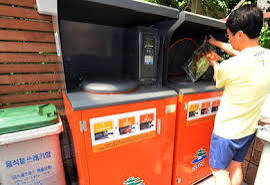
What you can design this week
The same move works on a habit of your own, a team you lead, or an organisation that wastes quietly. Three ways to start:
Move the cost to the moment of choice. Find something wasteful that is currently free and invisible when people act, and make its cost show up right there. A figure on the meeting invite, an alert at the point of spending, a total in view. The cost only changes behaviour if it arrives when the decision is made.
Make it personal, not shared. Costs spread across everyone are ignored by everyone. Where you can, attach the consequence of a behaviour to the individual or team that produced it, rather than letting it dissolve into a collective pool no one feels.
Stop reaching for the awareness campaign. Before you commission another poster or reminder, ask what would make the wasteful option mildly costly or inconvenient at the moment it happens. A small, well-placed friction beats a large, well-meant message.
South Korea did not persuade its citizens to care more about food. It redesigned the moment of throwing away so the cost was felt, and let self-interest do the rest. That is exactly as useful for your own quiet overspending, a team careless with resources, or an organisation that wastes by default, as it is for a country's kitchens.
If you want to think this way about waste you are trying to curb, our Behavioural Design training works through exactly this: how to read a situation, find where the cost is hidden, and design it back into the moment of choice.
If you want to learn how to design for behaviour rather than trying to motivate it, that's exactly what the Behavioural Design Fundamentals Course covers. View upcoming dates →
Frequently asked questions
What is South Korea's volume-based food waste system?
Since the mid-1990s, South Korea has required households to pay for food waste disposal by volume or weight, using metered bins, prepaid bags or card-based collection machines. The cost is personal and immediate: the more you throw away, the more you pay, at the moment of throwing. The system drove food waste recycling from around two per cent in the late 1990s to roughly ninety-five per cent by the 2020s.
Why does making costs visible at the point of choice change behaviour?
Behavioural science consistently shows that costs only influence decisions when they are immediate, personal and visible. A hidden or shared cost does not register in the everyday calculation that governs most routine behaviour. When the same cost is made visible right at the moment of the action, the calculation changes on its own, without lectures or change of heart. The Korean bin did not make people more virtuous. It made the cost appear where the choice was being made.
What is the tragedy of the commons and how does it apply to waste?
The tragedy of the commons describes situations where a shared resource is overused because each individual bears little or none of the cost of their own consumption. Free, anonymous waste collection is a classic example: because no household feels the consequence of its own food waste, no household has reason to reduce it. South Korea broke this pattern by privatising the cost at the household level, at the moment of waste, making each person the one who meets the consequence of their own behaviour.