How do you design a city where car use drops without banning cars?
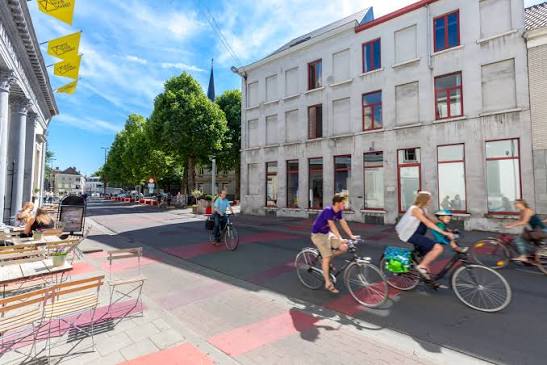
In 2017, the Belgian city of Ghent did something that sounds impossible: it reduced car traffic in its historic centre by around 30% without banning cars. No prohibition, no fine, no campaign asking people to drive less. It reorganised the roads so that driving through the centre was no longer the shortest way between two points. The car was still available. The through-route simply stopped existing.
The image is a map of six zones, each reachable by car but not driveable through to the next, with the through-routes quietly removed by one-way restrictions and physical changes to signs and streets. The result was that driving around the centre became faster than driving through it, and people adjusted without anyone having to be persuaded.
What Ghent actually did
Ghent's circulation plan divided the historic centre into six distinct zones. Each zone remained accessible by car; residents could drive in and out. What changed was that you could no longer drive through the centre from one zone to another. The through-routes, which had carried large volumes of traffic cutting across the city, were removed by a combination of one-way streets, physical barriers, and redesigned junctions.
To reach a destination on the other side of the centre, driving around the ring road became the faster option. The city had not taken the car away. It had taken away the route that made driving through the centre rational. Within two years, car traffic in the zone had fallen by around 30%, and air quality, noise, and public space in the centre had measurably improved. Public transport and cycling routes were simultaneously improved, though no financial incentive for this was offered. The default had changed, and most people followed it without a second thought.
Nobody was talked out of driving
There was no campaign about the environment, no appeal to civic duty, no financial incentive. Nobody made a deliberate choice to drive less. They made the same choice they always had: the fastest route. The fastest route had changed, so their behaviour changed with it, at the scale of an entire city, in two years.
This is the difference between motivation and design, at its cleanest. The conventional move is to try to change what people want, to persuade them that driving less is the right thing, to explain the environmental case, to offer incentives. Ghent changed what the situation offered, and the behaviour followed. It is not that drivers reconsidered their values; their navigation app simply showed them a different road. The behaviour was never really about the person at all. It was about the path the city had laid out. Change the path, and the behaviour changes with it.
The science: default behaviour
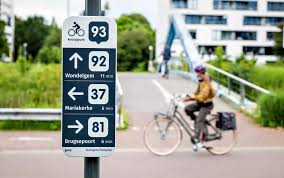
The principle underneath Ghent is default behaviour, and it is one of the most powerful forces in all of human conduct. Most of what people do, most of the time, is whatever the environment makes effortless: the option pre-selected in the form, the item on the top shelf, the road the navigation app opens with. We talk about behaviour as if it were made of deliberate choices, but the reality is that deliberation is expensive and most of us default through most of our day. We take the route that is in front of us.
This is why changing the default is so much more powerful than changing the message. A campaign that persuades 5% of drivers to voluntarily reconsider their route every morning is a success. A road layout that makes the through-route the longer option changes the behaviour of the other 95% without asking them to reconsider anything. The person who drives around the ring road because it is faster is not making a values-based choice. They are following their navigation app. The default did the work, not the persuasion.
And this generalises. Default organ donation produces dramatically higher donation rates than opt-in. Default pension enrolment saves more than financial literacy campaigns. Default renewable energy contracts produce more green energy than price incentives alone. The behaviour that is the pre-set, the most visible, the one that requires the least effort to arrive at, is the behaviour most people do. Change the default and you change the many, at a fraction of the cost of changing the message.
Through a Behavioural Design lens
It is worth slowing down on Ghent, because it shows the difference between working on people and working on the situation they move through.
Start with the person. What does a driver want? To get somewhere with the least effort. They are not thinking about their route as a values statement; they are following the path of least resistance. The forces acting on them are almost entirely environmental: the route their navigation shows, the road that goes straight, the choice that requires no deliberation. Reading behaviour by the forces the situation creates, rather than by the driver's attitudes, is what we call the Influence Framework at SUE, and in Ghent it points at the infrastructure, that is where the behaviour was coming from.
Now the fix, and Ghent is elegant because it operates on the ability lever rather than the willingness lever. Most interventions try to make people more willing, more motivated, more persuaded. Ghent changed what was possible: driving through the centre became the longer option, and driving around became the shorter one. Nobody needed to want to drive less; the route that made driving through sensible was simply gone. Removing an option so that the preferred behaviour is no longer competing against an easier one is what we call changing ability in the SWAC Tool, here in reverse, by taking away the ability to take the old path rather than adding something new. The change did not ask people to be different. It made the old behaviour the hard way, and the new behaviour the easy one, and that was enough.
The lesson travels to any default you are trying to shift. Before a campaign, ask what the current default is, the thing that happens if people do nothing, click nothing, think nothing. Then ask how you could make the desired behaviour the default, the thing that happens automatically, the path that requires the least effort. That question is worth more than most communication strategies. At SUE, the Influence Framework and SWAC are the methods we teach in The Art of Influence© to systematically analyse how the built environment triggers behaviour and where you can redesign the path.
What this means in practice
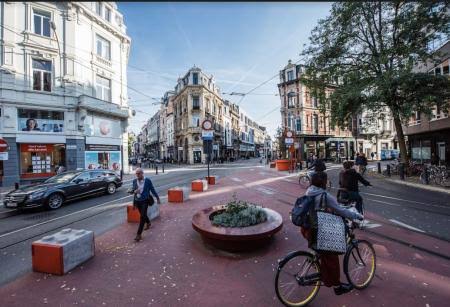
Ghent is about streets, but the move works on any situation where you want people to behave differently without telling them to. Start with your own habits. Most of what you do each day is not chosen; it is defaulted into by what is nearest, most visible, or most pre-arranged. If you want to change a behaviour, the most reliable move is not to resolve more firmly to do it differently; it is to redesign the situation so the new behaviour is the path of least resistance, the fruit on the top shelf, the first thing on the list, the walk that is already on the route. Take the old default away, or make it the long way round, and the new one settles in.
For anyone leading a team, this reframes how you produce change in a group. Most team behavioural change programmes work on motivation: better communication, clearer reasoning, culture workshops. Most of them are about asking people to override their defaults. What actually shifts behaviour reliably is changing the defaults themselves, the pre-filled form, the meeting that already exists in the calendar, the process that requires effort to deviate from. The team that collaborates because a shared channel is the only place documents are posted does not need to be motivated to collaborate. The default is doing it for them.
And for the organisation, this is the design question under every policy. Before you write the campaign or set the incentive, ask: what is the current default, and who does it serve? Then ask: how could the desired behaviour be the default, the option that happens if nothing is done, the one that requires no deliberate effort? Sometimes the answer is a rule or a process; sometimes it is simply moving something from opt-in to opt-out, from the bottom shelf to the top, from the long route to the short one. The behaviour follows the path. Change the path.
Learn to apply this yourself
What makes Ghent's approach effective is that it changed the default by redesigning the built environment rather than asking people to override their habits. In The Art of Influence© you learn to use the Influence Framework to map the forces shaping behaviour in any situation, and SWAC to find the specific lever - ability, willingness, or salience - that makes the desired behaviour the path of least resistance.
View The Art of Influence© onlineWhat you can design this week
The move works on your own habits, a team you lead, or a system you run. Three ways to start:
Find the default you are fighting. When you want behaviour to change but it keeps not changing, locate the default that is running instead. What is the easiest thing to do? What happens if nobody thinks about it? That is the behaviour you are competing with - and the thing you need to redesign, not overcome.
Make the new behaviour the path of least resistance. Put the fruit on the top shelf. Make the good option the pre-filled one. Put the meeting in the calendar. Design the environment so the desired behaviour happens unless someone actively opts out, rather than requiring everyone to actively opt in.
Remove the old route rather than adding persuasion. Ghent did not add an argument for not driving through the centre; it removed the road. Sometimes the most effective design move is to take away the easy old option - cancel the meeting that has been replaced by a better process, remove the tool that is competing with the better one, take away the route that makes the old behaviour the obvious choice.
Ghent reduced car traffic 30% without banning a single car. It changed the roads, and the behaviour followed. The default is the most powerful force in any system. Redesign the default, and you redesign the system.
If you want to learn how to identify and redesign the defaults in your own organisation, that is exactly the kind of work our Behavioural Design training is built around.
If you want to learn how to design for behaviour rather than trying to motivate it, that's exactly what The Art of Influence© covers. View upcoming dates →
Frequently asked questions
What is the Ghent circulation plan?
Ghent's circulation plan, introduced in 2017, divided the historic centre into six zones, each accessible by car but not driveable through to the others. The through-routes were removed by subtle one-way restrictions and physical changes to signage and street layout. Driving through the centre became a longer journey than driving around it. Within two years, car traffic in the zone fell by around 30%, without banning cars or imposing fines.
What is default behaviour in behavioural design?
Default behaviour is what people do when they follow the path of least resistance - the option their environment makes effortless. Most behaviour is default behaviour: people take the route that opens in their navigation app, choose what is on the top shelf, and drive the road that is in front of them. Changing the default changes the behaviour of the many without requiring any individual to make a deliberate decision.
How do you change a default without banning anything?
Make the behaviour you want the path of least resistance, and the behaviour you want to reduce slightly more inconvenient - not prohibited. Ghent did not ban driving; it made driving through the centre the longer way around. The car was still available; it simply stopped being the obvious first choice. This is the difference between a ban and a redesign: one relies on prohibition and enforcement, the other on changing the situation so a different behaviour becomes the natural default.