How do you design a neighbourhood out of violence?
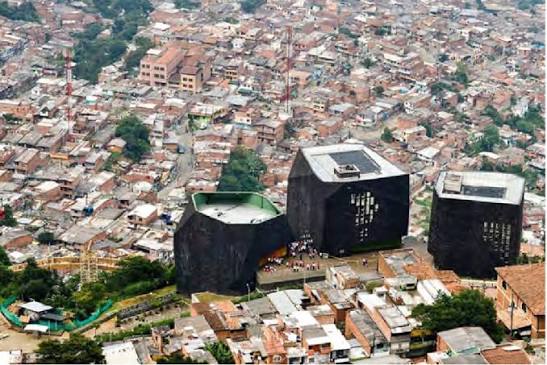
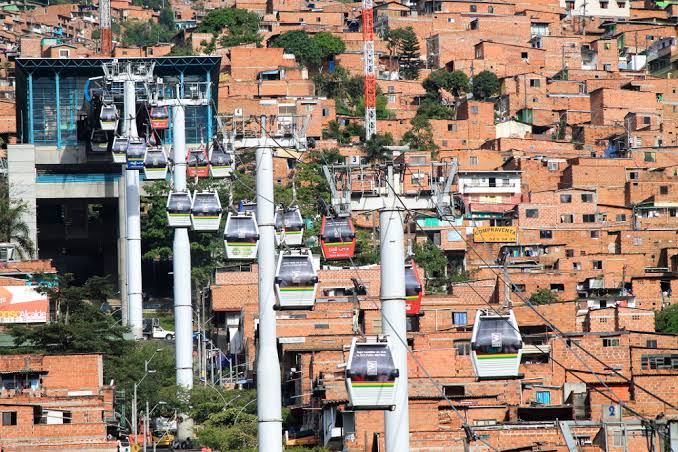
For years, the hillside settlements above Medellín were among the most dangerous places in the world. They clung to the steep slopes above the city, a two-hour climb from the centre, cut off from its jobs, its services, its life, and controlled by armed groups. The instinct everywhere is to treat a place like that as a problem to contain: seal it off, keep it at arm's length, let the rest of the city stay safe. Medellín did the opposite. It built a cable car straight up the mountain and stitched those neighbourhoods back into the city below.
The image is striking on its own: gondolas gliding up a hillside that police would not enter, carrying people to work in minutes instead of hours. But the point was never the transport. It was what the connection did to the violence, which fell faster in the neighbourhoods the cable car reached than in comparable ones it did not.
What Medellín actually did
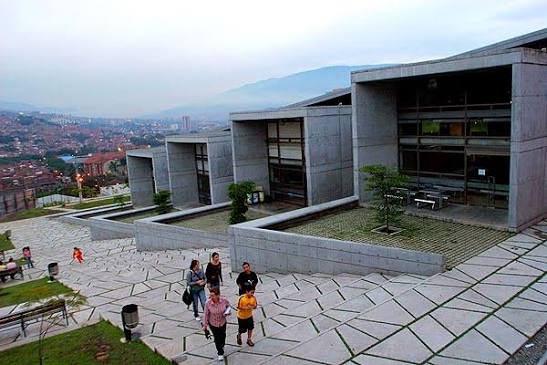
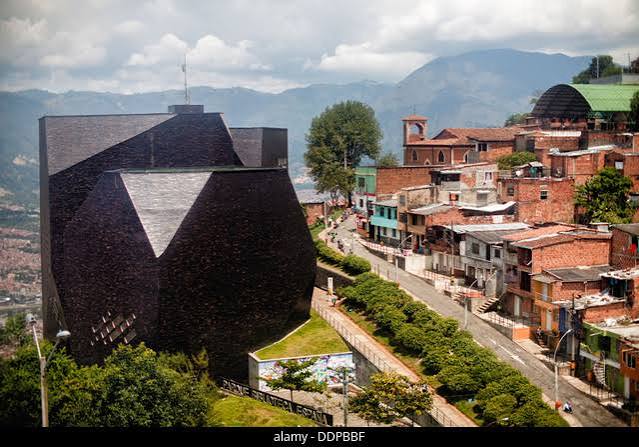
In 2004 Medellín opened the Metrocable, a cable-car line that linked its isolated hillside settlements to the city's metro system below. It was not a standalone gadget. Alongside it, the city invested in the connected neighbourhoods: better lighting, new public spaces, schools, library parks, pedestrian routes, a greater public presence in places that had been abandoned. The cut-off neighbourhoods were not contained or policed into submission. They were connected and invested in.
Researchers treated this as a natural experiment. They compared 25 neighbourhoods the Metrocable reached with 23 comparable ones it did not, before the intervention in 2003 and after in 2008. Violence was falling across the whole city in those years, but it fell significantly faster in the neighbourhoods the cable car connected, where residents also reported higher collective efficacy, the shared sense that neighbours would act for one another.[1] The connected neighbourhoods improved more, and the mechanism, connection rebuilding a community's capacity to look after itself, is what generalises.
You cannot lecture a neighbourhood out of isolation
No one reduced the violence by telling residents to behave better. There was no campaign urging people to trust their neighbours or reclaim their streets. The change came from altering what the environment offered, access, visibility, investment, presence, and letting the community's own capacity to protect itself grow in the space that opened up.
This is the difference between motivation and design, on a subject where motivation is almost useless. You cannot lecture a community out of isolation. Telling people who are cut off and abandoned to feel more connected and act more safely changes nothing about the conditions producing the danger. Medellín did not work on the residents' attitudes. It worked on the isolation itself, the physical and social fact of being severed from the city, and once that was undone, the community's own ability to keep itself safe had room to recover. The behaviour followed the changed environment, not a changed sermon.
The science: collective efficacy
The principle underneath Medellín's success is collective efficacy: the shared belief among the people of a place that their neighbours will step in for the common good, intervene, watch out, act. It is one of the strongest predictors there is of whether a neighbourhood stays safe, stronger in many studies than poverty or policing alone. And crucially, collective efficacy cannot be instructed into existence. It grows from connection, trust and a shared stake, the things an environment either enables or strangles.
This is why containment is exactly the wrong move and connection the right one. Sealing a neighbourhood off deepens the isolation that erodes collective efficacy in the first place; it confirms the place as abandoned and leaves whoever holds power there in charge. Connecting it does the reverse: access, visibility and investment rebuild the trust and shared stake that let a community police itself, far more effectively than any outside force can. The violence was never simply about dangerous individuals. It was about an environment that had broken the connection collective efficacy depends on, and the repair was to rebuild that connection, not to wall the danger in.
Through a Behavioural Design lens
It is worth slowing down on Medellín, because it shows how a whole sequence of behaviour has to be designed, not just a single moment.
Start with the people. What does someone in a cut-off hillside settlement want? Safety, dignity, a way to work and raise a family, a sense of belonging to the city rather than being exiled above it. The forces around that are overwhelmingly environmental: what pushed people towards a safer, more connected life was real, but what held it down was the brute fact of isolation, the two-hour climb, the absence of the city, the control of armed groups, the signal that no one cared. Reading a situation by the forces acting on people rather than their character is what we call the Influence Framework at SUE, and in Medellín it points hard at the environment, the isolation was the bottleneck, and no amount of willingness could clear it.
Now the harder part. Changing a community's behaviour is never a single nudge; it is a sequence, and each step can fail on its own. First you have to reach people at all, break through the isolation and the abandonment so that change even seems possible. Then you have to make the new behaviour genuinely doable, which is what the cable car and the lighting and the routes provided. Then people need their first experiences to confirm that it is real and safe. And finally it has to keep going long enough to become the new normal. Medellín, knowingly or not, designed for all four steps: it caught attention with a dramatic, visible intervention, converted it into real access, confirmed it with tangible investment, and continued it until collective efficacy took root. That four-step sequence, catching attention, converting it to action, confirming the choice, and continuing it until it sticks, is what we call the SUE | 4C Influence Flow©, and Medellín works because it cleared every hurdle, not just the first.
The lesson travels to any deep change you are trying to make in a system. Safety, like any lasting behaviour, was built into the place across the whole journey, not preached into the people at a single moment. At SUE, the Influence Framework and SWAC are the methods we teach in The Art of Influence© to systematically analyse how design triggers connection rather than leaving it to chance.
What this means in practice
Medellín is about cities, but the logic applies to any isolated, stuck part of a system you are trying to change. Start with how you think about problem areas. The instinct, faced with a troubled team, a failing region, a disengaged group, is to contain it, to treat it as the problem and keep it at a distance. Medellín suggests the opposite: the isolation is usually part of the cause, and the move that works is to connect, not to quarantine. Before you write something off, ask what link it is missing, to information, to the rest of the organisation, to a sense of belonging, and build that link.
For anyone leading change, the deeper lesson is that one intervention is rarely enough, because change is a sequence and each stage can fail. It is not enough to catch attention with a launch if you never make the new behaviour genuinely doable. It is not enough to make it doable if people's first attempts are not confirmed by a real, visible result. And none of it lasts unless it continues long enough to become normal. Most change programmes clear one hurdle and stall at the next, declaring victory at the launch and wondering why nothing held. Medellín held because it designed the whole journey.
And for the organisation, this reframes how you invest in the parts of the system that are most cut off. Medellín put its best infrastructure into its poorest, most dangerous districts, on the logic that connection there would do the most good. The same applies wherever a group is isolated: the function no one consults, the team that never sees how its work lands. The question is not how do we get these people to behave differently, but what connection has been severed, and how do we rebuild it across the whole journey rather than in one gesture.
Learn to apply this yourself
What makes Medellín's transformation so instructive is that it shows behaviour change as a designed sequence: connection first, then access, then sustained investment until collective efficacy takes root on its own. In The Art of Influence©, you learn to map exactly that sequence using the Influence Framework and SWAC, identifying the forces that hold behaviour in place and redesigning the environment rather than the people.
View The Art of Influence© onlineWhat you can design this week
The move works on a team, a stuck part of a system, or any deep change you are leading. Three ways to start:
Find the isolated part of your system. The team that never sees how its work lands, the function tucked away where no one consults it. Isolation, not attitude, is often what produces the behaviour you dislike. Locate it first, before you judge the people in it.
Build the connection that is missing, then sustain it. Before another campaign, ask what link would let these people see and rely on the rest of the system, a shared channel, a standing overlap, a reason to meet. Then keep it going, because one gesture fades; a sustained connection is what changes things.
Invest most where access is worst. Medellín put its best infrastructure in its poorest districts. Apply the same logic: put your effort into the group that is most cut off, not the one already well connected.
Medellín did not contain its most dangerous neighbourhoods. It connected them to the city, invested in them, and kept doing so until communities could protect themselves. The safety was designed into the place across the whole journey, not demanded from the people in a single speech.
If you want to learn how to design change across the whole journey rather than in one gesture, that is exactly the kind of work our Behavioural Design training is built around.
If you want to learn how to design for behaviour rather than trying to motivate it, that's exactly what The Art of Influence© covers. View upcoming dates →
Frequently asked questions
What is the Medellín Metrocable and why did it reduce violence?
The Metrocable, opened in 2004, connected Medellín's isolated hillside settlements to the city's metro system. Alongside it came investment in lighting, public spaces, schools, and library parks. Research found violence fell significantly faster in connected neighbourhoods than in comparable ones - because access and investment rebuilt collective efficacy, the shared sense that neighbours watch out for one another.
What is collective efficacy?
Collective efficacy is the shared belief among people in a place that their neighbours will step in for the common good. It is one of the strongest predictors of neighbourhood safety, stronger in many studies than poverty or policing levels alone. It cannot be instructed into existence - it grows from connection, trust, and shared stake, which the environment either enables or strangles.
What is the SUE | 4C Influence Flow©?
The SUE | 4C Influence Flow© is a framework used in the SUE Behavioural Design Method that describes the sequence needed for lasting behaviour change: Catch attention, Convert it to action, Confirm the choice with a real result, and Continue until the behaviour becomes normal. Medellín illustrates why all four steps matter - missing any one of them causes change to stall.