Most workplace conflict is about interests, context and behavioural patterns, not the surface issue it looks like, and once you understand what's actually driving them, you can learn to break them. That's what you learn with Behavioural Design.
"We keep having the same argument. Nothing changes."
10,000+ professionals trained, including people from
They are documented by Fisher, Kahneman and Cialdini. They apply to your team, your stakeholders and yourself. And they are all designable. As long as they stay invisible, every difficult conversation ends where it started.
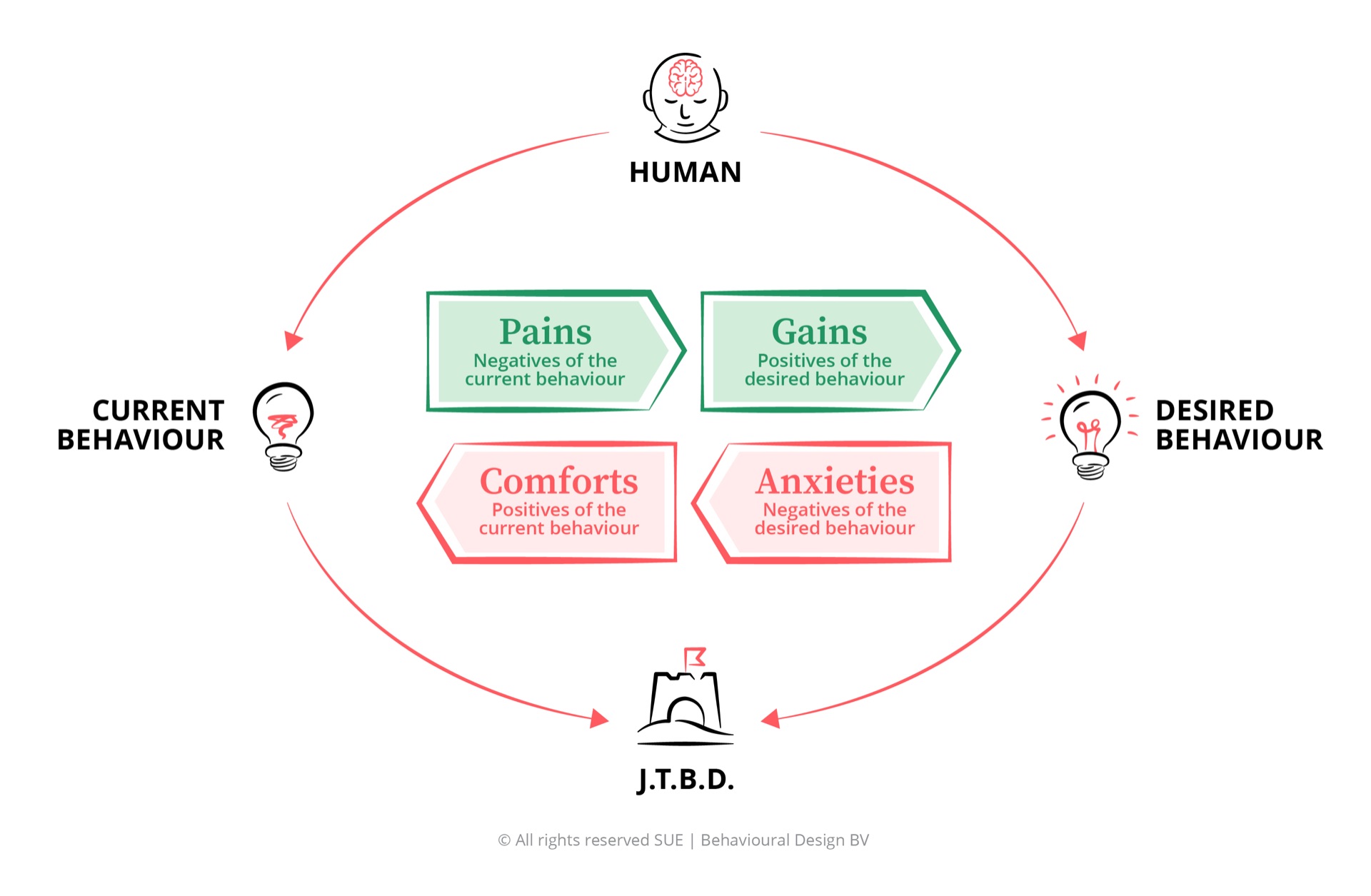
Positions are loud and visible. The interest underneath rarely gets named. Camp David stalled for a decade over land, until someone asked what Egypt and Israel actually needed: sovereignty, security. That's where the deal happened.
Naming tension is uncomfortable. Staying quiet is not, so people rewrite emails, skip meetings and route around the real conversation instead of having it. Cheap today, expensive every week after.
Everyone half-knows the project isn't working. The team keeps investing anyway, because admitting the mistake feels worse than continuing to lose. That's loss aversion, not stubbornness.
Stay quiet in enough meetings and quiet becomes the norm. People calibrate to what colleagues do, not to what the situation actually needs.
Change the setting, the format or the order people speak in, and the friction changes with it. Conflict is shaped by the conditions you put people in, not fixed by personality.
People who dig in are rarely being difficult on purpose. Their resistance tells you what makes the old position feel safe. Push past it, and you push against the same wall again.
The sharp reply, the raised voice, the door that closes a conversation: automatic reactions, not considered ones. A conversation designed only for the rational mind never reaches the part doing the damage.
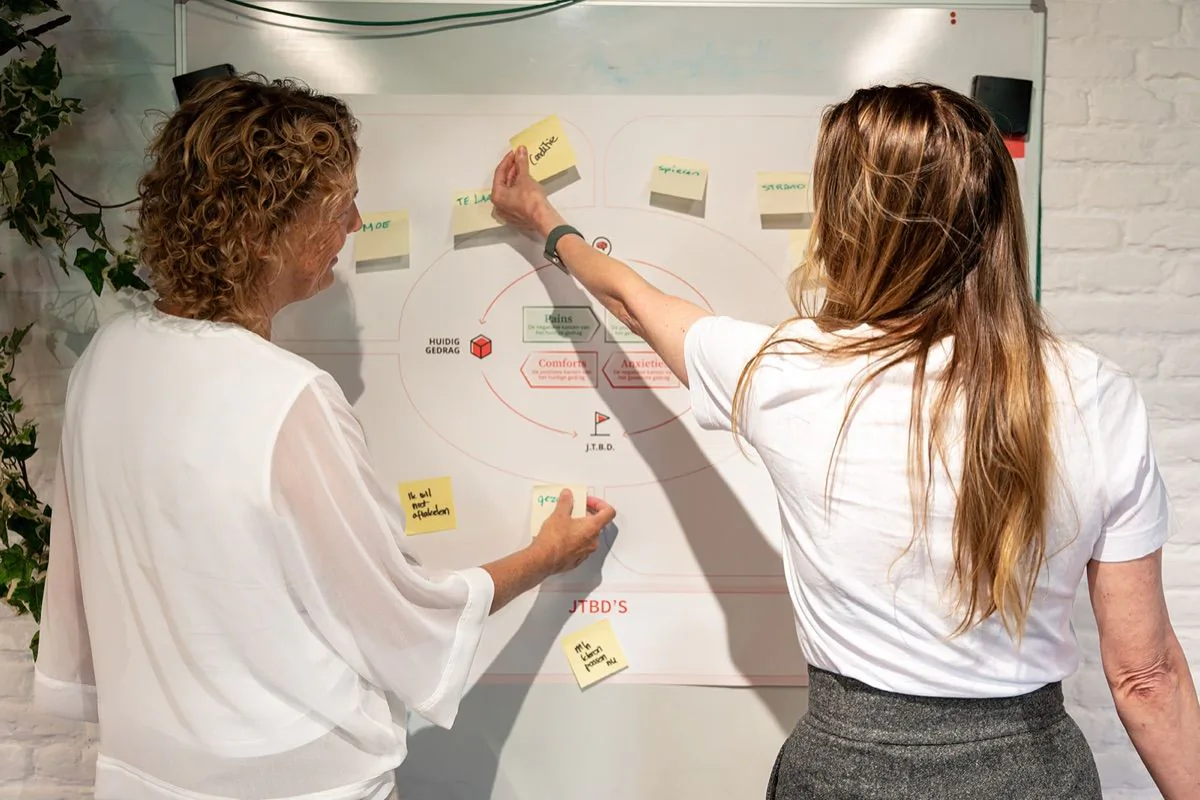
Conflict management is the process of understanding why a disagreement escalates, and designing the context so it doesn't have to. It takes the interests underneath the positions, the norms that keep people silent and the sunk decisions nobody wants to reverse, not mediation skills alone. Behavioural Design for conflict helps you diagnose what's really driving the friction, and redesign the context so a difficult conversation becomes a productive one.
The team leads and change managers among our 10,000+ alumni have one thing in common.
SUE teaches you to see conflict as a design question. Not who's right, but which context produces this behaviour and how you design that differently. That's a fundamentally different way of thinking, and I applied it in my team immediately.
The Deep Dive on building support taught me to treat resistance as information, not an obstacle. What does this resistance tell me about what people actually need? I have completely different conversations now.
I've worked in change management for twenty years and thought I'd seen it all. SUE's method gave me a precision instrument for situations where I used to rely purely on instinct. That's a different level altogether.
Our dedicated conflict management course launches later this year. Until then, the closest starting point is Leading Change and Transformation: the same behavioural science behind resistance, defended decisions and stuck positions, applied to change.
Want the full method first, or to tackle conflict with your whole team? See the Fundamentals Course, or the in-company formats ↓
Three in-company formats, depending on how deep you want to go and how long you want to build. Always applied to the conflict that's actually stuck in your organisation.
Most behavioural science knowledge sits locked in academic papers. SUE built the Influence Framework, a practical step-by-step method that any team lead, HR professional or manager can apply without a scientific background.
“ SUE Behavioural Design was a real experience that led me to look differently at behaviour. They take you along a very pragmatic way under challenging themes. I think the Influence Framework will solve many problems in the world. It is more than just a method, it is a fundamentally different way of thinking.
In-depth articles on the behavioural science behind conflict and resistance, written from SUE's practice.
Jobs to be Done thinking helps you find the real interest behind a position, the way the 1978 Camp David Accords did.
Read article →Support doesn't come from a stronger business case. It comes from understanding why people cling to the familiar.
Read article →Why teams keep defending a decision that isn't working, and five interventions that help them stop.
Read article →Resistance is not an obstacle but information. How you turn it into commitment by designing the context.
Read article →Conflict at work is rarely about what it looks like it's about. It's about interests, context and behavioural patterns that have become entrenched. Behavioural Design gives you the tools to analyse those patterns and redesign the context so people can move differently.
Traditional conflict management focuses on the relationship or the content of the dispute. Behavioural Design focuses on the context that feeds the conflict. The people involved are rarely the problem. The circumstances that put them on a collision course are, and those circumstances can be changed.
Team leads, HR professionals, change managers and anyone who regularly has difficult conversations or works in organisations with a lot of resistance or internal tension. You need no prior knowledge of behavioural science to start.
It depends on the format. An individual Deep Dive starts from €690 and the two-day Fundamentals Course from €1,190. For teams, SUE designs an in-company Masterclass (€7,990), a Sprint or a Learning Journey. In a no-obligation call we look together at which format fits your situation.
From the position people defend to the interest underneath it. The Behavioural Design Method gives you the framework to work with that difference.