Most difficult conversations are lost before the first sentence
You have rehearsed it. You know your opening line, you have the examples ready, and you have thought about how to phrase the difficult part kindly.
Then you have the conversation at half past four on a Friday, in the glass meeting room where everyone can see in, after a week in which this person has already had two things go wrong. It goes badly, and you conclude that you should have phrased it better.
You probably should not have phrased it better. You should have had it on Tuesday morning, somewhere else.
A difficult conversation at work is one where the relationship, someone's self-image or their standing is at stake alongside the subject. The outcome depends less on your words than on the conditions: when, where, what came before, and how the first minutes open. More on behavioural design for managers →
What actually makes a conversation difficult
It is not the topic. Plenty of unwelcome messages land without incident. What makes a conversation difficult is that something is at stake beyond the subject: how competent the other person feels, how they are seen by people they care about, or whether the relationship survives the next ten minutes.
That distinction matters because it explains why preparation aimed at the words so often disappoints. You are preparing for the topic. The other person is responding to the stakes.
And they are responding fast. Amy Edmondson's research on psychological safety showed how sharply teams differ in whether people believe it is safe to be seen struggling.[5] Someone who has concluded it is not safe will hear a neutral observation as an accusation, and no amount of careful phrasing overrides a conclusion they reached six months ago.
You are preparing for the topic. They are responding to the stakes.
The first three minutes decide most of it
The most striking finding in this field comes from marriage research, and it transfers uncomfortably well to work.
Sybil Carrère and John Gottman analysed the opening of conflict discussions between newlywed couples and found they could predict the eventual outcome of the marriage from the first three minutes of the conversation.[1] What mattered was how it started: a harsh opening, one that led with criticism or contempt, predicted a poor outcome regardless of what followed.
The mechanism is not mysterious. An opening sets the frame, and everything after is interpreted through it. Once someone has decided in minute two that this is an attack, minute nine cannot undo it, however reasonable you are being by then.
Roy Baumeister and colleagues explain why the margin is so thin. Their review of a large body of research concluded that bad is stronger than good: negative events and information carry more psychological weight than equivalent positive ones, fairly consistently across domains.[2] In a conversation this means one badly chosen opening outweighs several careful sentences, and the arithmetic does not work in your favour.
Two mistakes that are made before you start
You have explained their behaviour with their character. Lee Ross named this the fundamental attribution error: we attribute other people's behaviour to who they are and our own to the situation we were in.[3] So you walk in having concluded that someone is careless, while they walk in knowing exactly which week they were covering for two colleagues.
The conversation that follows is then about two different things. You are addressing a trait; they are defending a situation. Both of you leave convinced the other was not listening, and in a sense both are right.
You planned it while calm and will have it while activated. George Loewenstein described the hot-cold empathy gap: in a calm state we badly underestimate how differently we will behave in an emotional one.[4] The measured version you rehearsed on Sunday belongs to a person who is not in the room on Monday, and neither is the calm version of your colleague.
This is why "I will handle it in the moment" fails so reliably, and why the useful preparation is structural rather than verbal. You are not trying to remember better lines under pressure. You are trying to need fewer of them.
The forces in the room
Before you plan what to say, map what the conversation costs the other person. The SUE | Influence Framework sorts those forces into pains, gains, anxieties and comforts.[6]
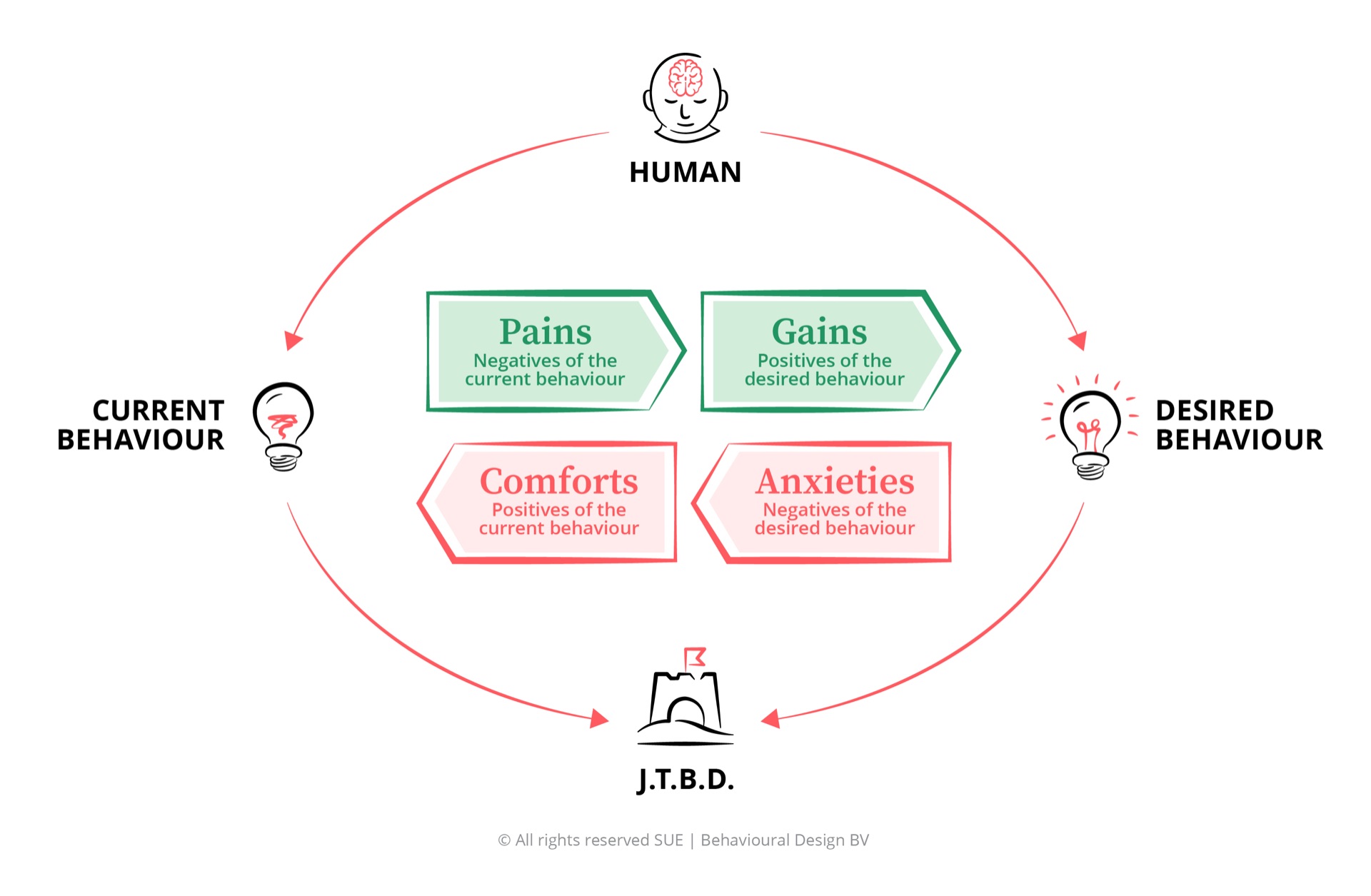
The pains they already feel are usually the subject of the conversation, and they usually know about them. Almost nobody is genuinely unaware that something is not going well.
The gains of agreeing with you are distant: better work, a smoother relationship, fewer of these conversations. All of it arrives later, and none of it in the next ten minutes.
The anxieties are immediate and dominate everything. Am I in trouble. Does this go on my record. Who else has been told. What does this do to how you see me from now on.
And the comforts available in the moment are the ones that ruin the outcome: explain, justify, produce the reason it was not really their doing. Not because they are defensive by nature, but because that is the cheapest way to protect what is at stake.
Read that and the design task changes. You are not trying to be more articulate. You are trying to lower the anxieties enough that the person can afford to hear you.
Design the conditions
Six choices, all made before the first sentence.
1. Pick the time by their state, not your courage
Most difficult conversations happen when the manager finally feels ready, which is often late in the day or the week. Choose a morning, early in the week, when there is working time afterwards. Nobody should be sent home to sit with it for a weekend.
2. Choose a place without an audience
A glass meeting room in an open-plan office adds an audience to a conversation that is already about standing. Walk outside instead. It removes the observers, removes the face-to-face confrontation, and gives both of you somewhere to put your eyes.
3. Say what it is about in advance, briefly
"Can we talk tomorrow morning about how the handover is going?" costs you one sentence and saves the other person a night of speculation, which is always worse than the actual subject. Ambushes produce defensiveness, and defensiveness is expensive.
4. Open with the situation, not the person
This is the harsh startup finding put to work. Lead with what you observed and the effect it had, not with a characterisation. "The report arrived after the meeting and I had to present without it" is a fact. "You are unreliable" is a verdict, and a verdict is what triggers the defence.
5. Ask before you conclude
You are about to commit the attribution error, so build in the correction. One real question, asked before you say what you think, and then actually waiting for the answer. Most of the time the situation you did not know about is the reason, and now you know it before you have said something you cannot take back.
6. End with what happens next, in writing
The middle of a difficult conversation is remembered poorly by both parties. Two lines afterwards, saying what you agreed, prevents the second conversation about what the first conversation meant.
If it goes badly anyway
Sometimes it will, and the recovery matters more than the conversation.
When someone becomes upset or defensive, stop making the point. Continuing to explain while the other person is activated adds material to something that is not being processed. Name it, offer to continue later, and mean it.
Then come back within two days. The gap is where the damage compounds, because in the absence of information people fill it in with the worst available version. A short second conversation, calmer on both sides, undoes most of what a bad first one did.
And be specific about what you got wrong, if you got something wrong. It costs you nothing that you had not already lost, and it is the single fastest way to restore the safety that makes the next conversation possible.
Frequently asked questions about difficult conversations at work
How do you start a difficult conversation at work?
With the situation and its effect, not with a characterisation of the person. Sybil Carrère and John Gottman found they could predict the outcome of a conflict discussion from its first three minutes, and that a harsh opening predicted a poor result regardless of what followed. Say what you observed and what it caused, then ask.
When is the best time for a difficult conversation?
Morning, early in the week, with working time afterwards. Most such conversations happen late on a Friday because that is when the manager finally feels ready, which sends someone home to sit with it for a weekend. Their state matters more than your courage.
Should you warn someone that a difficult conversation is coming?
Yes, briefly. One sentence naming the subject costs you nothing and saves the other person a night of speculation, which is almost always worse than the real topic. Ambushes produce defensiveness, and defensiveness is what makes these conversations expensive.
Why do difficult conversations go wrong even when you prepare?
Because preparation usually targets the words while the outcome is set by the conditions. There is also a state problem: George Loewenstein's work on hot-cold empathy gaps shows that people planning while calm badly underestimate how they will behave once emotions are engaged. The measured version you rehearsed is not the one in the room.
What do you do if the other person gets upset?
Stop making the point. Anything you add while someone is activated is not being processed, and it accumulates. Name what is happening, offer to continue later, and then genuinely come back within two days, because the gap is where the damage grows.
Conclusion
The advice on this subject is almost entirely about sentences, and sentences are the part you have least control over once you are in the room.
What you do control is everything around them. When it happens, where, whether the person saw it coming, whether you asked before you concluded, and how the first thirty seconds land.
Get those right and the conversation is often not difficult at all, which was never the goal but turns out to be the result.
Want to design how your team disagrees and decides? The online Deep Dive Leading Change teaches you to apply behavioural science to leading people: from resistance to follow-through.