Delegation fails at the handover, not at the follow-up
You hand something over on a Tuesday. Two weeks later it comes back not quite right, you fix it yourself in an evening, and quietly conclude that it was faster to have done it in the first place.
That conclusion is where delegation dies, and it is usually drawn from the wrong evidence. The work came back wrong because of what happened in the ninety seconds where it was handed over, not because of who received it.
Almost all advice on this points at the wrong end of the process. Let go. Resist the urge to interfere. Accept that it will not be done your way. All of that is about what happens after. The failure happened before.
Delegation is transferring responsibility for a task together with the authority to make the decisions it needs. It fails at the handover more often than at the follow-up: the person handing over knows too much to notice what they are leaving out, and the person receiving does not yet know enough to ask. More on behavioural design for managers →
What actually goes wrong when you delegate
Watch a real handover and it takes about ninety seconds. Here is the thing, here is roughly what I need, you know how it goes, shout if you get stuck.
Everything that later goes wrong is already contained in that sentence. "Roughly what I need" is a standard nobody can hit. "You know how it goes" is an assumption. "Shout if you get stuck" puts the burden of noticing on the person with the least information.
The reason it sounds sufficient is well documented. In 1990 Elizabeth Newton ran a study at Stanford in which one person tapped a well-known tune on a table and another tried to name it. The tappers expected around half their listeners to get it. About two and a half per cent did.[1] In the tapper's head the melody is playing in full. The listener hears knocking.
You have carried this task in your head for months. The context, the constraints, the two things that went wrong last time and the reason a particular client is sensitive about it. None of that is in the ninety seconds, because to you it is not information. It is just what the task is.
The person handing over hears a melody. The person receiving hears tapping.
Why the work comes back, and why you take it
Three mechanisms make taking it back feel like the sensible choice, and all three are worth recognising in the moment.
You are a bad judge of how long your own fix will take. Roger Buehler, Dale Griffin and Michael Ross documented the planning fallacy: people systematically underestimate how long their own tasks will take, even when they know their past estimates were wrong.[2] "I will just do it quickly this evening" is that fallacy in its natural habitat.
You prefer your own version because you made it. Michael Norton, Daniel Mochon and Dan Ariely showed that people value things they assembled themselves more highly than identical items they did not, an effect they called the IKEA effect.[3] Applied to a piece of work, this means your assessment of your own version is not neutral, and neither is your assessment of the one that came back.
The effort you already invested pulls you back in. Hal Arkes and Catherine Blumer's work on sunk cost showed how strongly prior investment shapes later choices.[4] Having spent an hour on the briefing, redoing it feels like protecting that hour, when it is actually spending another one.
Taken together, these produce a manager who is genuinely convinced that doing it themselves is efficient, while their calendar disagrees.
What a real handover contains
The fix is not longer briefings. It is putting four specific things into the handover that are almost always missing.
The decision rights. What this person decides alone, what they decide and tell you afterwards, and what they bring to you first. Without this, every uncertainty becomes a question, and a stream of questions is what convinces a manager that delegation costs more than it saves.
The definition of done. Not the task, the finish line. What it looks like when it is right, who it is for, and what it will be judged on. Most rework is a disagreement about this that neither party knew they were having.
The constraints that are not obvious. The budget, the deadline behind the deadline, the person who must be consulted, the approach that was tried last year and failed. This is the melody, and it is the part you will forget to hum.
What to do when it goes wrong. Not "shout if you get stuck", which requires someone to first know they are stuck and then decide it is worth your time. A specific trigger works better: if this is not working by Thursday, tell me on Thursday. That converts a judgement call into a diary entry.
Four things, five minutes. Which is roughly the length of the evening you were going to spend fixing it.
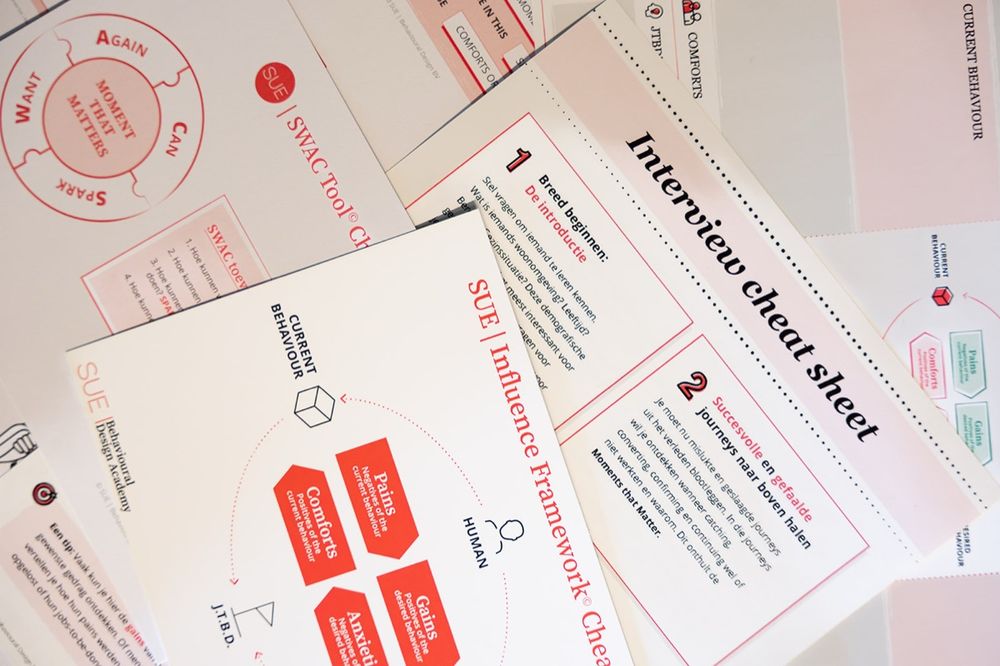
The forces on both sides of the handover
Delegation has two people in it, and the standard advice only looks at one. The SUE | Influence Framework sorts the forces into pains, gains, anxieties and comforts.[6]
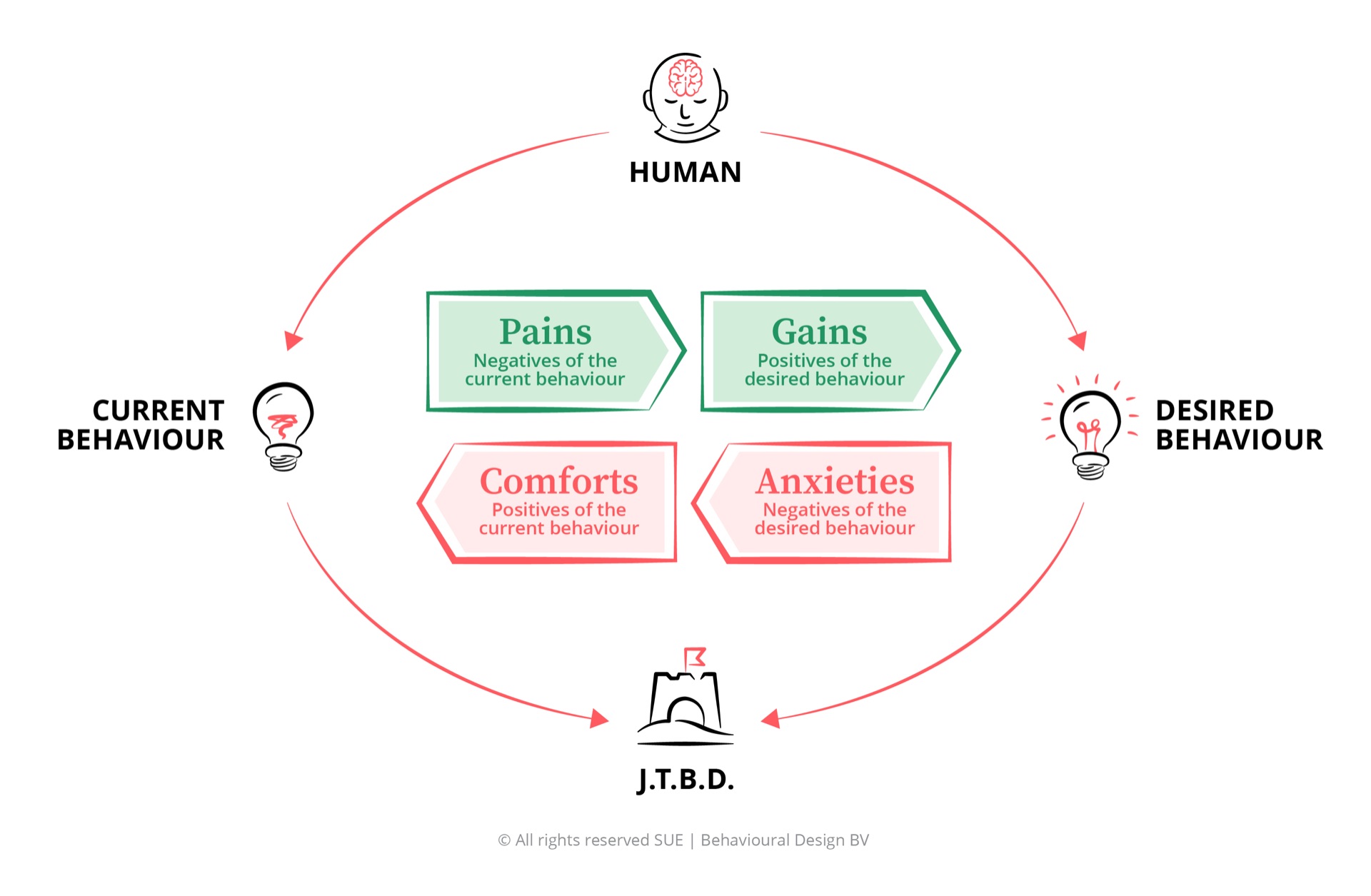
For the person handing over, the pains are a full calendar and work that only they can do. The gains of delegating are real but delayed, while the cost of a briefing is immediate. The anxieties are specific: it comes back wrong, I have to fix it anyway, and I have spent the hour twice. And the comforts of doing it yourself are considerable, because you know exactly how long it takes and it will be right.
For the person receiving, the picture is different and rarely considered. The gains are genuine: this is how people grow, and being trusted with something visible matters. But the anxieties dominate week one: I do not know what good looks like here, I do not know how much of your time I am allowed to take, and I would rather guess than look incompetent by asking.
And the comfort available to them is the one that ruins the outcome. Do the safest possible version, stay close to what you think is expected, and check nothing. That is exactly the version that comes back not quite right.
Notice that both sets of anxieties are solved by the same thing. Everything on the list is information, and every item is cheaper to give than to recover.
The handover, in five minutes
1. Say what it is for before you say what it is
The purpose lets someone make a hundred small decisions correctly without asking you about any of them. Skip it and every one of those becomes either a question or a guess.
2. Name the three decisions they own
Be concrete. "You choose the format, the timing and who you involve. Bring me the budget." Vagueness here is not generosity; it reads as a trap, and people respond to traps by checking.
3. Hum the melody
Say out loud the two or three things you know that are not written anywhere. The history, the sensitivity, the thing that failed before. Ask yourself what you would be annoyed about if they did not know, and then say that.
4. Set the trigger, not the check-in
A weekly check-in is a status meeting for you. A trigger is a rule for them: if X happens, or if you are not past this point by Thursday, come back. Then you can genuinely leave it alone in between, which is the part that was supposed to be the point.
5. Ask them to say it back
Thirty seconds, and it is the only real check on whether the melody landed. Not "does that make sense", which reliably produces a yes, but "how are you going to approach it?" The gap between their answer and your expectation is the thing you just avoided finding out in two weeks.
When it comes back wrong anyway
Sometimes it will, and the response is what determines whether you ever delegate that task again.
Resist fixing it silently. It is the fastest option this evening and the most expensive one this year: the person learns nothing, you have confirmed to yourself that delegation does not work, and the task returns to your desk permanently.
Instead, find out where the handover failed. Was the finish line unclear, was a constraint missing, or did they hit something they did not feel able to raise? All three are your side of the ninety seconds, and all three are fixable next time.
Then hand it back with one specific correction rather than a full rewrite. The second attempt is where the actual transfer happens. Take it away at that point and you have not delegated a task; you have run an expensive test.
Read also: situational leadership theory, the Hersey and Blanchard model in which delegating is the fourth of four styles.
Frequently asked questions about delegation
Why is delegation so hard?
Mostly because the handover is harder than it looks. Elizabeth Newton's tapping study showed that people who know something badly overestimate how well they are conveying it: tappers expected half their listeners to recognise a tune and about two and a half per cent did. A manager who has carried a task for months is the tapper.
What should you include when delegating a task?
Four things that are usually missing: what the person decides alone, what done looks like, the constraints that are not written anywhere, and a specific trigger for coming back. That takes about five minutes, which is less than the evening spent fixing the result.
Why do managers take delegated work back?
Three biases push in the same direction. The planning fallacy makes your own fix feel quicker than it is, the IKEA effect makes you rate your own version more highly, and sunk cost makes the time already invested feel worth protecting. Together they produce a manager who is convinced doing it themselves is efficient.
How much should you check in on delegated work?
Replace the check-in with a trigger. A recurring meeting is reassurance for the manager and interruption for everyone else. A rule such as "if you are not past this point by Thursday, come back" gives the same protection and lets you genuinely leave it alone in between.
What do you do when delegated work comes back wrong?
Do not fix it silently, which is quick tonight and expensive all year. Work out which part of the handover failed, since an unclear finish line, a missing constraint or an unraised problem are all your side of it. Then hand it back with one correction rather than rewriting it.
Conclusion
Delegation is treated as a test of character, as though the problem were an unwillingness to let go. Most of the time the problem is that a task carrying months of context was transferred in ninety seconds, and nobody noticed how much stayed behind.
Spend five minutes instead. Say what it is for, name the decisions they own, hum the parts of the melody only you can hear, set a trigger instead of a check-in, and ask them to say it back.
Then leave it alone, which becomes surprisingly easy once you know what you handed over.
Want to design how your team decides and reports? The online Deep Dive Leading Change teaches you to apply behavioural science to leading people: from resistance to follow-through.