How do you design a building that changes what people believe is possible for them?
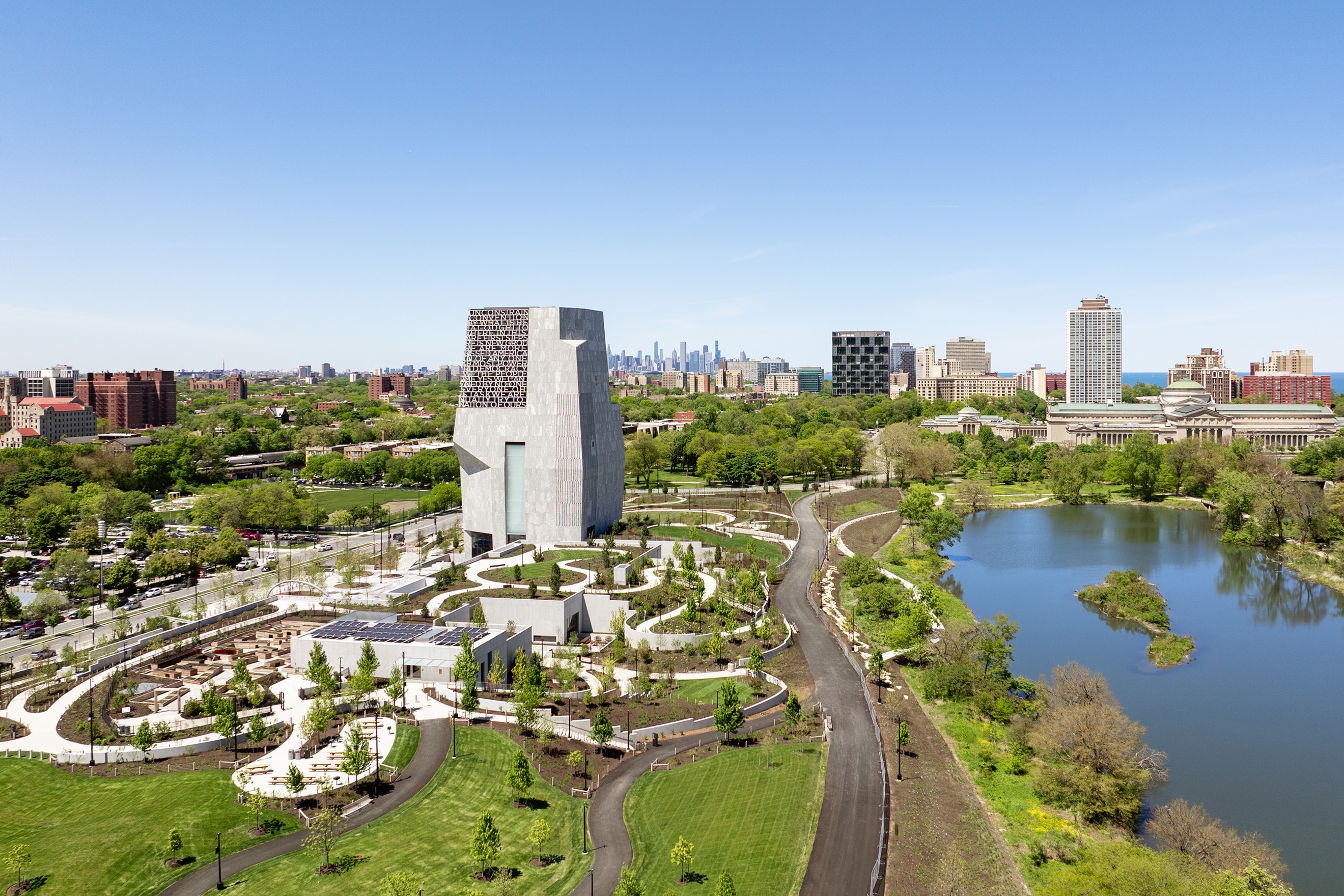
Not by telling them to dream bigger. By building a place where, for an afternoon, the bigger thing is right in front of them and they are allowed to touch it.
That is what opened on the South Side of Chicago on 19 June. At the dedication, Michelle Obama described her husband’s “stubborn optimism and unflinching courage,” and called the South Side itself “a stubbornly optimistic place where family after family scrapes and claws and laughs and dances their way to a better tomorrow.” That phrase is worth sitting with, because it names something I spend most of my working life on. Stubborn optimism is not a mood you talk yourself into. It is the belief that things can be better, held onto in the face of evidence that they are not, and then acted on. And the most powerful way to hand someone that belief is not to preach it. It is to build the conditions in which they can see it for themselves.
Which is exactly what this Center does. Most coverage went to the granite tower and the celebrity guest list. The more interesting story is quieter, and it runs through every room. The building never lectures anyone about hope or possibility. It hands them out, space by space, and lets people pick them up.
Start with where it stands
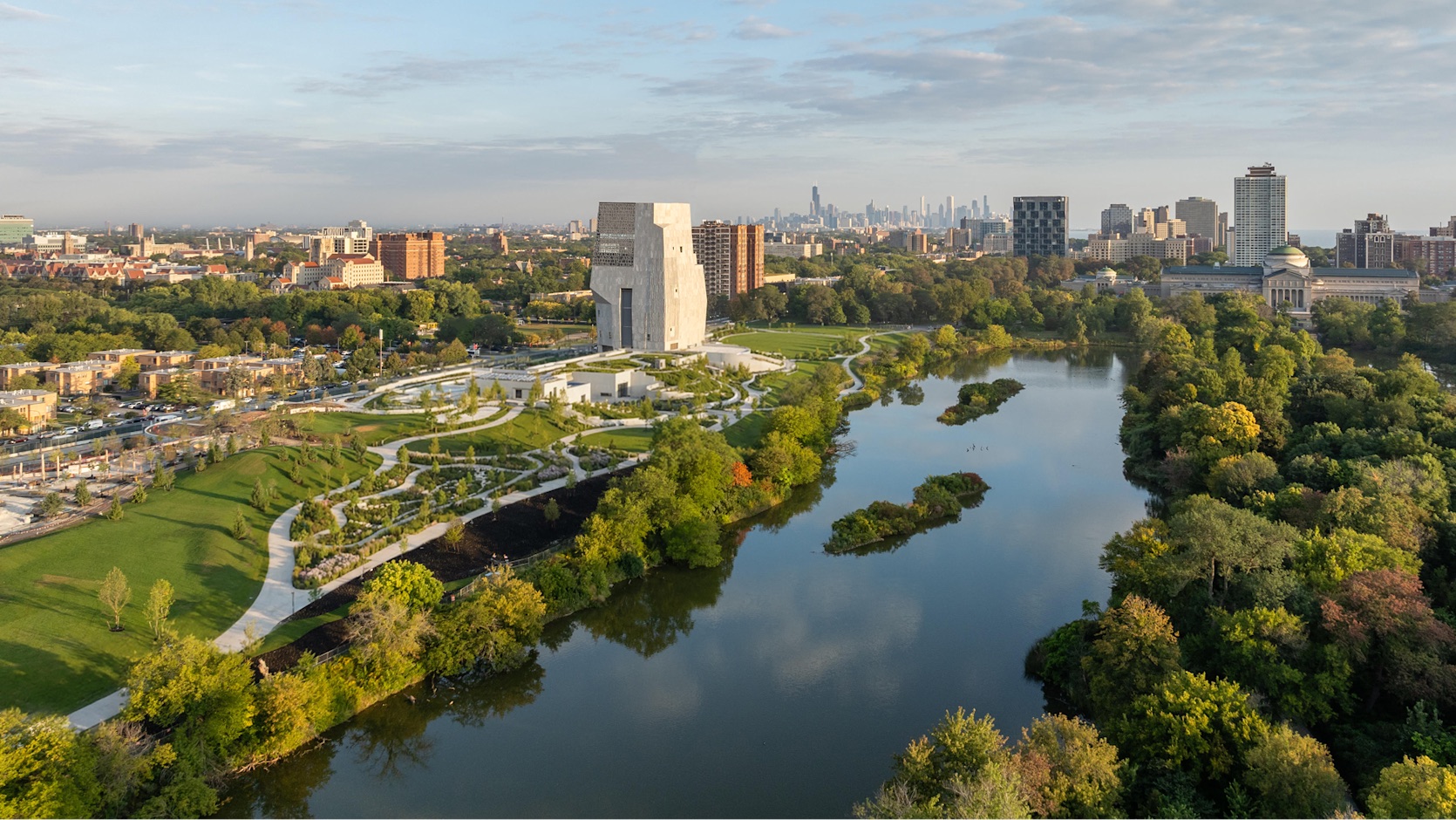
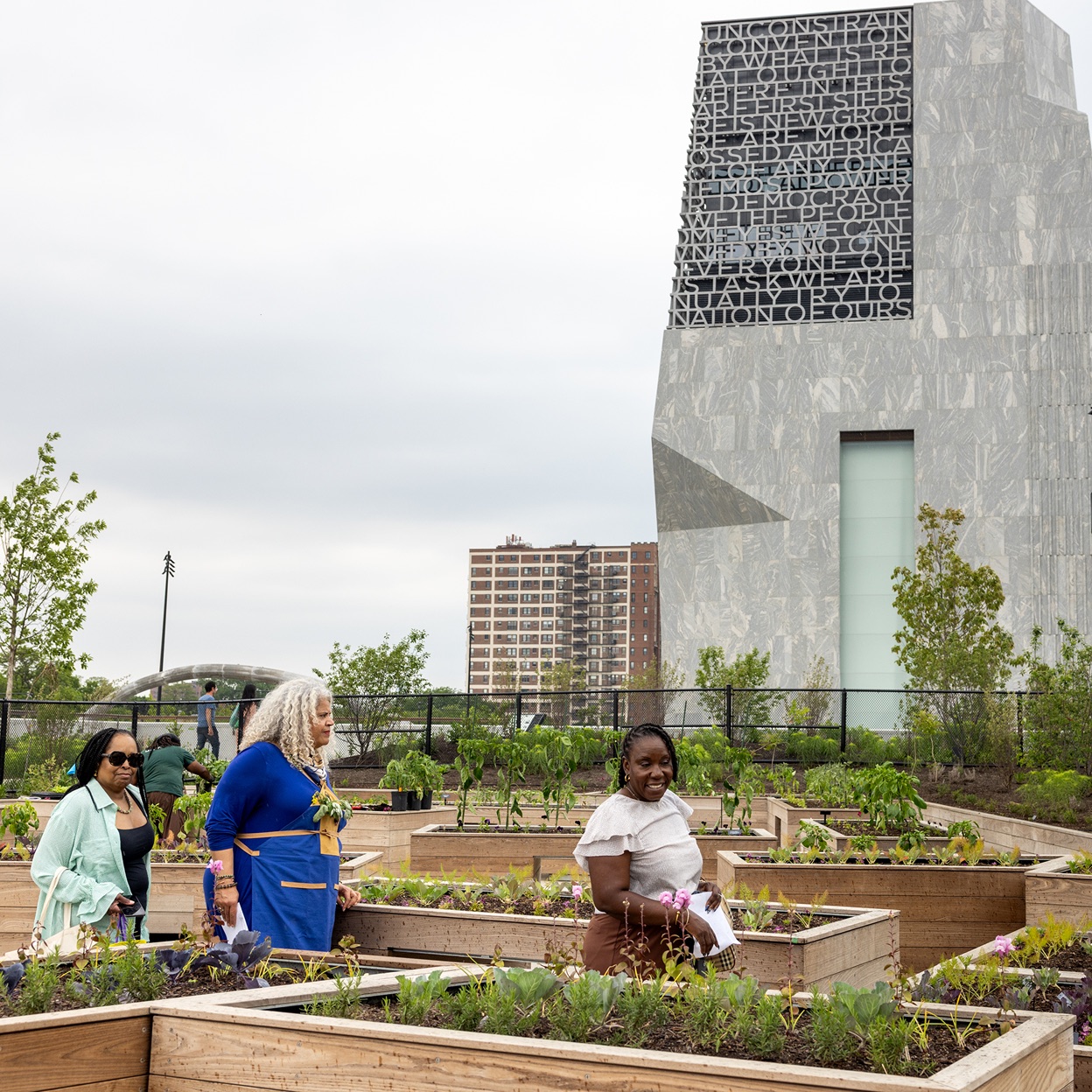
The first decision was the address. The Obama Foundation put an 850 million dollar campus — with a museum, a library, gardens and a sports facility — on the historically Black South Side, in a neighbourhood that decades of disinvestment had taught to expect less.
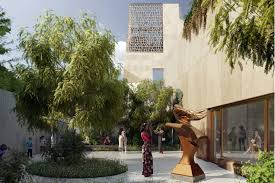
That placement is itself the argument. A presidential centre could have gone anywhere with good transport links and a donor base. Putting it here says something that no plaque needs to spell out: this is where the future is being built, and the people who live here are who it is being built for. The critic Blair Kamin, who had sharp reservations about the tower, called the result a real improvement to a stretch of lakefront that had been left to decline. A six-lane road that used to cut the park off from the neighbourhood was taken out, adding almost four acres of green with walking and cycling paths, stitching the campus back into the streets around it.
Before you read a single exhibit, the location has already made a claim about who belongs at the centre of things.
Then walk the rooms
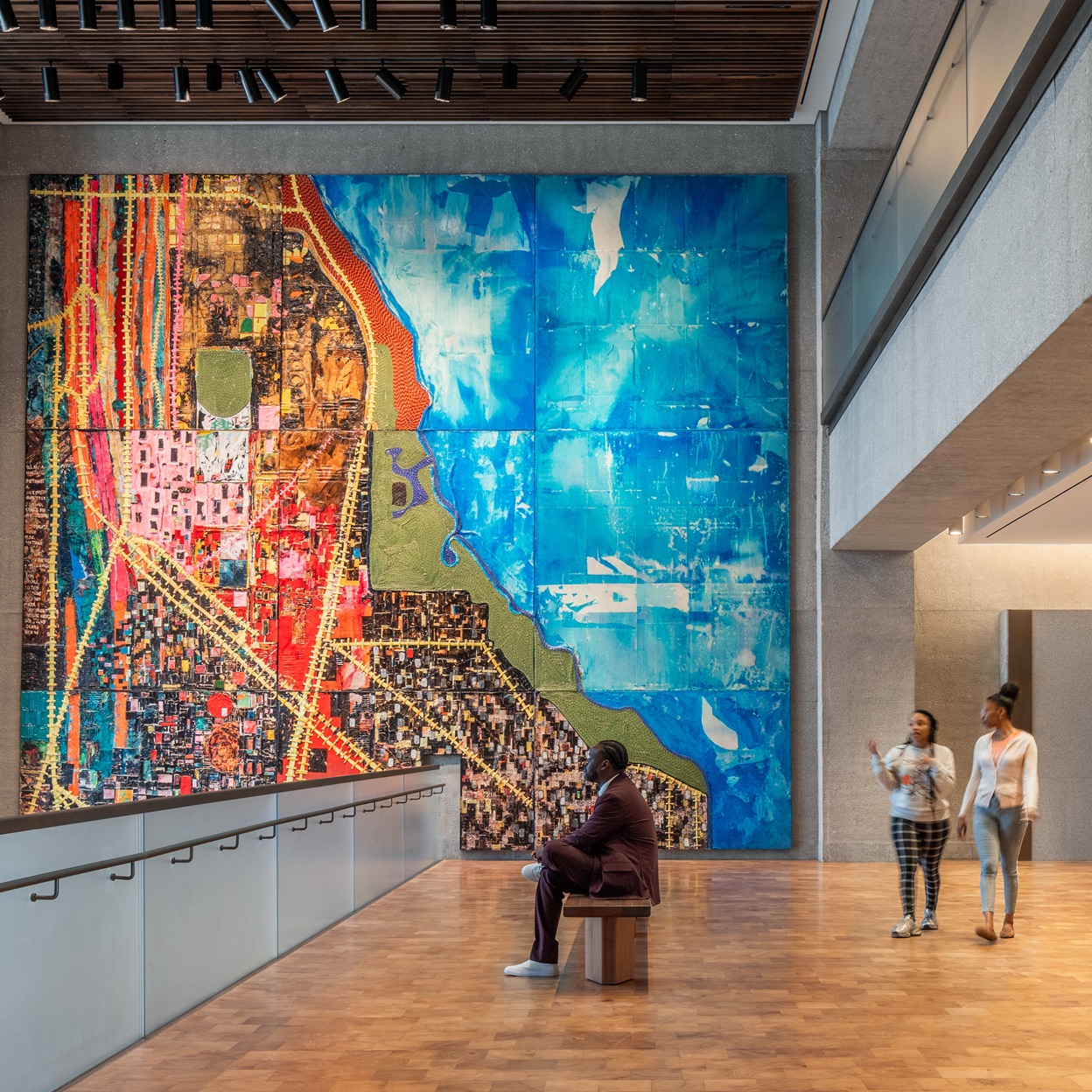
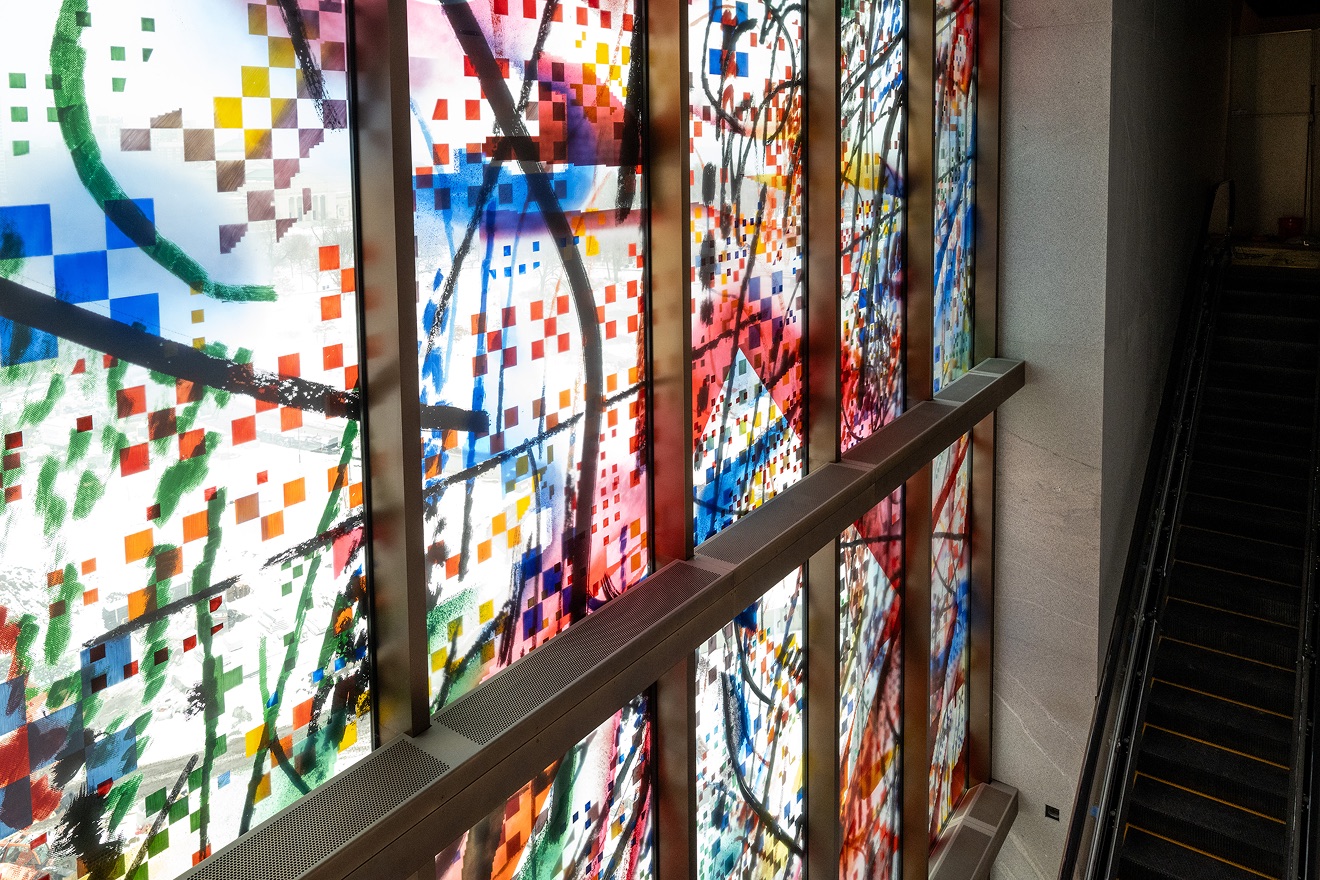
Inside, the same move repeats at human scale. NPR reported that the first word visitors see on entering is hope, set into the art. From there the building keeps turning abstractions into things you can stand inside.
The Oval Office is the clearest example. It is a full-size replica, and you are invited to sit behind the president’s desk and handle objects from the administration. For an adult that is a photo. For a child from the surrounding blocks it is something closer to a fitting. The seat of the most powerful office in the country turns out to be a chair you can actually sit in, and the person who last sat in the real one grew up not far from here.
Go up to the Sky Room at the top of the tower and the view does the same work. It looks out over Chicago’s South and West Sides, the neighbourhoods that made the Obamas, framed by words from his Selma speech: you are America, unencumbered by what is, ready to seize what ought to be. The thing you are looking at through those words is not a skyline of someone else’s success. It is your own part of the city, named as the place where America is still being written.
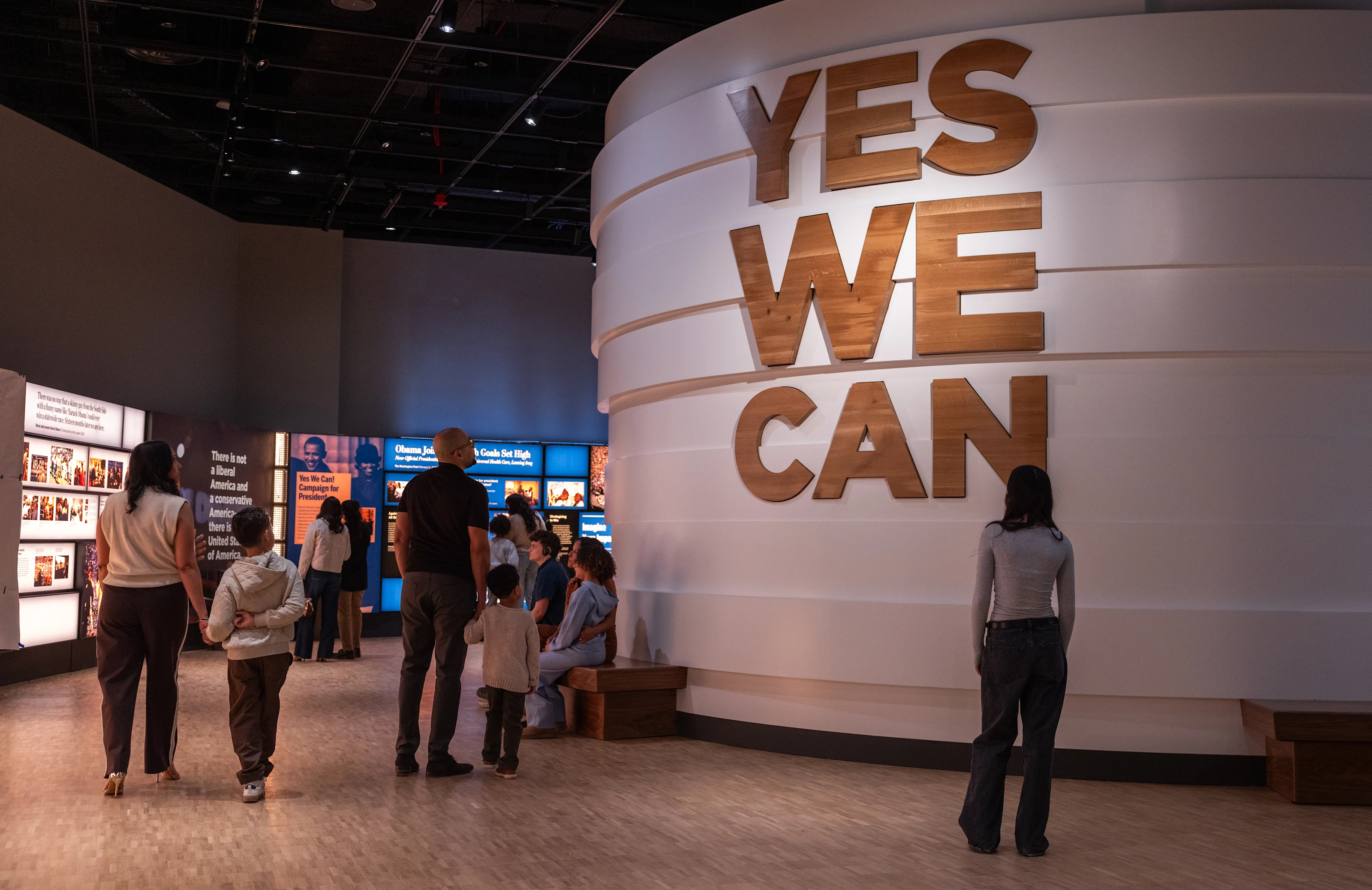
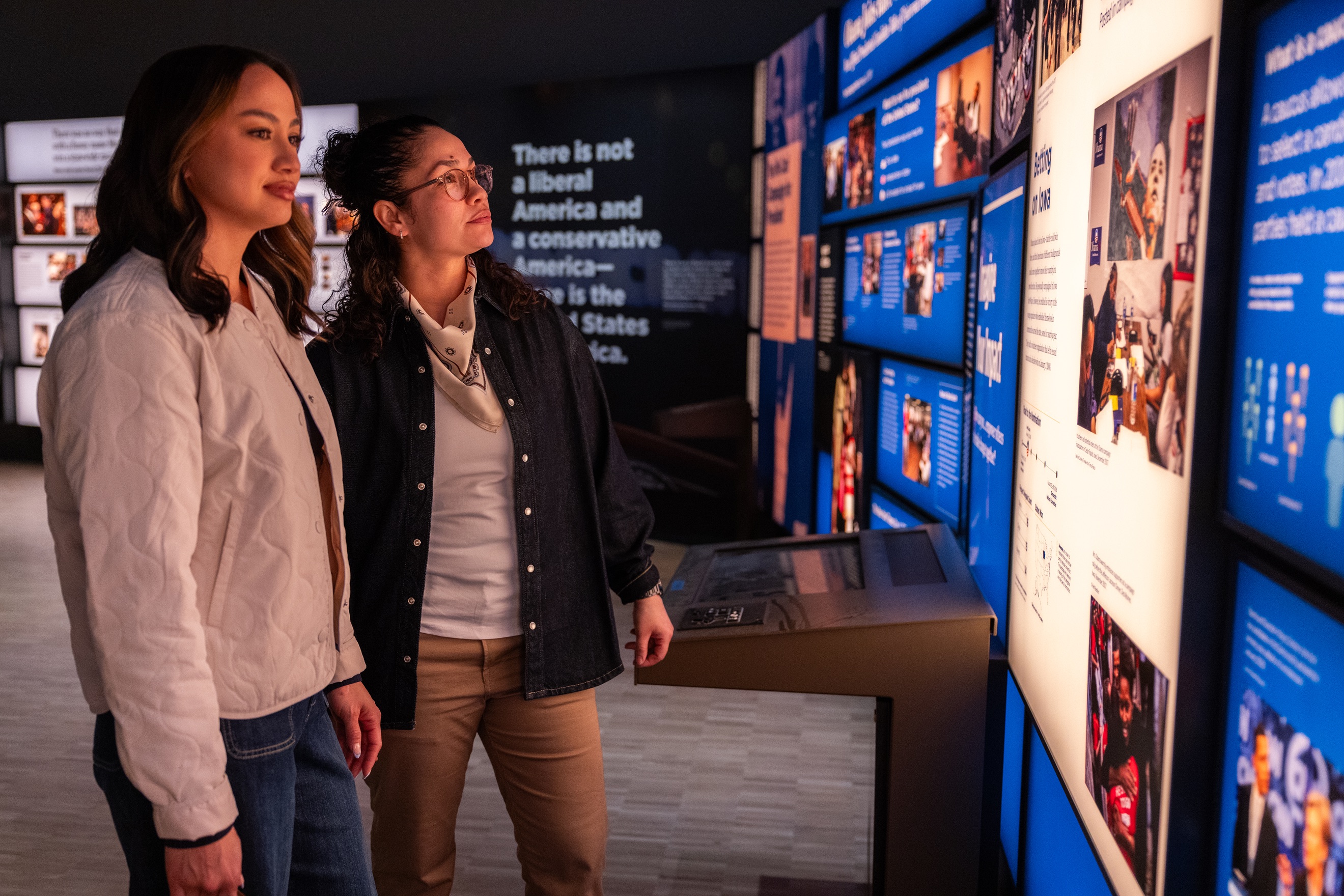
The interactive exhibits push the same button on purpose. In a station the Foundation calls Yes You Can, visitors design their own digital button naming a change they want to make. In We the People, you add your own name to a screen, each name a single dot inside a larger image, so the picture of the country is literally made of the people standing in the room. You are not shown democracy as a finished thing on a wall. You are asked to put yourself into it.
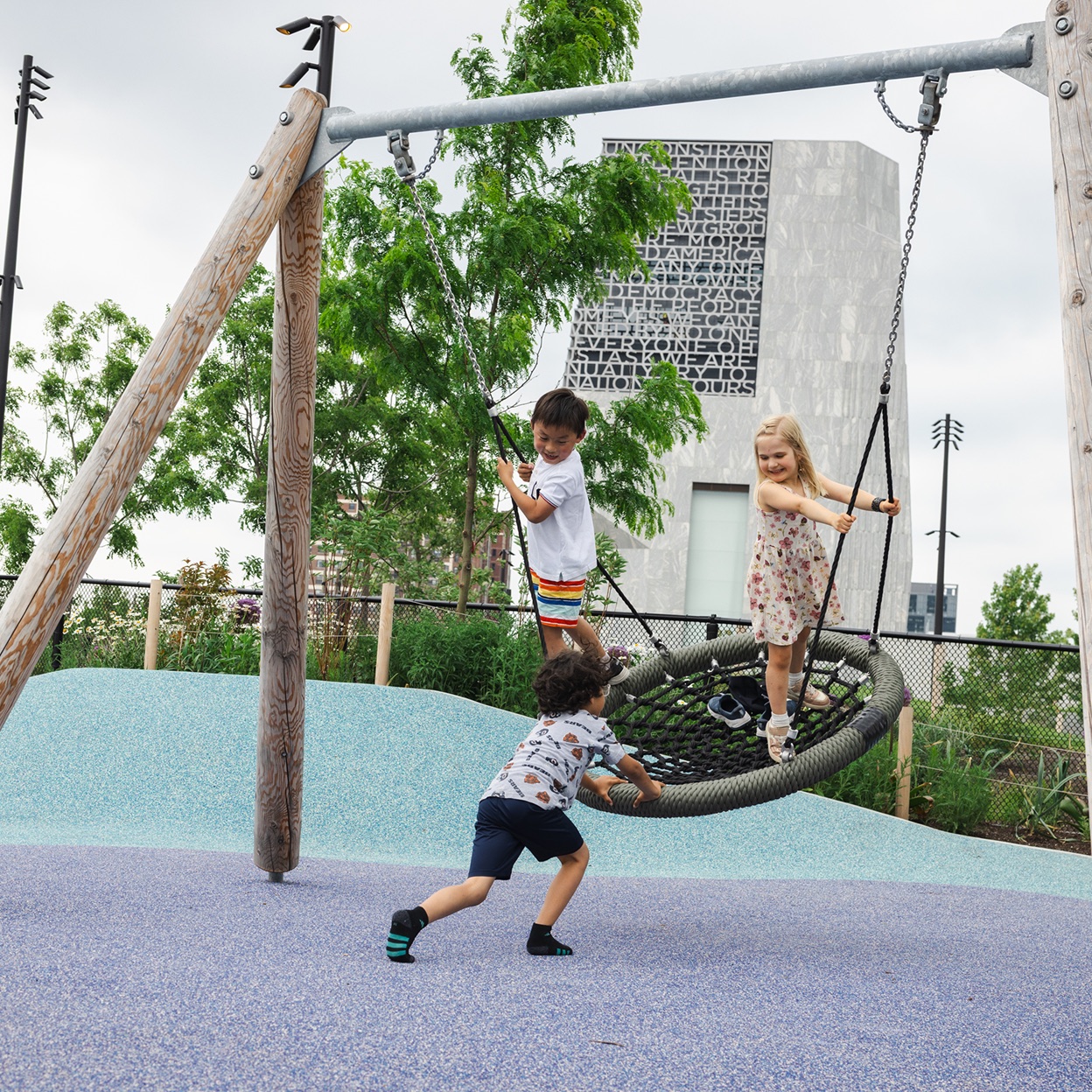
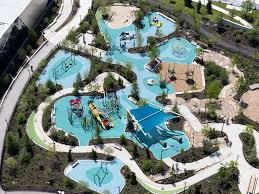
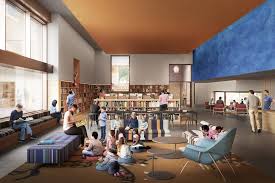
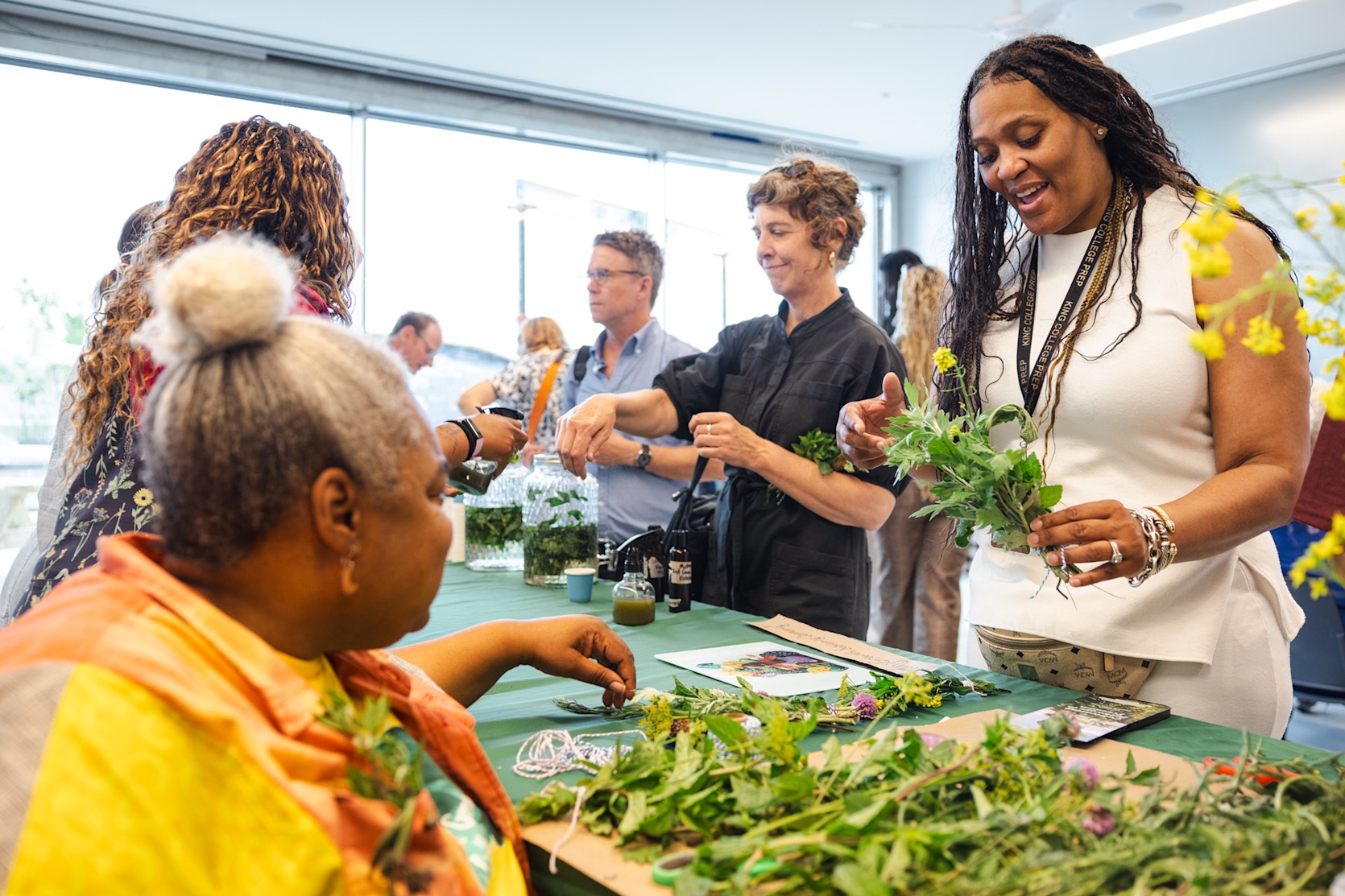
And it keeps going past the museum. Home Court, a 60,000 square foot facility with a regulation basketball court, runs programmes built around mentorship and sport. There is a playground and a teaching kitchen with a vegetable garden. A branch of the Chicago Public Library, free to everyone, paid for by a foundation grant rather than the museum budget. Recording studios and meeting rooms in the Forum, open for public use. A child can shoot baskets, plant something, record a podcast, borrow a book and sit in the Oval Office in a single visit, and every one of those rooms is quietly saying the same sentence: this is also for you.
Why showing beats telling
Here is the behavioural science underneath it. In 1986 the psychologists Hazel Markus and Paula Nurius introduced the idea of possible selves: the specific, concrete images people hold of who they might become. Their finding, published in American Psychologist, was that these future selves are not idle daydreams.[1] They work as the link between what we can imagine and what we actually do, steering goals and effort in the present.
The catch is that a possible self only moves behaviour when it feels real and reachable. Daphna Oyserman’s later work showed exactly this: vague aspiration does little, but a possible self that comes with a vivid picture and a plausible path changes how children approach school and effort.[2] Telling a kid she can be anything is weightless. Letting her sit in the chair, see her own neighbourhood named as the centre of the story, and put her name into the picture of the country gives the possible self something to hold onto.
That is the whole design logic of the Center, stated plainly. You do not change what people believe by announcing it. You change it by building the conditions in which they can see it about themselves. Belief follows the evidence the room provides, not the slogan on the banner.
What this means in practice
You will not build a presidential centre. The principle still travels, all the way down to a single conversation.
For your own growth, notice that you talk yourself into and out of futures based on how concrete they feel. If you want to become something, stop affirming it and start arranging one real encounter with it: shadow the person who already does the job, sit in the room, do the thing badly for an hour. Vague intention barely moves you. A vivid, reachable version of the future self does.
For leaders, this is the difference between a values poster and a possible self. You can tell people they are leaders, or you can put them in the room where the decision is made and let them run part of it. Representation works the same way. The colleague who never sees anyone like themselves in the senior meeting is missing evidence, not motivation, and no amount of encouragement substitutes for the proof of a real example.
For the organisation and the people you serve, audit what your spaces and products let people experience versus what they merely claim. A brand that says it is for everyone but designs only for one kind of customer is showing the truth, whatever the copy says. People read the room, not the mission statement.
Learn to apply this yourself
What makes the Obama Presidential Center’s approach powerful is that it works by changing what the environment shows people before any instruction, motivation or willpower enters the picture. The possible self becomes reachable because the room makes it concrete. In the Behavioural Design Fundamentals Course you learn to use the Influence Framework and SWAC to map exactly which environmental cues are shaping belief and behaviour in your own context — and to redesign them so the behaviour you want becomes the natural response.
View the online Fundamentals CourseWhat you can design this week
Build one Oval Office moment. Pick a person you want to grow and give them one concrete, slightly-too-big experience instead of a pep talk. Let them chair the meeting, present to the client, sit in the seat. Make the possible self something they have actually occupied for an hour.
Put them in the picture. Find the place where people are passive recipients and turn it into one where they add their own name, idea or work. Belonging deepens when someone can point to their own mark inside the larger thing.
Check what your room is showing. Walk through one space you control — an office, a website, a classroom, a shop — and ask what future it lets people see for themselves. Then change the one detail that is quietly telling someone this is not for you.
At the dedication, the Foundation’s leaders were clear that the place is not meant as a monument to a man but to the people who walk through it. You can hear that as a graceful line. It is also an accurate description of the method. A monument tells you someone was great. This building is trying to convince a ten-year-old on the South Side that she might be, and it does the convincing not with words but with a chair, a view, a basketball court and her own name on a screen.
Which is the part worth stealing, wherever you work. You rarely change a mind by stating the conclusion. You change it by building the room where the person arrives at it themselves. That is stubborn optimism made structural: not a speech about a better tomorrow, but a chair, a view and a name on a screen that let someone believe they belong in it.
If you want to learn how to design for behaviour rather than trying to motivate it, that’s exactly what the Behavioural Design Fundamentals Course covers. View upcoming dates →
Frequently asked questions
What is the Obama Presidential Center?
The Obama Presidential Center is an 850 million dollar campus on Chicago’s historically Black South Side, opened on 19 June 2026. It includes a museum with a full-size Oval Office replica, the Sky Room overlooking the South and West Sides, interactive installations including Yes You Can and We the People, a 60,000 square foot athletic facility called Home Court, a Chicago Public Library branch, recording studios and public meeting rooms. The location was chosen deliberately: putting it on the South Side is itself an argument about who belongs at the centre of things.
What are possible selves?
Possible selves are the specific, concrete images people hold of who they might become — introduced by psychologists Hazel Markus and Paula Nurius in a 1986 paper in American Psychologist. Their research found that these future-self images act as the link between what we can imagine and what we actually do. Daphna Oyserman’s later work showed that a possible self only changes behaviour when it feels vivid and reachable: vague aspiration does little, but a concrete, plausible image changes how people approach effort and goals.
How does the Center’s design relate to behavioural design?
The Center is one of the most deliberate applications of possible-selves design at architectural scale. Instead of telling visitors that they can achieve great things, every space gives them physical evidence of it. This is the core move in Behavioural Design: change the context so that the behaviour or belief you want becomes the natural response. The building does not motivate. It builds the conditions in which belief follows.