Theme Personal effectiveness
Behavioural Design for personal effectiveness

A better-designed day fixes it, not more willpower.

You already know the productivity tips. Time-blocking, inbox zero, the two-minute rule. Knowing them was never the problem. Most of your behaviour runs on autopilot, and no article rewires autopilot. Behavioural Design teaches you to redesign the day itself, not just your intentions.

View trainings → Individually or with your team
10,000+
trained
9.3/10
rating
EQAC
accredited
€690
from, ex VAT
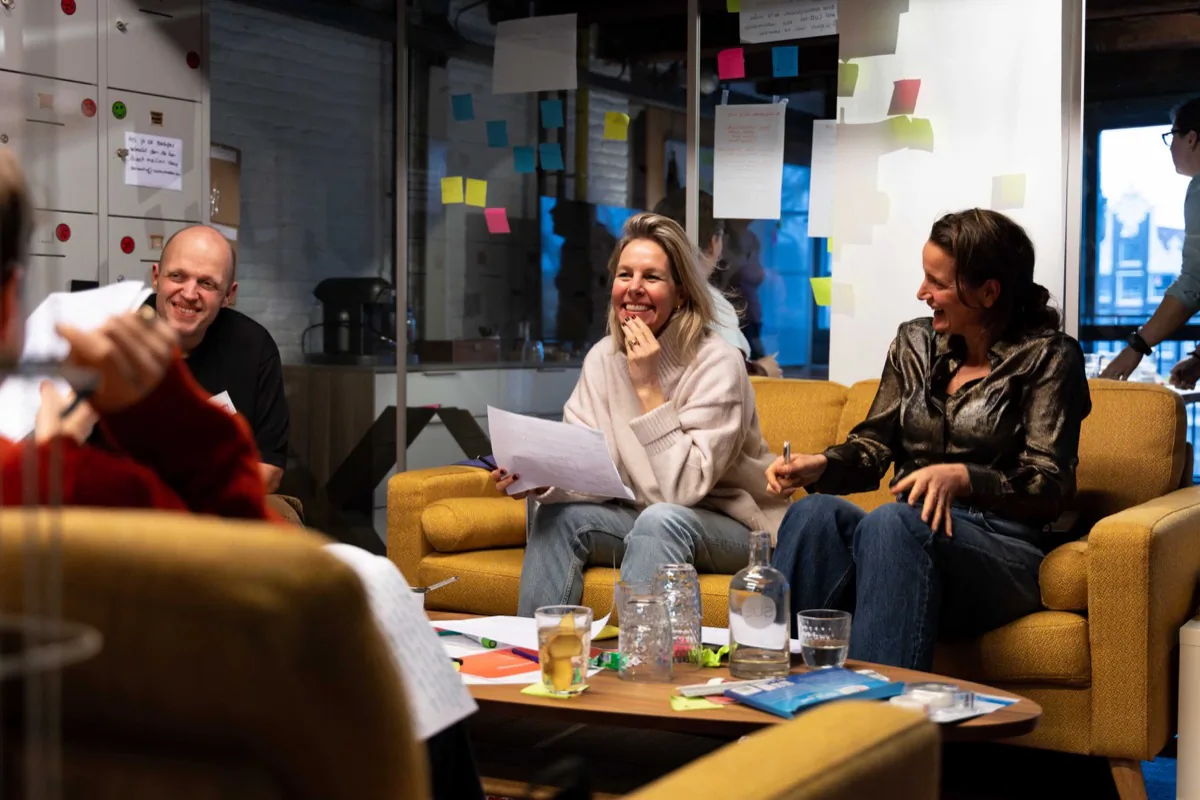
Professional working on personal effectiveness during the Behavioural Design Fundamentals training at SUE Amsterdam
Familiar in personal effectiveness

"I make a plan every Monday. By Wednesday I'm back to my old habits."

10,000+ professionals trained, including people from

ING Heineken KPN ANWB Randstad Achmea Eneco Centraal Beheer ING Heineken KPN ANWB Randstad Achmea Eneco Centraal Beheer
The forces behind your daily behaviour

Seven forces that keep your old habits in place

They are documented by Kahneman, Cialdini and Thaler. They apply to your inbox, your calendar and your Monday-morning resolutions. And they are all designable. As long as you leave them untouched, every productivity system collapses within a few weeks.

01 - The intention-action gap

Knowing what to do isn't the same as doing it

You agree with the advice. You've read the article. But between that intention and Monday morning sits a gap no checklist ever closes on its own.

02 - Decision fatigue

Your best decisions happen in the morning

Every choice you make drains the same limited resource. By the afternoon, your brain reaches for whatever takes least effort, which is rarely the thing that matters most.

03 - Status quo bias

The old routine beats the better one

Changing a habit feels like more effort than it saves. So you stick with the familiar way of working, even once you know it costs you more than it delivers.

04 - Sunk cost fallacy

Stopping feels like losing

You've already put hours into that task, that tool, that meeting series. Walking away feels like admitting defeat, so you keep going long after it stopped paying off.

05 - Defaults

Your environment decides for you

Notifications on, email as your default screen, an open calendar anyone can fill. Whoever sets the defaults sets your behaviour, and right now that's rarely you.

06 - Framing

The same message lands differently depending on the wrapping

You have the right argument and the right facts. Colleagues still don't move. How you frame a request changes whether people act on it, regardless of how sound the logic is.

07 - System 1

95% of your behaviour is automatic

Most productivity advice speaks to the conscious, rational mind. But your day runs on autopilot. Rational arguments never reach it.

Read the full article: what behavioural science actually says about personal effectiveness → Decision fatigue at work →
Behavioural Design is the missing layer.

Effectiveness is behaviour. And behaviour is designable.

Personal effectiveness is the ability to reach your goals with the least possible waste of energy and attention. It comes down to how you decide, how you build habits and how much influence you have on the people around you, rather than how much willpower you have. Behavioural Design for personal effectiveness helps you understand why you do what you do, and how to design the context, the defaults and the daily environment so the desired behaviour becomes the obvious choice.

1
Diagnose the behaviour, not the mindset. You map which forces keep your current habits in place: which comforts, defaults and barriers make the old routine logical.
2
Design the context. With the SUE Influence Framework you design a day where the desired behaviour is easier than the old one.
3
Prove the effect. You test the interventions on your own routine and see whether behaviour actually shifts, so effectiveness stops being an intention and becomes a demonstrable result.
Read more about the Behavioural Design Method →
What professionals say after the training

They stopped fighting their own routine and started designing it.

The professionals among our 10,000+ alumni have one thing in common.

Finally a training that explains why I keep putting certain things off, and gives me what I need to actually change that. I got there by designing smarter, not by trying harder. I apply the insights daily now.

Anke V.
Anke V.
Manager Operations - Insurance sector
★★★★★

In two days you get introduced to a new way of thinking that overturns a lot of traditional assumptions about productivity and personal effectiveness. I left the Academy with so much energy to apply the principles, and that's exactly what I did.

Karin M.
Karin M.
Senior Consultant - Advisory firm
★★★★★

I had never found a method to actually use behavioural principles to structurally raise my own effectiveness. The mix of theory and direct applicability to my own situation makes it different from anything else I've followed.

Miranda B.
Miranda B.
L&D Director - Financial sector
★★★★★
The best first step

Learn the principles that really change how you work.

Take the Fundamentals Course and learn the method to design your focus, habits and influence. In two days live, or 33 online lessons at your own pace.

Behavioural Design Fundamentals training on personal effectiveness
Most chosen
9.3/10
rating
EQAC
accredited
Max 16
participants
Behavioural Design Academy

Behavioural Design Fundamentals

You learn the full Influence Framework, the JTBD method and all the core tools of Behavioural Design. You work on your own effectiveness challenge and go home with a worked-out plan you apply the next day.

Two ways to follow it
Live in Amsterdam, 2 intensive days, max 16 participants Online self-paced, 33 lessons at your own pace
View the Fundamentals → See start dates

Want to tackle it with your whole team or organisation? See the in-company formats ↓

Personal effectiveness for teams and organisations

Raise the whole team's effectiveness, not just one person's

Three in-company formats, depending on how deep you want to go and how long you want to build. Always applied to how your team actually works.

Behavioural Design Masterclass personal effectiveness
1 day

Behavioural Design Masterclass

An intensive day in which your team learns the method and applies it straight away to a real effectiveness bottleneck: too many meetings, unclear priorities, focus that keeps getting interrupted.

  • In-company, at your location or in Amsterdam
  • Max 16 participants
  • €7,990 ex VAT
More about the Masterclass →
Behavioural Design Sprint team training personal effectiveness
Most popular
2 training days + interviews

Behavioural Design Sprint

Two intensive training days with interviews and prototype tests in between. Your team learns the method while applying it to a real productivity or focus problem from your own way of working.

  • Interviews between the sessions included
  • Up to 8 or up to 20 participants
  • €11,900 (up to 8) or €17,900 (up to 20) ex VAT
More about the Sprint →
Behavioural Design Learning Journey personal effectiveness
A to Z programme

Learning Journey

An organisation-wide programme from A to Z, facilitated by a senior SUE facilitator. For organisations that want to embed effective working habits structurally, not just for one training day.

  • Interviews, prototypes and effect measurement included
  • Senior SUE facilitator throughout the programme
  • Tailored, price on request
View Learning Journeys →
Why the SUE Behavioural Design Method

Behavioural science made applicable for people who want to work smarter, not just harder.

Most behavioural science knowledge sits locked in academic papers. SUE built the Influence Framework, a practical step-by-step method that any professional can apply without a scientific background.

SUE Influence Framework: the forces that shape behaviour and effectiveness
No academic theory, you work on your own effectiveness challenge during the training and go home with a worked-out plan
Built on Kahneman, Cialdini and Thaler, scientifically grounded but accessible for practitioners
A method of our own, the Influence Framework can't be learned anywhere else, described in the #1 management bestseller
16 years of experience, from ING and KPN to central government: the method is proven on the biggest behaviour challenges, personal and organisational

SUE Behavioural Design was a real experience that led me to look differently at behaviour. They take you along a very pragmatic way under challenging themes. I think the Influence Framework will solve many problems in the world. It is more than just a method, it is a fundamentally different way of thinking.

Eline Grouwels
Eline Grouwels
Founding partner - Umital
★★★★★
Springest
9.3/10
★★★★★
Google Reviews
4.8/5
★★★★★
accredited
EQAC accredited
Trusted by
ING Heineken KPN Randstad Achmea
In-depth articles

Personal effectiveness explained

In-depth articles on the behavioural science behind focus, habits and influence, written from SUE's practice.

See all articles →
Frequently asked questions

One more thing

Personal effectiveness is the ability to reach your goals with the least possible waste of energy and attention. It covers focus, habits, decision-making and influence. Behavioural science shows that effectiveness comes from designing your context so the desired behaviour becomes the obvious choice, not from working harder or having more willpower.

Most productivity training treats people as rational actors who just need better information to change behaviour. But roughly 95% of behaviour runs on automatic processes, not conscious choice. A course that only transfers knowledge doesn't change behaviour structurally. SUE works from the science of behaviour change: you learn to design your context so the good choice becomes the easy one.

If you've already read widely on productivity and effectiveness, this is where it pays off most. You have the knowledge. The training gives you the scientific framework that explains why some techniques work for you and others don't. Many participants say afterwards: I was already doing part of this intuitively, but now I understand the mechanism behind it.

A regular soft skills course teaches communication techniques, time management tips or presentation skills. SUE goes one layer deeper: you learn why people, including yourself, actually do what they do, and how to diagnose the behavioural barriers behind it. That makes you more effective in communication, decision-making and collaboration, because you design smarter, rather than simply trying harder.

Yes. We invoice under the company name and the training is EQAC-accredited. The "Why the SUE Behavioural Design Method" section above gives you the business case for your request.

Start with the Fundamentals Course if you want to master the full method. It gives you the complete framework for personal effectiveness. Choose a Deep Dive if you have one specific challenge: Persuasive Writing for communicative effectiveness, or Building Buy-in if you want more influence with colleagues and stakeholders.

Ready to start?

Designing your day instead of surviving it is the skill that actually compounds.

From the productivity tips you already know to the behaviour that actually changes on Monday morning. The Behavioural Design Method gives you the framework to design it.

View the Fundamentals Course → Learning Journey for your team →