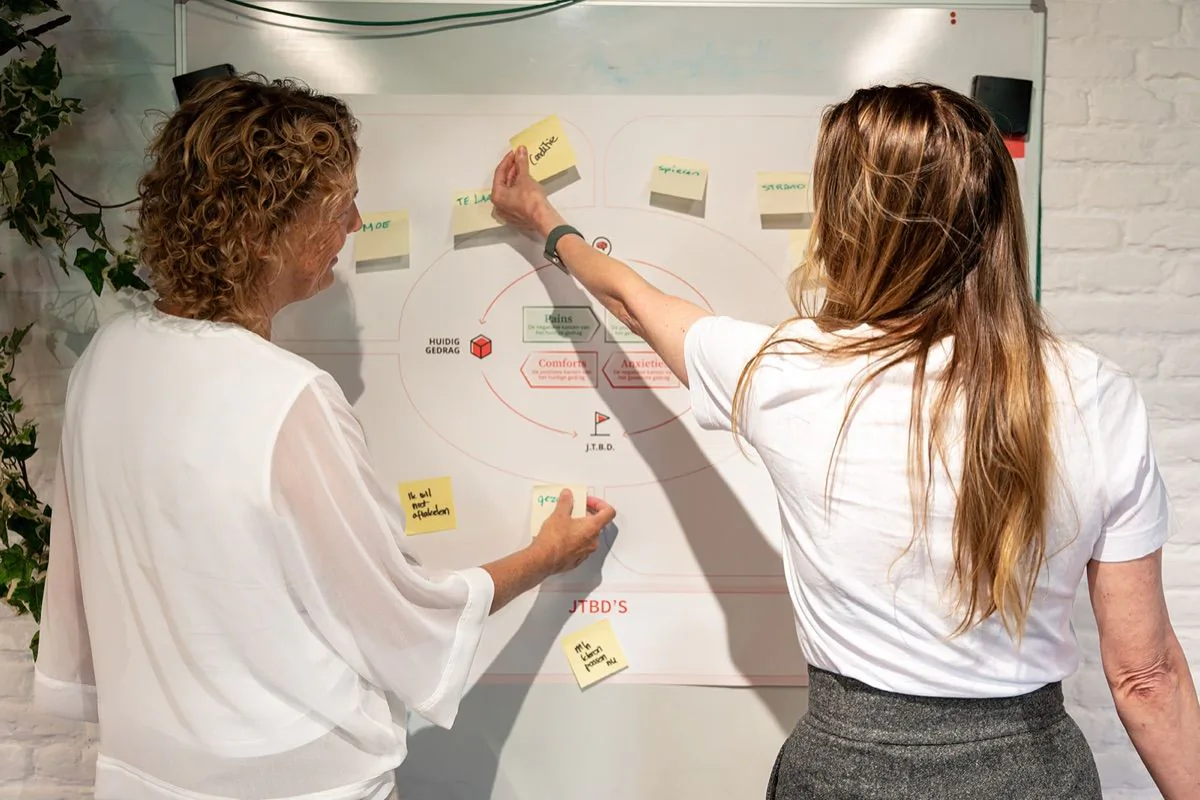
Your people already know they should move more, rest properly and speak up before it gets bad. The daily context makes that hard. In a Behavioural Design programme your team maps out exactly where that context leaks, then designs the interventions that fix it. Choose the format that fits: one day, two days, or a longer track built around your own challenge.
"We have a wellbeing policy on the intranet. Nobody actually books the time off."
10,000+ professionals trained, including people from
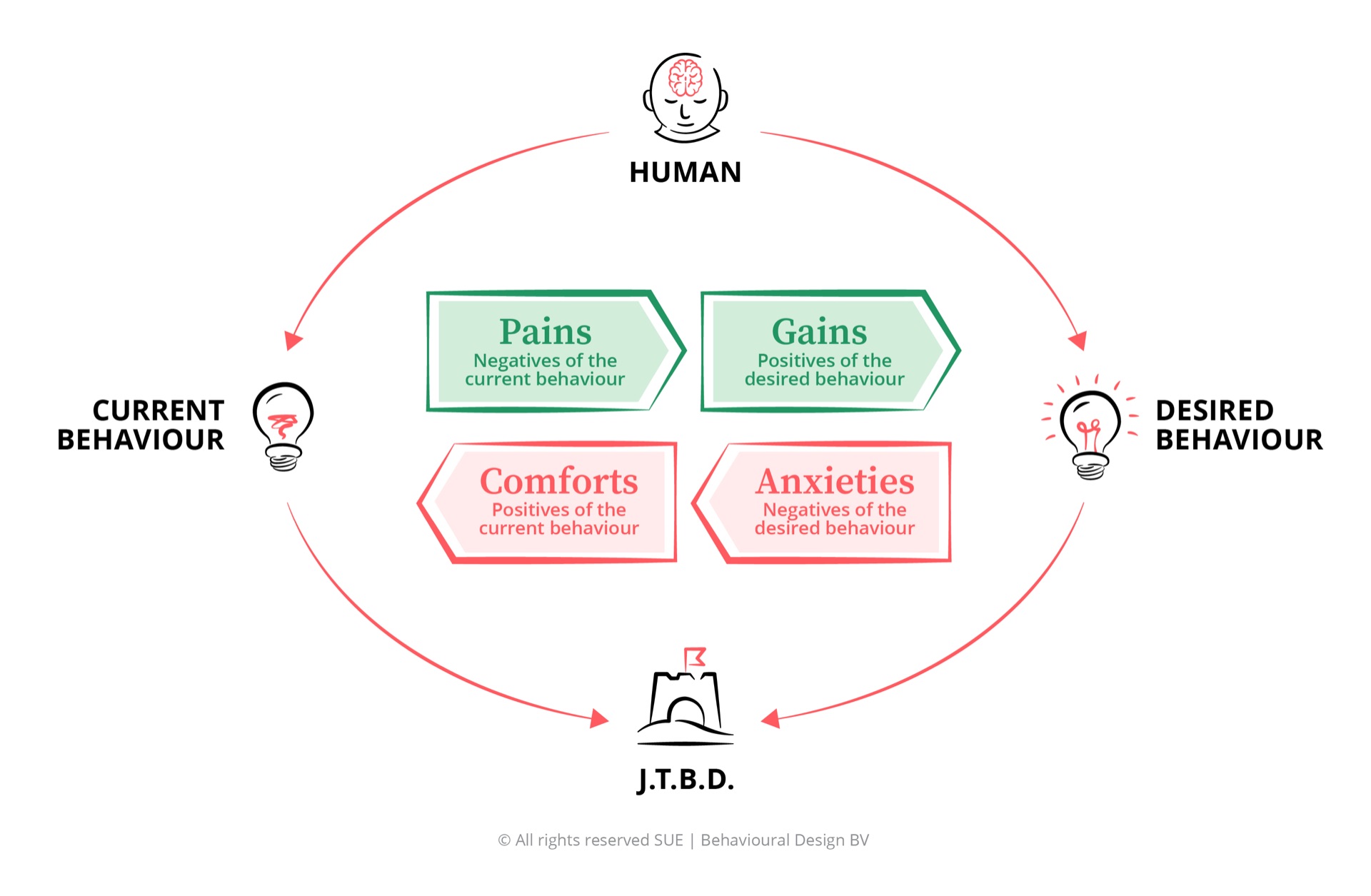
They are documented by Kahneman, Cialdini and Thaler. They apply to your employees, your managers and your board. And they are all designable. As long as you leave them untouched, another vitality campaign will land on the same wall.
Nobody needs another poster to explain that movement, rest and an honest conversation matter. Your people already know. The gap between that knowledge and Monday morning behaviour is exactly what a wellbeing programme rarely closes.
Slowing down can feel like admitting you can't keep up. Pushing through is the behaviour that built most careers, so it stays the path of least resistance even when it costs people their energy.
Asking for help, declining a fifth project, actually taking the break you're owed: each requires a change in habit. The effort of changing feels heavier than the benefit, so people keep the routine they already have.
If nobody around you takes their full lunch break or logs off on time, neither will you. The unwritten norm on the floor beats the policy on the intranet.
Back-to-back meetings, a shared inbox with no cut-off, a rota with no buffer: whoever designs the default workload designs how sustainable that work actually is.
Managers are the strongest lever for growth, workload and engagement, yet most get little time, training or accountability for that role (Gallup, 2025).
Decisions about pace, breaks and whether to ask for help mostly happen on autopilot. A rational argument about wellbeing never reaches that layer.
Sustainable employability is the capacity of your people to work in a healthy, motivated and productive way, now and years from now. It shows up in how people actually plan their week, ask for help and recover after a demanding stretch, far more than in the wellbeing policy sitting on the intranet. Behavioural Design for sustainable employability helps you understand why people push through instead of pacing themselves, and how you design the context, the rules of the game and the social norms so the healthy choice becomes the obvious one.
Take Spaarne Gasthuis. The hospital wanted more nurses supervising students on its learning wards. Behavioural interviews with nine nurses and department heads showed why it wasn't happening on its own: nurses who hadn't supervised a student yet assumed it meant extra work on an already full day. The colleagues who already did it experienced the opposite, since a learning ward carries no patient load of your own, which leaves more room to breathe. "On the learning ward I really let the students do their own thing. I observe, I listen in on how they talk to family, because I don't have to worry about my own patients," said one of the nurses interviewed. The intervention was built around exactly that insight: let the nurses who already supervised students talk openly about what it costs, and what it gives back.
The HR professionals and managers among our 10,000+ alumni have one thing in common.
At the Academy you learn a lot about behavioural change and how to apply it in a short period of time. The training flew by and was very well put together. Amazing how complicated material comes to life in a fun and interactive course. I am definitely going to apply it in my work.

The programme with SUE taught me the importance of thinking about the human behind the client, because a client will not act from expected rational thinking patterns. As an organisation it is important that we start thinking outside-in at the right moments to create that much needed added value.

I am so happy with these results. The order of first doing a Behavioural Design Sprint, then testing and running an effect measurement worked very well. We are now in a position to roll this out with confidence. The numbers and effects help us to truly convince people.

Take the Deep Dive The Behavioural Advantage in Talent Management and learn how to design the employee lifecycle, from onboarding to retention, so sustainable employability holds up in daily practice.
Want the full method first, or to tackle it with your whole team? See the Fundamentals Course, or the in-company formats ↓
Three in-company formats, depending on how deep you want to go and how long you want to build. Always applied to your own workload, wellbeing or retention challenge.
Most behavioural science knowledge sits locked in academic papers. SUE built the Influence Framework, a practical step-by-step method that any HR director, L&D manager or leader can apply without a scientific background.
“ SUE Behavioural Design was a real experience that led me to look differently at behaviour. They take you along a very pragmatic way under challenging themes. I think the Influence Framework will solve many problems in the world. It is more than just a method, it is a fundamentally different way of thinking.
In-depth articles on the behavioural science behind workload, wellbeing and retention, written from SUE's practice.
The behavioural layer behind vitality policy that doesn't stick, and how you design it so it actually does.
Read article →High workload and staff shortages are not HR problems. They are behavioural design problems.
Read article →Teachers rarely leave education over salary. They leave because the structure undermines the reasons they stayed.
Read article →Happiness at work is not a perk on top of the job. It is a design outcome of the daily context.
Read article →Sustainable employability is the capacity of your employees to work productively, healthily and with motivation throughout their career, including through reorganisations, career changes and busier seasons. It shows up as daily behaviour rather than a fixed state: how people plan their workload, ask for help and recover after a demanding stretch. Behavioural Design helps you design the context so that behaviour holds up over time.
The Behavioural Design Masterclass (1 day, from €7,990) is the fastest way in: your team maps the behavioural barriers behind your sustainable employability challenge and designs first interventions. The Behavioural Design Sprint (2 training days plus interviews, from €11,900) goes further, moving from behavioural diagnosis to validated interventions ready for rollout. The Learning Journey is an organisation-wide programme, tailored to your situation, for teams that want to embed sustainable employability structurally rather than run a single programme.
Most wellbeing programmes start from awareness: inform people, motivate them, make them conscious of healthy choices. That rarely works structurally, because your people already know what healthy work looks like. SUE starts from a different question: why don't they act on what they already know? And then designs the context so the healthy choice becomes easier than pushing through.
HR directors, L&D managers, managers and executives at organisations that notice their traditional vitality and wellbeing programmes are not delivering the effect they hoped for. SUE works often with healthcare, education and government, alongside large employers in other sectors.
Usually within three to four weeks after an intake conversation. SUE can travel to your location, or organise the day or days in Amsterdam.
From the wellbeing policy on the intranet to the pace people actually keep. The Behavioural Design Method gives you the framework to design it.