For whom communication professionals
Behavioural design × AI training for communication

Design communication that|

Everything you do as a communication professional, from campaigns and newsletters to change communication and stakeholder management, comes down to influencing behaviour. Most communication informs. Behavioural Design teaches you to design for the automatic mind: the one that actually drives what people do.

10.000+
trained
9.3/10
rating
EQAC
accredited
€1.190
from excl. VAT

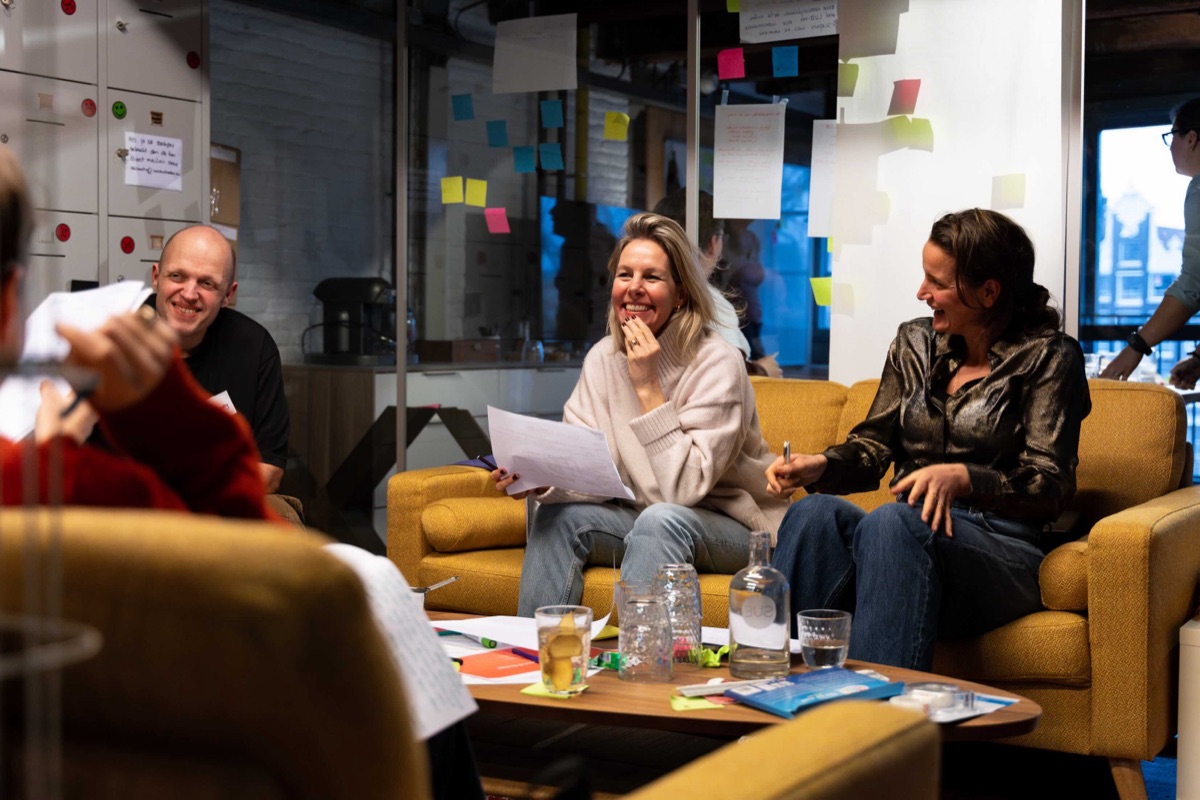
HR professionals during the Behavioural Design Fundamentals training at SUE Amsterdam

10,000+ professionals trained, including people from

Heineken ING Bank KPN Randstad Achmea Adyen Eneco ANWB Roche European Commission Gemeente Amsterdam DPG Media Sony ABN AMRO Booking.com Heineken ING Bank KPN Randstad Achmea Adyen Eneco ANWB Roche European Commission Gemeente Amsterdam DPG Media Sony ABN AMRO Booking.com
Communication is a behaviour profession

Every communication professional runs into these behaviour challenges.

Campaigns, internal communications, change messaging. Again and again: people receive the message but don't change their behaviour. The question is not whether you recognise this. The question is how you break through it.

01 · Campaigns

Why does our campaign reach everyone but move no one?

Reach is not the problem. Awareness is not the problem. Something between awareness and action is failing.

02 · Internal comms

Why does the intranet get 8% open rates?

The content is relevant. The timing is good. Still nobody reads it. Information and communication are not the same thing.

03 · Framing

Why does the same message land differently every time?

One version gets questions, the other gets commitment. Framing is not spin — it is how the brain processes choice.

04 · Stakeholders

Why does the stakeholder hear it but still not act?

The presentation was good. The proposal was thorough. The answer was: "let's schedule a follow-up." There is a gap between understanding and deciding.

05 · Change communication

Why does our change communication increase resistance?

The more we explain the change, the more people worry. Communication that informs is not communication that moves people.

06 · Persuasion

How do I write copy that persuades rather than informs?

Good writing is not enough. The brain skips most of what it reads. Designing for the automatic mind is a skill, not a talent.

07 · Annual reports

Why does the annual report get filed unread?

It is well-written, well-designed, well-positioned. And nobody opens it. Obligation and communication are different goals.

08 · Social proof

Why do our campaigns work in testing but not in the real world?

The focus group loved it. The A/B test won. Real behaviour did not change. Context is the difference.

09 · Behaviour

How do I design a communication that actually changes what people do?

Not what they think, not what they say they will do. What they actually do. That requires a different design process.

Why the SUE Behavioural Design method

Behavioural science made practical for professionals who are not behavioural experts.

Most behavioural science knowledge is locked in academic papers and consultancy reports. SUE built its own method, the Influence Framework, which translates that knowledge into a practical step-by-step process any HR professional can apply, without a scientific background.

Read: the SUE Influence Framework explained →
SUE Influence Framework
No academic theory — you work on your own HR case during the training and go home with a fully worked-out plan
Built on Kahneman, Cialdini and Thaler, scientifically grounded but accessible for practitioners
Our own method, the Influence Framework is not taught anywhere else, described in the #1 management bestseller
16 years of experience, from ING to Heineken to the Dutch Government: the method has been proven on the biggest HR challenges in the Netherlands
Springest
9.3/10
★★★★★
Google
4.8/5
★★★★★
Bloomville
5.0/5
★★★★★
Certified by
EQAC accredited
The ideal starting point

Three featured programmes for HR

Individually, with your whole team, or as self-study. Three formats in which you learn how to design behaviour in onboarding, retention, culture change and sustainable employability. Choose the format that fits your role, schedule and organisation.

Our full range

Or browse all our trainings and programmes

In addition to the three featured trainings above, we have a broader range. Choose below the format that suits you. Every path leads to the same goal: designing communication that changes behaviour in campaigns, change processes and stakeholder management.

What communication professionals say after the training

10.000+ professionals have followed a SUE Behavioural Design training.

The communication professionals among them have one thing in common: afterwards they look at campaigns, copy and stakeholder management differently.

After the training

What communication professionals do differently after the Behavioural Design training

Not abstract knowledge. Concrete changes in how you approach campaigns, internal comms and behaviour change.

You analyse behaviour before you design the communication

You use the Influence Framework as your starting point: what drives these employees, what's holding them back, what context helps?

You design workplace context, not just HR communication

You shape the work environment so that the desired behaviour becomes the easiest choice, not just the most communicated one.

You speak the language of behaviour in communication decisions

You share a common framework with your team: goals, anxieties, habits, context, friction, triggers. HR decisions become more concrete and better grounded.

Frequently asked questions

Frequently asked questions about Behavioural Design for HR

Most participants start without any prior knowledge. The training teaches you the behavioural science you need, linked directly to your own communication practice. No academic theory for its own sake, just actionable insights you can apply the very next day in your campaigns, internal comms or stakeholder work.

You learn the SUE Influence Framework: a method for analysing why employees do what they do, and for designing HR interventions that genuinely work. You work on your own HR case during the training, such as onboarding, retention, culture change or wellbeing, and go home with a fully worked-out strategy you can apply the next day.

The training is most valuable for experienced communication professionals. You've got the practical experience. The training gives you the scientific framework that backs up your intuition and sharpens your approach. Many participants say afterwards: I was already doing parts of this, but now I understand why some campaigns work and others don't.

A deliberately mixed group: HR professionals, marketers, communication advisers, policymakers and leaders all together. Maximum 16 participants. That mix is what makes it valuable, because you learn not only from the content but also from how people in other sectors deal with similar behavioural challenges.

Yes. We invoice in the company name and the training is EQAC-accredited, which makes reimbursement easier. Get in touch if you need a quote or additional information for your request.

Start with the Fundamentals. That gives you the complete Behavioural Design framework: the Influence Framework, the JTBD method and all core tools. The Deep Dive Communication builds on that with communication-specific applications. Without the Fundamentals, the Deep Dive lacks its foundation.

The Fundamentals course is the broad foundational training: 2 days live (or 33 online lessons) in which you learn the complete Behavioural Design framework. After that, you can apply it to any communication challenge. A Deep Dive training lasts 1 day and goes deep on one specific topic, such as campaign design, stakeholder management or internal communications. If you do both, the Fundamentals course is always the first step.

Yes. The Behavioural Design training is EQAC-certified, which makes reimbursement from employers easier. We invoice in the company name and provide a quote on request. The course is given in Amsterdam and online. Get in touch for personal advice on which training best fits your situation.

Ready to take the step? View the next start date or ask your question.

View start dates → Ask a question

10.000+ professionals have gone before you · 9.3/10 rating · EQAC accredited

Behavioural Design is the missing layer.

Why a well-intentioned HR policy doesn't automatically change behaviour

Behavioural Design for communication professionals is the application of behavioural science to campaigns, change communication, internal communications and stakeholder management. The method helps you understand why people respond the way they do to your messages, and how to design communication so that the desired behaviour becomes the natural response.

1
96% of behaviour is automatic. Most HR interventions address the conscious mind: posters, e-learnings, wellbeing campaigns. The Behavioural Design Method teaches you to read the unconscious, and design for it.
2
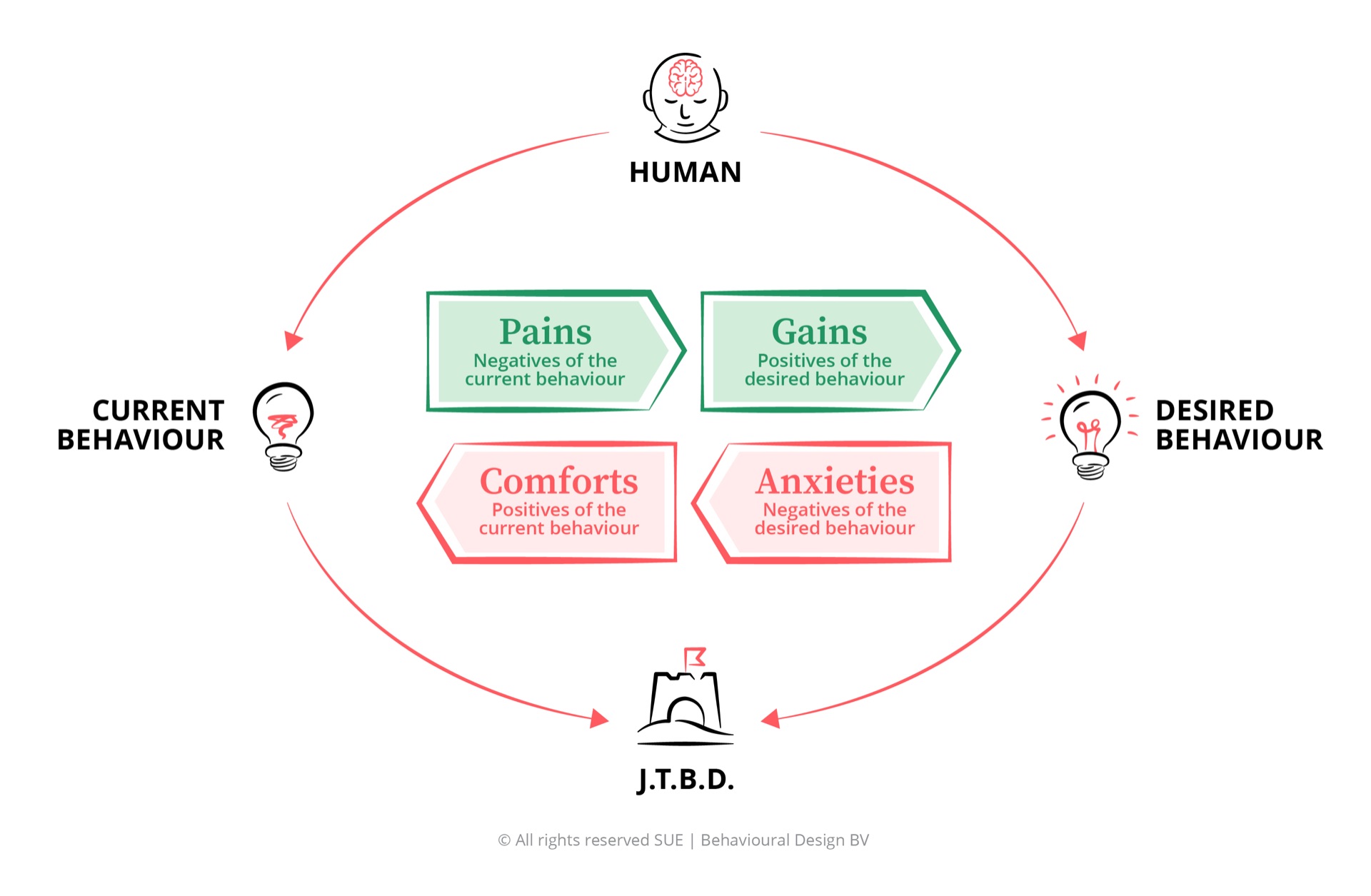
Five forces shape every behaviour. Pains, gains, anxieties, comforts and jobs-to-be-done. The SUE Influence Framework teaches you to recognise them in employees, managers and candidates, and use them to influence HR decisions.
3
Behaviour is designable. The Behavioural Design Method gives you a step-by-step process for changing the work environment, not the person, so that ownership, engagement and sustainable employability become the natural default.
Read more about the Behavioural Design Method →
Personal advice

Would you prefer to discuss the options with us?

Book a no-obligation discovery call. Marjan will connect you with the right SUE specialist who can give you targeted advice based on experience with HR challenges.

Marjan Krom, Happiness and Hospitality Manager SUE
Marjan Krom
Happiness & Hospitality Manager

Book a call

Choose a moment that suits you.

Further reading

Communication & behavioural science: the most-read articles

1
Behavioural science
Why informing doesn't work: when communication fails to change behaviour
2
Change communication
Change communication that actually works: design, not information
3
Group behaviour
Social proof in internal and external communication
4
Methodology
The SUE Influence Framework explained: six forces behind every behaviour
5
Behavioural science
What is Behavioural Design? The complete primer for communication professionals
View all articles on communication & behavioural science → The Art of Designing Behaviour
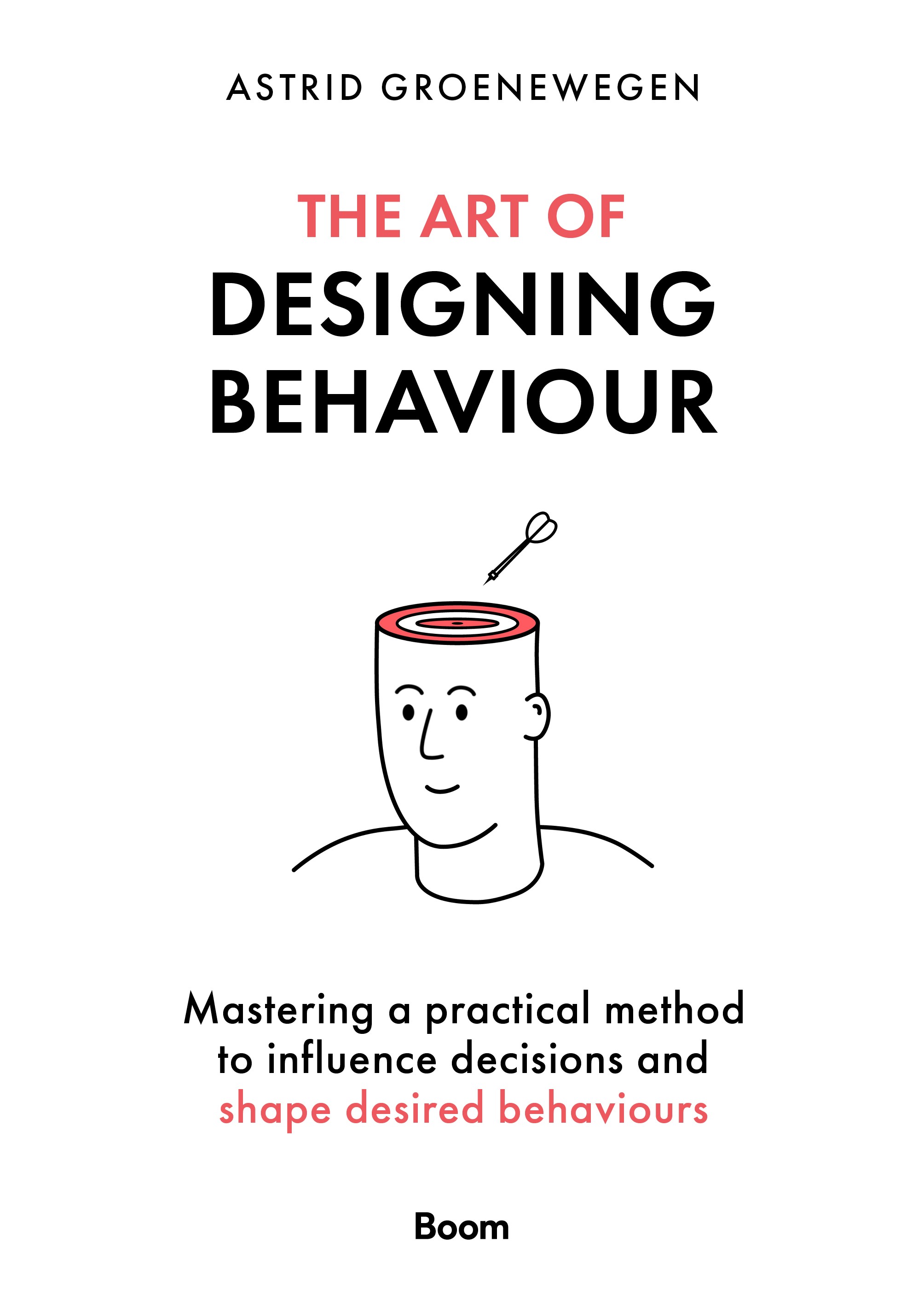
Book by Astrid Groenewegen
The Art of Designing Behaviour
The complete practical guide to using behavioural science to change what people do.
#1 Bestseller · The standard in behavioural design
Astrid Groenewegen
Astrid Groenewegen
Co-founder, SUE Behavioural Design
Weekly newsletter

1.5 minutes of Influence

Every week I notice something: a hospital sign, a supermarket shelf, a phrase in a meeting. Always something that shows exactly how context drives behaviour. I write it down. Every Thursday morning it lands in your inbox. In 90 seconds.

Read by 10,000+ professionals · Free · Unsubscribe any time

Next edition
Behavioural Design Fundamentals — 21 & 22 May 2026 5 spots remaining
Enrol now →